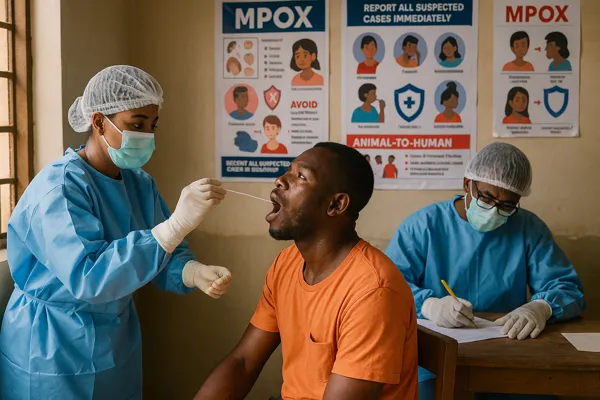
Renewed Alert as Mpox Cases in Ghana Rise Sharply
The mpox cases in Ghana have surged again, sparking concern among health authorities. On 14 October 2025, the Ghana Health Service (GHS) confirmed 22 new infections, pushing the total number of cases to 735 nationwide. This latest update underscores ongoing community transmission and has prompted renewed calls for vigilance, early detection, and prompt reporting of suspected symptoms.
Epidemiological Background: Ghana’s Recurrent Struggle with Mpox
Mpox, formerly known as monkeypox, is a viral zoonotic disease that has caused intermittent outbreaks across West and Central Africa for decades. Ghana’s first confirmed outbreak occurred in 2022, coinciding with a wider global mpox epidemic that spread to over 100 countries. Initial detections were largely imported cases, but subsequent clusters revealed domestic transmission — a worrying sign of localized spread.
Throughout 2023 and 2024, the mpox cases in Ghana continued to resurface sporadically. In October 2024, Reuters reported that Ghana had registered another case, signaling continued vulnerability to re-emergence even after months of apparent control.
Globally, the 2023–2025 mpox epidemic remains under surveillance by the World Health Organization (WHO), as multiple countries continue to record sporadic infections.
These periodic resurgences point to the need for sustained surveillance, public education, and regional cooperation, especially in endemic zones such as Ghana and Nigeria.
Current Developments: New Data from the Ghana Health Service
According to the latest GHS situation update, 22 new mpox cases were confirmed across multiple regions of Ghana, bringing cumulative infections to 735 as of October 14, 2025.
The GHS emphasized the need for early medical attention for individuals showing mpox symptoms, including:
- Sudden fever
- Headache and muscle pain
- Swollen lymph nodes
- Chills and general fatigue
- Rash appearing on the face, hands, or genitals
Public health messages have been amplified nationwide, urging citizens to practice frequent handwashing, avoid contact with infected persons, and report suspected symptoms immediately to the nearest health facility.
This is not Ghana’s first major spike in 2025. Earlier in July, health officials recorded 23 new cases and confirmed the country’s first mpox-related death, bringing the cumulative count at that time.
More recently, independent data from Health Policy Watch noted an upward trend in Ghana’s caseload alongside rising infections in other countries such as the Philippines and China.
Situational Assessment: What the Surge Suggests
The latest jump in mpox cases in Ghana indicates that community transmission remains active. The increase to 735 confirmed infections points to either expanded testing capacity or ongoing spread, potentially fueled by low public awareness and delayed reporting.
Key Observations:
- Transmission Mode: The virus spreads through close physical contact, bodily fluids, or contaminated materials like bedding and clothing. This mode of transmission makes community containment challenging.
- Surveillance Gap: Experts note that under-detection remains a concern. Mpox symptoms can resemble other diseases such as chickenpox or measles, leading to potential misdiagnosis.
- Severity of Cases: The GHS has not reported additional fatalities in this update, but the July 2025 death confirms that severe outcomes remain possible.
- Public Health Readiness: While Ghana’s diagnostic capacity has improved, rural health facilities may still face logistical barriers in sample transport and laboratory confirmation.
These factors collectively suggest that the mpox cases in Ghana may continue to fluctuate until consistent containment, education, and vaccination efforts are achieved.
Expert Commentary and Institutional Reactions
In an official statement released via the GHS Public Health Directorate, the Service reiterated its commitment to transparency and vigilance:
“We have detected 22 new cases, bringing the total to 735. We urge members of the public to maintain good hygiene, report symptoms early, and visit the nearest health facility.”
— Ghana Health Service, October 2025
Health experts also warn against complacency. According to infectious disease specialists, mpox can remain undetected for days, making contact tracing and isolation essential. “Every missed case can lead to exponential spread,” one epidemiologist told GSN Health Desk.
Transmission Concerns
Researchers emphasize that close skin contact and contaminated materials are the leading sources of infection. This means family members, healthcare workers, and individuals in crowded settings face higher risks.
Broader Implications: Local and Global Dimensions
National Impact
The sustained increase in mpox cases in Ghana could strain public health resources already managing other infectious diseases such as malaria, cholera, and dengue. Regional hospitals in the Ashanti, Greater Accra, and Northern Regionsare reportedly scaling up surveillance, though diagnostic gaps persist in rural districts.
The public’s perception of Ghana’s health system may also be tested. Continuous updates without visible control could undermine confidence if communication gaps persist between health authorities and citizens.
Regional and Global Context
At the regional level, Ghana’s mpox surge contributes to West Africa’s broader public health burden. The WHO and Africa CDC continue to monitor outbreaks in Ghana, Nigeria, and the Democratic Republic of Congo — regions identified as potential mpox reservoirs.
Globally, this resurgence complicates efforts to declare mpox a fully “contained” disease. Travel surveillance measures may tighten, and global health agencies could reissue precautionary advisories for travellers visiting affected countries.
Furthermore, Ghana’s consistent case reporting positions it as a regional transparency leader, offering data that helps shape Africa’s collective outbreak response.
Conclusion: Sustained Vigilance Needed
The recent rise in mpox cases in Ghana—22 new infections pushing the total to 735—illustrates that the outbreak remains far from over. While fatalities are limited, the pattern of resurgence demands urgent, sustained public health action.
Health authorities continue to advocate for:
- Rapid diagnosis and isolation of suspected cases
- Strengthened community education
- Expansion of regional laboratories and contact tracing capacity
The Ghana Health Service’s proactive reporting is commendable, but lasting containment will require global support, local participation, and consistent vigilance. Ghana’s experience reflects a wider truth: infectious diseases do not vanish—they evolve, and so must public health systems.
Internal Links
- Pig Liver Transplant in China: Man Survives 171 Days
- Measles Outbreaks Across US Hit Record High in 2025