Rising Threat: A Virus Once Thought Eliminate
The measles outbreaks across US in 2025 have reached a record-breaking milestone, with confirmed cases surpassing levels not seen since the early 1990s. The Centers for Disease Control and Prevention (CDC) reported over 1,500 cases across 42 states, sparking urgent warnings from public health officials that the country risks losing its “elimination” status declared in 2000.
The resurgence is not simply a medical issue but also a societal one. The alarming surge is forcing policymakers, doctors, and families to confront the consequences of declining vaccination rates, the impact of misinformation, and growing skepticism toward science. Experts note that measles outbreaks across US continue to expose weaknesses in the nation’s public health communication system.
How the US Lost Its Measles Shield
Measles, once considered eradicated from the US in 2000, is among the most contagious viruses known to humans. It spreads through respiratory droplets and can linger in the air for hours. Before the widespread use of the measles, mumps, and rubella (MMR) vaccine in 1963, the disease infected millions of children annually, claiming hundreds of lives each year.
The measles outbreaks across US are a reminder of how fragile progress can be. Although elimination meant no sustained transmission within US borders, cases still arrived with international travelers. Outbreaks in 2014, 2019, and now 2025 highlight how herd immunity collapses when vaccination coverage dips below the critical 95% threshold needed to protect communities.
Today, shifting attitudes toward vaccines, fueled by online misinformation, have left vulnerable populations exposed. Experts warn that without urgent corrective action, measles could become a recurring national challenge.
Record Numbers and Hotspots in 2025
According to the CDC’s October 2025 report, at least 1,544 measles cases have been confirmed this year — the highest number since 1992. These cases span 42 jurisdictions, with Texas, California, and New York recording some of the sharpest rises.
The measles outbreaks across US are being fueled primarily by unvaccinated populations. Data show that over 85% of cases involve unvaccinated individuals or those with unknown vaccination status. The link between vaccine hesitancy and resurgence is undeniable.
Hospitalizations have risen sharply, with dozens of patients requiring intensive care. At least three deaths have been confirmed nationwide, underscoring the life-threatening nature of the virus. Health officials warn that numbers could rise as major gatherings — state fairs, sports events, and religious conventions — serve as potential super-spreaders.
The CDC has also tracked 35 separate outbreaks this year. In West Texas, clusters of unvaccinated children fueled rapid community transmission, overwhelming local hospitals. California’s Central Valley, another hotspot, saw entire school districts shut down temporarily to contain spread. The agency warns that measles outbreaks across US could escalate further if winter travel increases.
Experts Warn of National Health Risks
Epidemiologists say the measles outbreaks across US expose cracks in the nation’s public health defenses. Dr. William Schaffner, an infectious disease expert at Vanderbilt University, described the situation starkly:
“Measles is a test of our vaccination system. If we allow pockets of unvaccinated people to grow, this is the result: a preventable disease resurging and threatening national health security.”
The implications for the country’s elimination status are severe. If continuous transmission lasts more than 12 months, the World Health Organization may revoke the nation’s measles-free designation — a symbolic but significant setback for global health leadership. This could also embolden vaccine skeptics, worsening future measles outbreaks across US if public trust is not restored.
Public Health Response and Community Voices
CDC Director Dr. Mandy Cohen urged parents to act:
“The MMR vaccine is safe, effective, and the only way to stop this virus from spreading further. Communities must close vaccination gaps before it’s too late.”
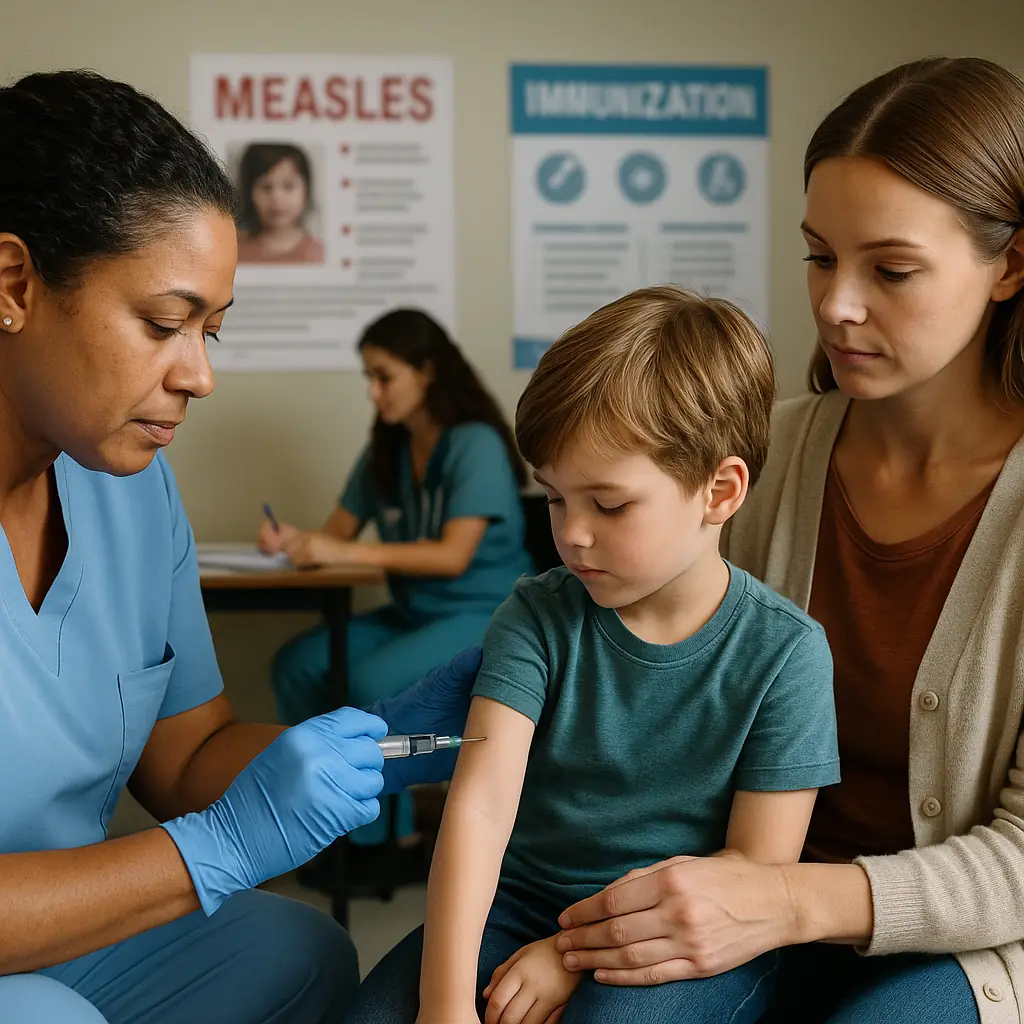
In response, state health agencies have rolled out emergency vaccination campaigns. New York established pop-up clinics in subway stations, while Texas deployed mobile health units to underserved rural communities. California announced free vaccination weekends, waiving insurance requirements.
Parents, however, remain divided. Some embrace the measures, grateful for accessible vaccination points. Others, influenced by vaccine misinformation, resist and cite mistrust of pharmaceutical companies and government agencies. This division makes containment harder, allowing the measles to persist in vulnerable communities.
Public health experts stress that effective communication is just as vital as vaccination itself. They emphasize that tackling misinformation and rebuilding confidence are key steps in ending the measles outbreaks once and for all.
Global Lessons and Local Consequences
The US surge mirrors global patterns. The World Health Organization (WHO) reports that measles cases worldwide have more than doubled in the last two years, with sharp increases in Africa and Southeast Asia. International travel ensures outbreaks in one country quickly affect another.
For the US, the costs are mounting. Outbreak responses — including quarantines, contact tracing, and vaccination campaigns — consume millions in state budgets annually. Schools are forced into closures, businesses face workforce absences, and travel advisories threaten tourism.
In Ghana and other African nations, where GSN has previously reported rising measles cases, the American crisis is viewed as a warning: if even wealthy nations can lose control, countries with weaker health systems must prepare aggressively. The measles outbreaks serve as a case study of what happens when trust in vaccination erodes.
As global mobility increases, experts fear that failure to control measles outbreaks could contribute to renewed transmission worldwide — reversing decades of public health progress.
The Road Ahead: Urgent Action Required
The measles outbreaks across US are more than a public health emergency; they highlight the fragility of vaccination-driven progress. Unless urgent measures are taken to rebuild trust, improve vaccine access, and counteract misinformation, the country risks reversing decades of success in preventing childhood disease.
Health leaders stress that the solution lies not only in medical interventions but also in education, community outreach, and transparent communication. As the world watches, the US must demonstrate that science and collective action can overcome doubt and division.
The path forward is clear: strong science, transparent leadership, and a united national effort to safeguard future generations from preventable diseases — ensuring that measles outbreaks in US never reach such critical levels again.
Internal Links
- Measles Resurgence in U.S. Southwest: 1,200+ Cases Trigger National Health Alert
- Student Mental Health Crisis in 2025: Rising Anxiety and Depression Among Youth
- Long COVID Global Impact: How Lingering Symptoms Are Reshaping Healthcare