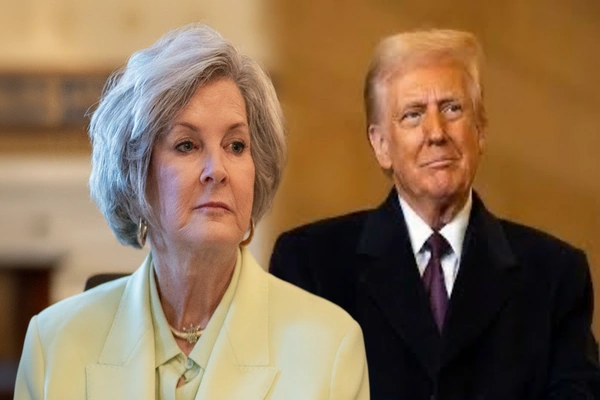
In a rare and unusually candid interview series with Vanity Fair, White House Chief of Staff Susie Wiles offered an inside account of President Donald Trump’s leadership style, internal decision-making, and strategic priorities during the early phase of his second term. The remarks have drawn attention for their depth and transparency, providing an uncommon public glimpse into the inner workings of the Trump White House.
Background
Susie Wiles assumed the role of White House chief of staff at the start of President Trump’s second term in January 2025, following her central role in orchestrating his successful 2024 campaign. A veteran Republican strategist, Wiles is widely regarded as one of the most influential figures in the administration, overseeing personnel management, policy coordination, and executive operations.
The interview series, conducted over several months by journalist Chris Whipple, represents one of the most detailed profiles of White House governance during Trump’s return to office. It covers a broad range of issues, including executive temperament, legal strategy, cabinet-level disputes, and foreign policy direction, marking a departure from the traditionally reserved public posture of a chief of staff.
Leadership Style and Psychological Characterization
Among the most discussed elements of the interview was Wiles’s assessment of President Trump’s leadership temperament, which she described using a psychological metaphor drawn from personal experience rather than clinical diagnosis. She emphasized Trump’s relentless drive, confidence in his instincts, and resistance to perceived constraints, while clarifying that the comparison was illustrative rather than literal.
Internal Criticism of Justice Department Handling
Wiles also addressed internal tensions within the administration, including concerns over how the Department of Justice managed public expectations surrounding the release of Jeffrey Epstein-related materials. She criticized the manner in which limited information was distributed, arguing that it failed to provide clarity and instead intensified public scrutiny.
Foreign Policy Strategy and Venezuela Pressure Campaign
On foreign policy, Wiles revealed a more forceful strategic posture toward Venezuela than previously articulated in official White House statements. She indicated that President Trump views continued pressure — including maritime interdictions — as leverage against President Nicolás Maduro, framing the approach as a means to compel behavioral change.
Approach to Accountability, Retribution, and Legal Actions
Addressing questions of accountability and retribution, Wiles framed the administration’s legal posture as a response to what it views as systemic failures that previously targeted Trump and his allies. She argued that enforcement actions and prosecutions should be understood as corrective measures rather than politically motivated retaliation.
Electoral Strategy and 2026 Midterm Engagement
Wiles confirmed that President Trump intends to play a direct and visible role in the 2026 midterm elections, signaling an unusually hands-on approach for a sitting president at this stage of a term. The strategy reflects an effort to maintain legislative influence and shape party direction well ahead of the next presidential cycle.
Political and Governance Implications
The disclosures attributed to Wiles offer a rare public window into the operational mindset of a White House chief of staff, a position traditionally defined by discretion rather than public commentary. Her remarks underscore the administration’s governing philosophy, which emphasizes executive assertiveness, centralized decision-making, and political continuity beyond a single election cycle.
At the same time, her critique of internal processes and public communication highlights ongoing challenges in managing transparency, legal expectations, and institutional trust. Analysts note that such candor, while informative, carries risks for message discipline and internal cohesion.
Political, Institutional, and Public Responses
Reaction to the interview has unfolded across political institutions, media organizations, and public discourse, reflecting the unusual nature of the comments and their potential implications. The White House has publicly reaffirmed confidence in Wiles’s leadership, emphasizing administrative accomplishments and policy progress.
Members of Congress have called for additional oversight on issues raised in the interview, particularly regarding foreign policy actions and the handling of sensitive legal matters. Media analysts have described the interview as one of the most consequential insider accounts of the current administration to date.
Domestic and International Implications
Domestically, the interview has intensified debate over executive authority, transparency, and the balance between political strategy and governance. It arrives at a time of heightened polarization and renewed focus on the norms guiding presidential power.
Internationally, the comments on Venezuela may influence diplomatic relations across Latin America, particularly among governments monitoring U.S. military and economic pressure tactics. The disclosures could also shape how allies and adversaries interpret Washington’s strategic intentions.
Conclusion
Taken together, Susie Wiles’s remarks provide a rare, consequential glimpse into the internal dynamics shaping the Trump administration at a critical juncture. As policy decisions, legal challenges, and electoral planning continue to unfold, the interview is likely to remain a key reference point for understanding the administration’s governing approach.
Related GSN Coverage
- Rob Reiner Murder Investigation: What We Know So Far
- Bondi Beach Shooting: Australia Confronts Public Safety Fears
 French
  English