Daniel Mensah is Senior Automotive & Global Economy Analyst at Global Standard News (GSN). He previously led reporting on trade policy impacts on manufacturing in North America and Asia.
General Motors’ decision to bring the China-built Buick SUV to the United States for domestic production represents more than a shift in assembly lines. It reflects evolving U.S.–China tensions, tariff realities, and the future of global automotive supply chains. As one of the U.S.’s most enduring automakers, GM’s strategy offers insight into how multinational companies navigate geopolitics, economics, and market demand simultaneously.
From Import to Onshoring
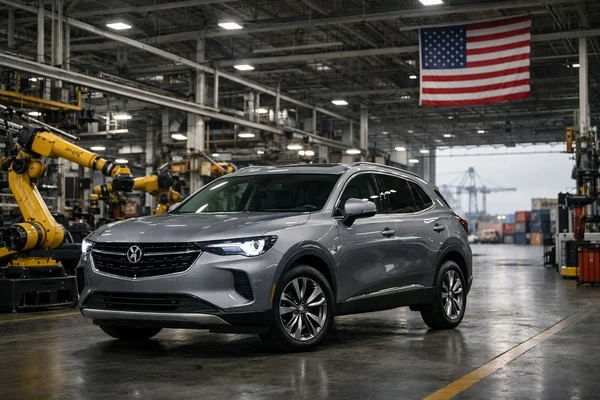
For nearly a decade, General Motors (GM) has imported the Buick Envision — a mid-size crossover SUV — from China to the U.S. market, where demand for SUVs continues to outpace sedans and compact cars. The arrangement began in 2017 when GM sought to leverage China’s growing manufacturing capacity and competitive production costs to serve U.S. customers. However, the strategy soon ran into geopolitical headwinds.
The U.S. government, citing national security and economic competitiveness concerns, imposed a 25% tariff on Chinese-built passenger vehicles as part of broader trade tensions that peaked in the late 2010s. Unlike some products that received temporary tariff exemptions, the Buick Envision remained subject to the full duty. These tariffs eroded price competitiveness and strained GM’s import strategy.
At the same time, rising political pressure — including from labor unions and bipartisan U.S. lawmakers — urged automakers to bolster domestic production. The argument was clear: more factory jobs in the U.S. support local economies and reduce reliance on foreign manufacturing. This broader backdrop explains GM’s pivot to onshore production for a vehicle once emblematic of globalized auto manufacturing.
For broader context on how policy changes shape industries, see GSN’s feature on tech regulation California XAI Deepfake Crackdown and platform monetization trends in Spotify Podcast Monetization.
What’s Changing and Why
In early 2026, GM confirmed plans to relocate production of the next-generation Buick Envision to the United States, shifting assembly from China to its Kansas City assembly plant by 2028. This development marks one of GM’s most prominent manufacturing realignments in a decade.
Who Is Affected?
- General Motors: Directly impacted through capital investment, workforce planning, and supply chain restructuring.
- Employees in Kansas City: Production jobs tied to SUV assembly are expected to increase, a significant win for local labor.
- Chinese Joint Venture Factories: Facilities in China currently producing the Buick Envision will see adjustments in their output mix.
- Consumers: U.S. buyers can expect redesigned models with technology upgrades tuned for domestic preferences.
Why This Shift Now?
The decision stems from a mix of economic, political, and strategic factors:
- Tariffs and Cost Pressures: The 25% tariff on Chinese imports remains in force. GM sought exemptions but did not secure them, making U.S. production financially more attractive.
- Political and Labor Considerations: U.S. lawmakers from both parties have pressed for domestic investment. Unions such as the United Auto Workers (UAW) have highlighted job creation as a top priority.
- Supply Chain Resilience: Global disruptions — from the COVID-19 pandemic to geopolitical tensions — have elevated supply chain resilience as a priority over lowest-cost manufacturing.
Where the Transition Will Occur
Production will be based at GM’s Kansas City plant, a facility that previously assembled the Chevrolet Bolt electric vehicle. As Bolt production winds down, the plant will be retooled to support internal combustion SUV assembly — a notable shift given the broader industry push toward electrification.
When It Takes Effect
The plant restructuring is scheduled to begin in 2026, with full production of the U.S.-market Buick Envision targeted by 2028. This timeline aligns with GM’s broader product cycle refreshes and fulfills commitments to local stakeholders.
How GM Is Managing the Shift
GM has announced capital expenditures to upgrade manufacturing lines and invest in workforce training. The move also involves recalibrating supplier contracts to ensure domestic sourcing for key components — a complex task given globalized parts ecosystems. Suppliers both local and international are adapting to support the new assembly footprint.
Analysis: Strategic, Economic, and Geopolitical Implications
GM’s strategy provides insight into the evolving nature of multinational corporate decision-making amid shifting global pressures. Three core implications stand out:
Tariffs as Strategic Lever
Trade policy now plays a decisive role in strategic planning. Import duties directly affect corporate strategy, pushing firms to onshore or near-shore production to avoid punitive costs — redefining comparative advantage in manufacturing.
Domestic Investment to Win Political Capital
By expanding U.S. manufacturing, GM strengthens its position with policymakers and labor groups. This can translate into favorable policy conditions, cost offsets, or tax incentives, showcasing a model other manufacturers may follow.
Supply Chain Resilience Over Cost Efficiency
While China offered cost advantages, disruptions and rising geopolitical tension have elevated supply chain resilience as a top priority. Localizing production aims to reduce exposure to transport delays and cross-border uncertainties.
However, this transition also poses challenges. Retooling factories and realigning supply chains require significant time and capital. Moreover, the broader industry trend toward electrification contrasts with using a former EV plant for internal combustion production — a potential paradox within GM’s portfolio strategy.
Reactions and Perspectives
Industry and political reactions have been mixed but largely supportive of GM’s strategy:
Political Leaders
U.S. lawmakers from Missouri’s delegation highlighted the benefits to local employment and manufacturing strength. Representative Anna Williams (D-MO) called the decision “a win for Missouri and the national economy,” emphasizing job creation and investment at a time when manufacturing has been under pressure.
Labor Unions
The United Auto Workers (UAW) praised the move for preserving and creating jobs but urged GM to pair this onshoring with expanded U.S. electric vehicle production to secure the future of domestic auto manufacturing.
Industry Analysts
Emily Hart, an automotive industry analyst at Global Markets Insight, noted, “GM’s move speaks to larger structural shifts. Reducing tariff exposure and aligning with political expectations helps stabilize earnings forecasts in an uncertain market.”
Chinese Auto Sector
China’s automotive manufacturers acknowledged the resilience of their production ecosystem, emphasizing that China remains a central hub for global auto manufacturing. They also noted that multinational strategies will continue to adapt to regional policy environments.
Consumer Advocates
Some consumer groups expressed concern that transitioning production to the U.S. could increase vehicle prices if cost savings from Chinese assembly disappear. GM has stated that the company will manage costs through efficiency improvements and local supplier agreements.
Global and Local Impact
The decision’s ramifications extend beyond GM and the U.S. market:
Local Economic Growth
The Kansas City region stands to benefit from increased employment in manufacturing, logistics, and parts supply. Ancillary sectors — from retail to housing — may see secondary growth tied to expanded factory operations.
National Manufacturing Sentiment
GM’s strategy may embolden other automakers considering domestic production to mitigate trade friction and policy uncertainty. The move also contributes to broader discussions on industrial policy and supply chain sovereignty in the U.S.
China’s Role in Auto Supply Chains
While China will remain a critical global manufacturing hub, the shift highlights that reliance on any single region carries strategic risk. Automotive companies are increasingly diversifying production footprints to balance cost with political and logistical stability.
Consumer Market Dynamics
For U.S. consumers, domestically produced vehicles may offer improved assurances of availability and service support. The ultimate price impact will depend on how effectively GM manages production costs and supply agreements with domestic and international suppliers alike.
Conclusion
GM’s decision to bring the China-built Buick to U.S. soil underscores a pivotal shift in global auto industry strategy — where tariffs, politics, and supply resilience now shape production decisions as much as cost. As the automotive sector continues to evolve, GM’s approach offers a blueprint for multinational adaptation in an uncertain global landscape.