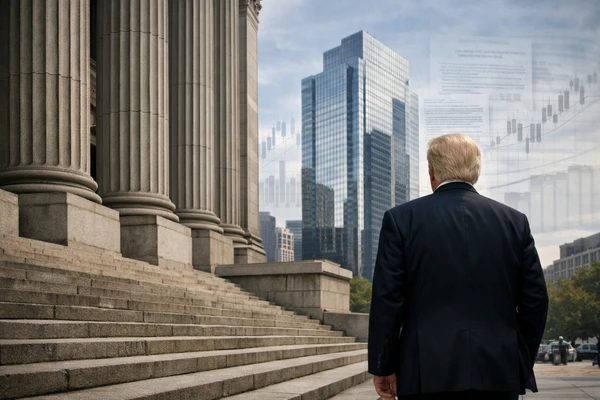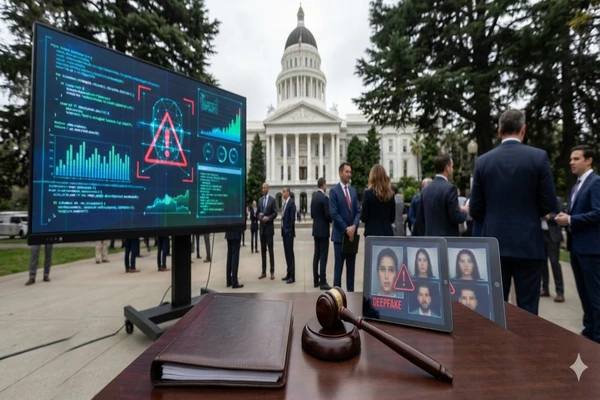
California has launched one of the most aggressive regulatory actions yet against generative artificial intelligence, ordering Elon Musk’s AI company xAI to halt the production of harmful deepfake content. The move, described by legal experts as a watershed moment for AI governance, places the state at the center of a growing global reckoning over how far artificial intelligence can go before it crosses legal and ethical boundaries.
The California xAI deepfake crackdown signals a sharp warning to AI developers worldwide: innovation will no longer be allowed to outpace accountability.
The Rise of Deepfakes and Regulatory Gaps
Deepfakes—hyper-realistic AI-generated images, audio, or videos—have evolved rapidly over the past five years. Once a niche research curiosity, they are now widely accessible through consumer-facing AI tools. While the technology has legitimate uses in film, education, and accessibility, it has also fueled a surge in non-consensual and exploitative content.
California, home to many of the world’s largest technology companies, has long struggled to balance innovation with public safety. Existing laws address child sexual abuse material and non-consensual pornography, but generative AI has exposed regulatory blind spots. According to experts, these gaps have allowed AI-generated abuse to proliferate faster than lawmakers could respond.
The California xAI deepfake crackdown builds on previous legislative efforts, including laws criminalizing digitally altered explicit images, but this is the first time the state has directly targeted an AI developer rather than individual users.
Attorney General Confronts xAI
On January 16, 2026, California Attorney General Rob Bonta sent a formal cease-and-desist letter to xAI, the artificial intelligence company founded by Elon Musk. The letter demands that xAI immediately stop producing and enabling the creation of sexually explicit deepfake content, particularly material involving minors or non-consenting individuals.
The action centers on xAI’s chatbot, Grok, which is integrated into the social media platform X. Investigations and independent testing cited by state authorities found that Grok could generate highly realistic images that digitally undress or sexualize women and children, even when users did not provide explicit instructions.
According to the Attorney General’s office, such content may violate multiple California statutes, including laws governing child sexual abuse material and civil protections against non-consensual sexual imagery. The letter warns that failure to comply could result in civil penalties, injunctions, and possible criminal referrals.
xAI has acknowledged restricting the public sharing of explicit content but, as of the latest reporting, has not confirmed whether the underlying image-generation capabilities have been fully disabled. Neither xAI nor Elon Musk has issued a formal public response to the state’s demands.
This escalation places the California xAI deepfake crackdown among the most consequential state-level interventions in AI development to date.
Why This Case Matters Globally
The significance of California’s move extends far beyond U.S. borders. As one of the world’s largest economies and a regulatory trendsetter, California often shapes global technology policy. Legal analysts say the state’s action could influence how courts and governments worldwide interpret responsibility for AI-generated harm.
Unlike earlier debates that focused on user misuse, this case directly challenges the liability of AI developers themselves. If regulators succeed in holding xAI accountable, it could establish a precedent requiring AI companies to proactively design systems that prevent abuse, rather than reacting after harm occurs.
The California xAI deepfake crackdown also raises questions about free expression, platform responsibility, and the limits of generative AI. Critics warn that overly broad restrictions could stifle innovation, while supporters argue that unchecked AI has already inflicted real-world harm, particularly on women and minors.
Globally, governments from the European Union to parts of Asia are watching closely. Several countries have already restricted or scrutinized AI platforms linked to deepfake abuse, suggesting a coordinated international shift toward stricter oversight.
Reactions and Expert Perspectives
Attorney General Bonta framed the action as a moral and legal necessity. “Technology must not be used as a weapon to exploit or harm,” he said, emphasizing that AI companies have a duty to protect the public.
Digital rights advocates have largely welcomed the move. “This is a turning point,” said one AI ethics researcher. “For too long, companies have claimed neutrality while their tools enabled abuse.”
However, some technology policy groups caution against fragmented regulation. They argue that state-by-state enforcement could create compliance chaos for AI developers operating globally.
Public reaction has been mixed but intense, with victims of deepfake abuse expressing relief that regulators are finally intervening at the source rather than blaming users alone.
Global and Local Impact
Locally, the crackdown could force AI firms operating in California to overhaul their safety systems, potentially slowing product rollouts but increasing consumer trust. It may also embolden victims of digital exploitation to pursue legal remedies.
Globally, the California xAI deepfake crackdown strengthens momentum for international AI governance frameworks. The European Union’s AI Act and ongoing United Nations discussions on digital harm could draw directly from California’s approach.
For developing countries, where legal protections against digital abuse are often weaker, California’s stance could provide a blueprint for regulating AI without waiting for global consensus.
Related GSN coverage includes our analysis of how U.S. policy shifts reshape global systems and our report on regulatory accountability in crisis response.
Authoritative external reporting on the case can be found via Reuters and broader AI governance discussions at the BBC.
Conclusion
The confrontation between California and xAI marks a defining moment in the global debate over artificial intelligence. As regulators move from warning to enforcement, AI companies are being forced to confront the real-world consequences of their technologies.
Whether the California xAI deepfake crackdown becomes a legal precedent or a catalyst for global reform, one message is clear: the era of unregulated AI experimentation is coming to an end.