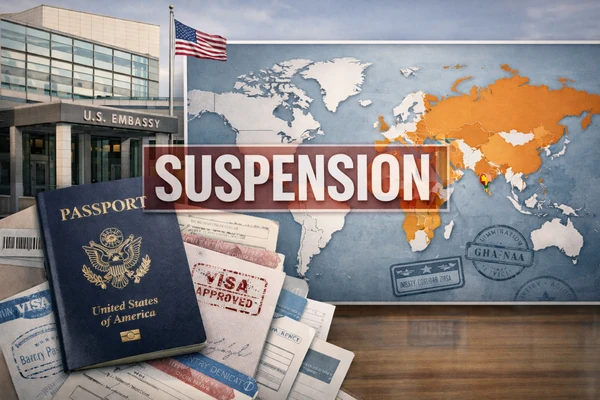
The United States has announced a far-reaching US visa processing suspension that will halt the processing of immigrant visas for nationals from 75 countries, effective January 21, 2026. The policy, disclosed in a State Department memo and reported by Reuters, has global implications — especially for nations in Africa, Asia, the Caribbean, and beyond. Most notably for GSN’s diverse readership, Ghana is explicitly included among the 75 countries affected.
The Policy’s Origin and Purpose
Immigration policy in the United States has been in flux for years, with recent administrations expanding or tightening legal entry pathways. This latest directive is grounded in the long-standing “public charge” doctrine — a legal provision that allows U.S. authorities to deny entry to individuals considered likely to rely on public assistance. Under the current policy shift, consular officers are instructed to assess a broad range of applicant attributes, including age, health, finances, education, and English proficiency, as part of visa screenings.
Officials argue that this reassessment aims to preserve U.S. economic resources and ensure that new immigrants will be self-sufficient. Critics, however, warn that pausing immigrant visas for entire nations — rather than individual cases based on merit — risks separating families, stalling workforce pipelines, and straining diplomatic relations.
Full List of 75 Countries Affected
The following is the most complete list compiled from multiple credible reports about the US visa processing suspension. While the U.S. government has not officially published an authoritative master list, consistent reporting by major outlets confirms the inclusion of these countries:
- Afghanistan
- Albania
- Algeria
- Antigua and Barbuda
- Armenia
- Azerbaijan
- Bahamas
- Bangladesh
- Barbados
- Belarus
- Belize
- Bhutan
- Bosnia and Herzegovina
- Brazil
- Burma (Myanmar)
- Cambodia
- Cameroon
- Cape Verde
- Colombia
- Côte d’Ivoire
- Cuba
- Democratic Republic of the Congo
- Dominica
- Egypt
- Eritrea
- Ethiopia
- Fiji
- Gambia
- Georgia
- Ghana
- Grenada
- Guatemala
- Guinea
- Haiti
- Iran
- Iraq
- Jamaica
- Jordan
- Kazakhstan
- Kosovo
- Kuwait
- Kyrgyzstan
- Laos
- Lebanon
- Liberia
- Libya
- Macedonia (North Macedonia)
- Moldova
- Mongolia
- Montenegro
- Morocco
- Nepal
- Nicaragua
- Nigeria
- Pakistan
- Republic of the Congo
- Russia
- Rwanda
- Saint Kitts and Nevis
- Saint Lucia
- Saint Vincent and the Grenadines
- Senegal
- Sierra Leone
- Somalia
- South Sudan
- Sudan
- Syria
- Tanzania
- Thailand
- Togo
- Tunisia
- Uganda
- Uruguay
- Uzbekistan
- Yemen
What the Suspension Entails
The US visa processing suspension specifically affects immigrant visas — the category used for lawful permanent residence (green cards) and family reunification. The pause does not apply to temporary or non-immigrant visas such as tourist, business, or most student visas, according to the Associated Press reporting on the State Department announcement.
The policy directive instructs U.S. embassies and consulates worldwide to refuse immigrant visa issuance under current procedures while internal reviews and screening reforms take place. Although the suspension is “indefinite,” meaning no end date has been provided, it is described by officials as a procedural pause rather than a permanent ban.
Why Ghana and Other Nations Are Included
According to government commentary and expert analysis, the visa suspension is tied to a more stringent application of the “public charge” doctrine. Under this framework, authorities assess whether a prospective immigrant is likely to become dependent on public benefits such as welfare or long-term government assistance. Critics argue that this approach unfairly singles out certain nationalities despite evidence that immigrants often contribute significantly to host economies.
Ghana’s inclusion reflects broader criteria applied across countries whose migrants are perceived — rightly or wrongly — to be at higher statistical risk of future public assistance use. The suspension does not necessarily mean applicants from Ghana will never receive visas: cases may resume once screening procedures are updated and reviewed.
Reactions from Governments and Experts
U.S. officials defending the policy argue that it will strengthen immigration systems and protect taxpayer resources. At the same time, advocates for migrants and diaspora groups have sharply criticized the decision as overly broad and harmful to family unity and global mobility. Diplomatic responses from affected governments, including Ghana, are expected as officials assess the suspension’s implications for citizens.
Impact on Ghana and the Global Community
For Ghanaians with pending immigrant visa applications or petitions filed by family members in the U.S., the suspension introduces significant uncertainty. This could delay family reunification and disrupt plans for permanent relocation. Beyond Ghana, countries across Africa, Asia, and Latin America face similar disruptions, potentially leading to economic, social, and diplomatic ripple effects.
What Comes Next
The US visa processing suspension affecting 75 countries marks one of the most comprehensive pausing of legal immigration pathways in recent decades. While the intent is a procedural review, the impacts — from delayed family reunifications to reduced permanent residency flows — are immediate and far-reaching. Stakeholders around the world, especially in included nations like Ghana, will watch closely for further guidance from the U.S. State Department and official clarifications on timelines and criteria.