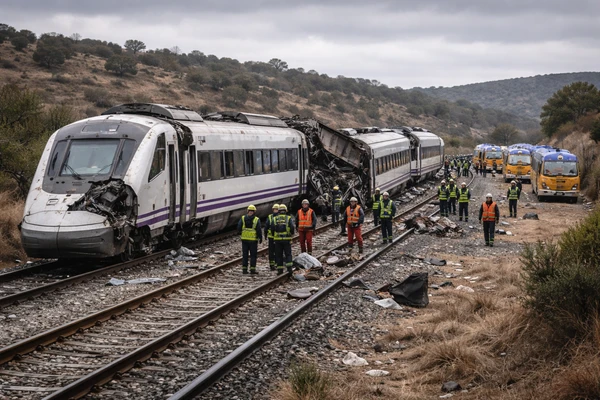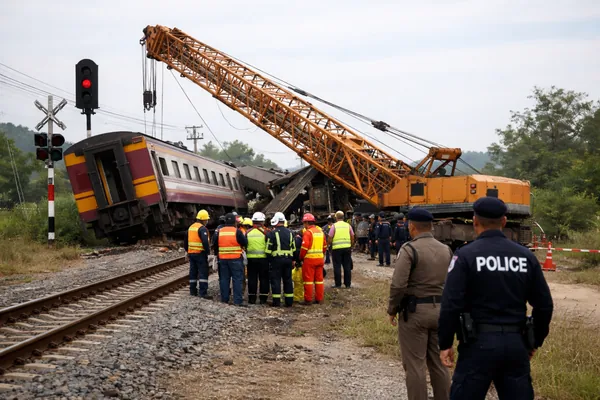
The Thailand crane train crash that unfolded in the early hours of January 14, 2026, has emerged as one of the most disturbing transport disasters in the country in recent years. A construction crane collapsed onto a moving passenger train in northeastern Thailand, killing at least five people and injuring dozens more. As rescue workers combed through twisted metal and derailed carriages, the tragedy exposed deeper questions about safety enforcement, regulatory oversight, and the risks of building mega-infrastructure alongside live transport corridors.
While Thailand has made major strides in expanding its rail network, the incident underscores a critical reality: infrastructure growth without uncompromising safety controls can turn fatal within seconds.
Thailand’s Rail Expansion and Safety Challenges
Over the past decade, Thailand has pursued aggressive rail modernisation as part of its national development strategy. Projects include high-speed rail links connecting Bangkok to northeastern provinces and eventually to Laos and China, as well as upgrades to conventional passenger and freight lines.
These projects are designed to reduce road congestion, cut logistics costs, and position Thailand as a regional transport hub. However, construction frequently occurs alongside active rail services, a practice that demands rigorous safety coordination.
Thailand’s infrastructure record is mixed. While major projects have delivered economic gains, the country has also experienced repeated industrial and construction accidents linked to weak enforcement, fragmented oversight, and contractor pressure to meet deadlines. In several past cases, investigations have revealed poor risk assessments and inadequate supervision — patterns that critics now fear may have played a role in the Thailand crane train crash.
What Happened in the Thailand Crane Train Crash
According to Reuters, the crash occurred in the Sikhio district of Nakhon Ratchasima province, a key rail corridor linking Bangkok to Thailand’s northeast.
The passenger train was travelling its scheduled route when a large construction crane — part of nearby rail infrastructure works — suddenly collapsed onto the track. The crane struck the train with devastating force, derailing multiple carriages and trapping passengers inside.
Emergency responders, including police, medical teams, and railway officials, were rushed to the scene. Survivors described chaos inside the carriages, with some passengers forced to break windows to escape. Several injured victims were transported to regional hospitals, while rail services on the affected line were immediately suspended.
Authorities initially confirmed at least five fatalities, cautioning that the death toll could rise as rescue operations and medical assessments continued.
Immediate Response and Government Action
Thailand’s transport ministry ordered an urgent investigation into the cause of the crane collapse, focusing on whether construction safety protocols were properly followed. Officials also directed contractors to halt work in the area pending a full safety review.
Railway authorities have pledged cooperation with investigators, while law enforcement is examining whether criminal negligence may have contributed to the crash. If violations are found, contractors and supervisors involved could face legal consequences.
Why the Thailand Crane Train Crash Matters
The Thailand crane train crash is not merely an isolated accident; it is a warning signal about systemic vulnerabilities in large-scale infrastructure development.
Construction Near Active Rail Lines
Globally, best practices require strict exclusion zones, reinforced barriers, and — in many cases — temporary rail shutdowns when heavy machinery operates near active tracks. Any failure in these safeguards dramatically increases risk.
Oversight and Accountability Gaps
Major infrastructure projects often involve layers of contractors, subcontractors, and regulatory agencies. Without clear accountability, safety responsibilities can become diluted, allowing dangerous conditions to persist.
Pressure to Deliver
Infrastructure timelines tied to political promises or foreign investment agreements can incentivise speed over safety. Experts warn that this pressure frequently leads to corners being cut, particularly in fast-growing economies.
The crash echoes broader global concerns about infrastructure governance, similar to debates over state power, accountability, and international norms highlighted in GSN’s coverage of Germany’s criticism of U.S. global leadership.
Public Reaction and Expert Voices
Public response in Thailand has been swift and emotional. Social media platforms filled with calls for justice, with many users questioning why passenger trains were allowed to operate beneath heavy construction equipment.
Transport safety experts interviewed by local media stressed that modern rail systems can coexist with construction only when oversight is uncompromising. Several called for independent safety audits and stronger penalties for violations.
The tragedy has also resonated beyond Thailand, coming amid wider global unrest and governance challenges, including civil disruptions such as the Iran protests and internet blackout that have raised similar questions about state responsibility and public safety.
Global and Local Impact
Locally, the Thailand crane train crash has shaken confidence in rail travel, particularly among communities that rely on trains for daily commuting and regional commerce. Temporary service suspensions could disrupt supply chains and economic activity in the northeast.
Globally, the incident is likely to influence how international investors and contractors approach safety compliance in Southeast Asia. Infrastructure projects involving foreign funding or expertise may face closer scrutiny, higher insurance costs, and tighter regulatory conditions.
International media outlets, including BBC News, have highlighted the crash as part of a broader pattern of construction-related transport disasters worldwide.
Conclusion
The Thailand crane train crash stands as a tragic reminder that infrastructure development is not merely an engineering challenge, but a moral one. As Thailand continues its push toward modernisation and regional connectivity, safety must remain non-negotiable.
For the families of the victims, accountability and reform will matter far more than promises. Whether this disaster leads to lasting change or becomes another forgotten statistic will depend on the transparency and seriousness of the investigation now underway.