Iran protests 2026 have entered a critical and volatile phase as authorities moved to cut off much of the country’s internet access while the nation’s Supreme Leader publicly warned demonstrators of severe consequences. What began as localized economic protests has rapidly evolved into a nationwide crisis, highlighting deep-rooted dissatisfaction with governance, economic hardship, and political accountability.
The combination of mass street demonstrations and digital isolation marks one of the most consequential domestic challenges Iran has faced in recent years, drawing international concern and intensifying scrutiny of the government’s response.
A Pattern of Economic Pressure and Political Dissent
Iran has a long history of mass protests driven by economic hardship and political grievances. Major protest movements in 2009, 2017–2019, and 2022 exposed recurring tensions between public demands and state authority. Each wave followed a familiar pattern: rising living costs, rapid public mobilization, and a forceful response by security institutions.
By 2026, Iran’s economic conditions had deteriorated further. International sanctions, inflation exceeding 40 percent, and prolonged currency depreciation severely eroded household purchasing power. The Iranian rial continued to weaken, driving up the cost of food, fuel, and housing. These pressures laid the groundwork for the current unrest, which initially centered on economic survival before expanding into broader political dissent.
Internet Blackout and Security Crackdown
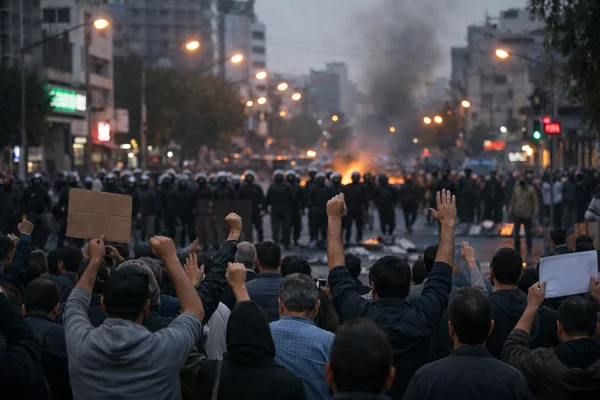
Iran protests 2026 intensified after demonstrations spread across major cities including Tehran, Mashhad, Isfahan, and Shiraz. Protesters blocked roads, gathered in central districts, and chanted slogans openly critical of senior leadership. In response, authorities implemented a sweeping internet shutdown, sharply limiting access to social media platforms, messaging services, and international communications.
According to Reuters, the blackout disrupted international phone calls and restricted the flow of information, mirroring tactics used during previous nationwide crackdowns. Flights were reportedly canceled, and several domestic media outlets scaled back online operations.
Supreme Leader Ayatollah Ali Khamenei addressed the unrest directly, accusing protesters of acting on behalf of foreign powers and warning that acts he described as sabotage and arson would be met with decisive action. Security forces were deployed in large numbers, with reports of clashes between demonstrators and police. Human rights groups have cited fatalities and mass arrests, though precise figures remain difficult to verify due to the communications blackout.
Limits of Control and Rising Public Frustration
Iran protests 2026 expose the growing limitations of the state’s traditional containment strategies. While internet shutdowns and security deployments have previously suppressed unrest, the persistence and geographic spread of the current protests suggest deeper structural challenges.
Analysts warn that repeated blackouts carry significant economic costs, disrupting businesses, financial transactions, education, and healthcare services. Over time, such measures risk further alienating Iran’s urban middle class and private sector. Comparisons with earlier protest cycles also reveal a notable shift in public rhetoric, with demonstrators increasingly questioning the legitimacy of political institutions rather than isolated government policies.
Reactions and Statements: Domestic Unity, International Concern
Iranian officials have largely maintained a unified public stance, emphasizing national security and allegations of foreign interference. State media continues to frame the unrest as externally driven, a narrative frequently used during previous periods of instability.
International reactions have been cautious but increasingly critical. Western governments and human rights organizations called for restraint and urged Iranian authorities to restore internet access. The BBC reported growing concern that the communications blackout could obscure human rights violations and prevent independent verification of events on the ground.
Economic Disruption and Regional Uncertainty
Domestically, Iran protests 2026 have disrupted daily life, commerce, and transportation. Small businesses and informal workers face mounting income losses as curfews, shutdowns, and uncertainty continue. Universities and public institutions in several regions have reportedly suspended operations.
Globally, the unrest introduces renewed uncertainty into Middle Eastern geopolitics. Prolonged instability in Iran could affect energy markets, regional security calculations, and diplomatic negotiations. The situation echoes other recent geopolitical tensions reported by Global Standard News, including security instability in Venezuela and critical infrastructure sabotage in Northern Europe, underscoring a broader pattern of global volatility.
A Defining Moment for Iran’s Stability
Iran protests 2026 represent a defining moment for the country, blending economic desperation with escalating political confrontation. The nationwide internet shutdown and the Supreme Leader’s warning signal a hardened official response, but they also highlight the depth of public discontent.
As Iran navigates this period of unrest, the choices made in the coming weeks will shape not only domestic stability but also the country’s long-term political trajectory and its relationship with the wider world.