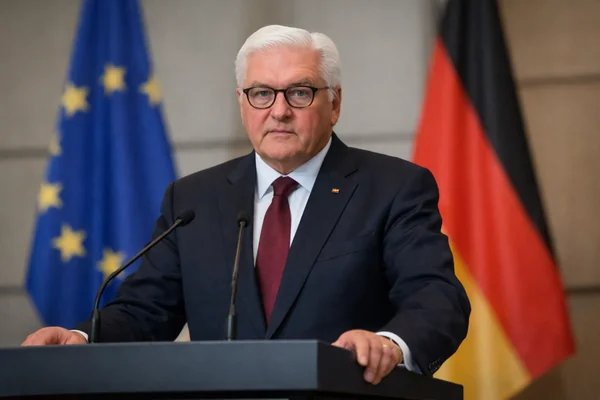
German President Frank-Walter Steinmeier delivered unusually blunt criticism of United States foreign policy under President Donald Trump, saying it risks “destroying the world order” and could lead the international system to degenerate into a “den of robbers.” His remarks, made during a symposium in Berlin marking his 70th birthday, have reverberated across Europe and beyond, reflecting deep concern among traditional U.S. allies about shifting global power dynamics.
The Post-WWII World Order and Germany’s Role
Since the end of World War II, the international system has largely been shaped by a rules-based order centered on institutions such as the United Nations, NATO, and multilateral treaties. The United States played a foundational role in this structure, promoting democratic norms, collective security, and global cooperation. Germany, emerging from the devastation of war and division during the Cold War, later became one of the strongest supporters of this order, anchoring itself in Western alliances and international law.
President Steinmeier, a former German foreign minister with decades of diplomatic experience, carries an influential voice in European foreign policy debates despite the largely ceremonial nature of his office. His views often reflect longstanding concerns in Berlin about maintaining stability and cooperative global governance.
Steinmeier’s Comments Explained
On January 8, 2026, Steinmeier sharply criticised U.S. foreign policy under President Donald Trump, urging the world not to allow the global order to disintegrate “into a den of robbers where the unscrupulous take what they want.”
His statement appears to reference several recent actions by the United States, particularly its military intervention in Venezuela, where U.S. forces ousted Venezuelan President Nicolás Maduro. This unprecedented operation — a unilateral move with significant geopolitical repercussions — has been widely reported and debated internationally.
Steinmeier described Russia’s 2014 annexation of Crimea and the subsequent full-scale invasion of Ukraine as a watershed moment for European security — but said that what he views as recent U.S. behaviour represents a second historic rupture in the global order. “There is a breakdown of values by our most important partner, the USA, which helped build this world order,” he said.
Why Steinmeier’s Warning Matters
Steinmeier’s remarks are significant for several reasons:
1. Unusual Directness
German presidents typically avoid overtly confrontational language toward allies. Steinmeier’s choice of the phrase “den of robbers” underscores the depth of concern among some European leaders about U.S. foreign policy direction.
2. Alliance Strains
The comments signal growing tension within what has historically been a cornerstone of Western alliances. While the United States and Germany share strategic interests — including in NATO and global trade — diverging approaches to international engagement have heightened friction.
3. Global Norms at Risk
Steinmeier’s critique is rooted in the fear that unilateral interventions and weakening multilateral norms could embolden great powers to act without restraint, eroding legal and diplomatic frameworks designed to prevent conflict.
4. European Strategic Autonomy
The remarks coincide with debates in Europe about “strategic autonomy,” a concept championed by leaders like French President Emmanuel Macron, who has similarly criticised U.S. policy for pulling away from international rules and institutions.
5. Public Opinion in Germany
Recent regional polling suggests a marked decline in German confidence in U.S. reliability as a partner, with a significant portion of respondents expressing concern about U.S. commitment to collective security.
Reactions and Official Responses
While Steinmeier’s office has not offered further elaboration beyond his speech, reactions have come from various quarters:
- European capitals expressed cautious support for preserving a rules-based international system, though official statements avoided direct confrontation with the United States.
- French President Emmanuel Macron echoed similar concerns about global order and the risk of great powers “dividing up the world,” underscoring alignment among key EU partners.
- U.S. officials have not formally responded to Steinmeier’s comments, but the Biden administration has defended U.S. policies as necessary for security and stability in contested regions.
- Analysts note that U.S. domestic politics, including debates over foreign military engagement and executive authority, are shaping global perceptions of American leadership.
Global and Local Impact
Transatlantic Relations
Steinmeier’s statements could influence upcoming NATO deliberations and EU-U.S. consultations on security and defence cooperation. A diminishing alignment between the United States and European democracies may lead to recalibrated strategic priorities on both sides of the Atlantic.
Emerging Powers
Steinmeier urged greater involvement from countries such as Brazil and India in safeguarding global norms, highlighting a shift toward broader multilateral engagement beyond traditional Western leadership.
Global Security Frameworks
The erosion of trust in U.S. leadership could encourage other powers, including Russia and China, to expand influence in regions like Africa, Latin America, and Southeast Asia, complicating efforts to address conflicts and global challenges such as climate change, migration, and economic inequality.
Conclusion
German President Frank-Walter Steinmeier’s sharp critique of U.S. foreign policy underscores deepening concerns about the future of the post-WWII international order. His warning that the world could devolve into a “den of robbers” if norms are not upheld signals a pivotal moment for global diplomacy. As the United States, European partners, and emerging powers navigate this complex landscape, the coherence and sustainability of global governance frameworks may be tested in the years ahead.
Related GSN Articles
- How Spotify Podcast Monetization Is Changing Creator Economics
- US Government Brain Drain: Causes, Impact, and Policy Responses