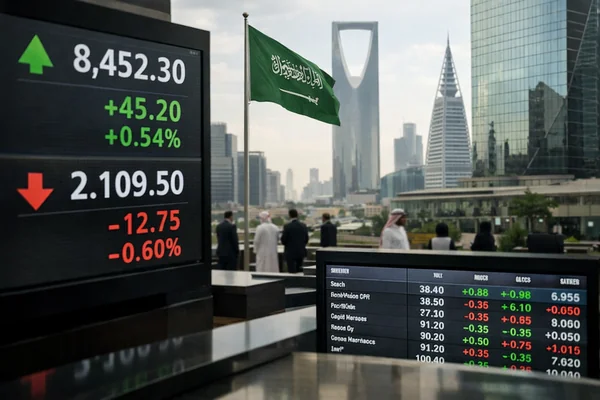
Saudi Arabia financial market opening marks one of the most consequential economic reforms in the Gulf in over a decade. Beginning February 2026, the kingdom will allow all foreign investors to directly access its capital markets, dismantling long-standing regulatory barriers. The move strengthens Riyadh’s ambition to become a global financial hub while accelerating Vision 2030’s diversification agenda.
How Saudi Markets Reached This Point
Saudi Arabia’s capital markets have evolved steadily since the mid-2010s, following a cautious liberalisation strategy. For years, foreign participation was restricted to institutions that met stringent Qualified Foreign Investor (QFI) requirements, including high asset thresholds and regulatory approvals.
This gradual approach coincided with the rapid expansion of Tadawul, the kingdom’s primary stock exchange, which has grown into the largest equity market in the Middle East by capitalisation. Inclusion in major global indices improved visibility, but direct access remained limited for many international investors.
These reforms form part of a wider economic transformation strategy aimed at reducing oil dependency and strengthening private-sector participation, a theme consistently explored in Global Standard News’ coverage of international economic policy, including its analysis of global fiscal shifts and capital mobility.
What the Market Opening Changes
The Saudi Arabia financial market opening will take effect in February 2026 following approval by the Saudi Capital Market Authority. The reform removes QFI eligibility thresholds and allows all foreign investors—both institutional and individual—to invest directly in Saudi-listed securities.
Key changes include broader access to equities, bonds, and listed investment funds, simplified onboarding processes, and improved settlement efficiency. Certain strategic sectors, such as direct land ownership, will remain restricted under existing national regulations.
Saudi authorities argue that deeper liquidity and broader participation will improve market efficiency, enhance price discovery, and lower long-term financing costs for domestic companies.
Analysis: Why This Reform Matters Globally
From a global perspective, the Saudi Arabia financial market opening is less about short-term inflows and more about structural positioning. Saudi Arabia is increasingly competing with established financial centres in Asia and the Middle East for international capital.
While many large institutions already hold Saudi exposure through index-linked instruments, full access removes psychological and regulatory friction that previously discouraged active portfolio allocation.
The timing is also notable. As investors reassess risk exposure amid shifting global interest-rate cycles, large emerging markets with scale and liquidity are gaining renewed attention. Saudi Arabia’s economic size and reform momentum place it prominently within that recalibration.
Reactions and Expert Commentary
Saudi officials framed the reform as a natural progression rather than a sudden liberalisation. Regulators emphasised that market safeguards remain in place to mitigate volatility and speculative excess.
Market analysts describe the move as inevitable, noting that sustained index inclusion and international competitiveness require full investor access. Foreign portfolio managers have welcomed the announcement, while also highlighting transparency, disclosure standards, and governance as ongoing areas to monitor.
Regional and Global Impact
The Saudi Arabia financial market opening is expected to influence capital flows across the Gulf. Competing regional exchanges may face increased pressure to accelerate reforms in order to retain investor interest.
For investors in Africa and Asia, Saudi Arabia becomes a more accessible gateway into Middle Eastern growth. The reform also strengthens Riyadh’s economic diplomacy by embedding global investors more deeply into the kingdom’s financial ecosystem.
This broader trend mirrors other global economic realignments previously examined by Global Standard News, including its reporting on international investment policy shifts and cross-border capital strategies.
Conclusion
Saudi Arabia financial market opening represents a structural shift rather than a symbolic gesture. By opening its markets to all foreign investors, Riyadh signals regulatory maturity and long-term confidence. While the immediate impact may be gradual, the reform’s implications for global capital allocation and regional competition are significant and enduring.
Related Global Standard News Coverage
- Canada–Ukraine Economic Aid and Global Capital Strategy
- U.S. Government Brain Drain and Economic Competitiveness