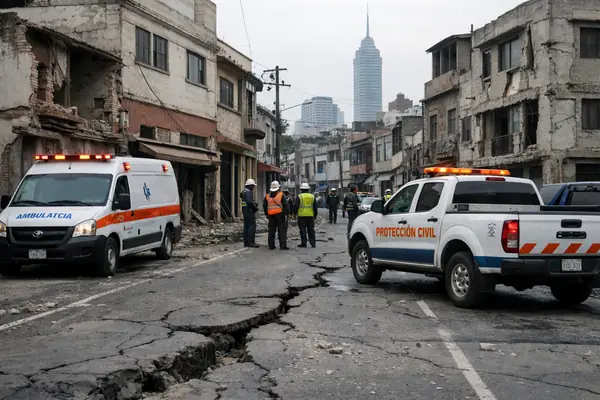
A Mexico earthquake with a magnitude of 6.5 struck the southern and central regions of the country on January 2, 2026, near San Marcos in Guerrero state, triggering widespread shaking felt as far as Mexico City. The powerful tremor resulted in multiple casualties, injuries, structural disruptions, and raised urgent questions about seismic preparedness in one of the world’s most tectonically active nations.
Why Mexico Is Prone to Earthquakes
Mexico lies along a complex network of tectonic boundaries that make it highly susceptible to seismic events. In particular:
- Plate tectonics: The Cocos Plate subducts beneath the North American Plate, creating intense seismic strain and frequent earthquake activity.
- Geographic risk zones: Regions such as Guerrero, Oaxaca, and Michoacán sit above active subduction zones, historically producing powerful earthquakes.
- Historic precedents: Catastrophic earthquakes — including the 1985 Mexico City quake that claimed thousands of lives — have shaped national preparedness and building codes.
This tectonic setting explains why tremors originating near Guerrero can be strongly felt hundreds of kilometers inland, including in densely populated urban centers like Mexico City.
The 2026 Mexico Earthquake
On January 2, 2026, at 07:58 local time, the U.S. Geological Survey recorded a strong 6.5-magnitude earthquake near San Marcos, a town in the Pacific coast state of Guerrero. The quake struck at a depth of approximately 35 kilometers and lasted nearly 30 seconds, producing powerful ground motion.
Immediate Impact
- Casualties and injuries: Authorities confirmed two deaths — a woman in Guerrero whose home collapsed and a man in Mexico City who died after falling during evacuation. Dozens were reported injured.
- Structural and infrastructure effects:
- Landslides and road damage in rural Guerrero.
- Damage to homes and public buildings, including a hospital in Chilpancingo, prompting evacuations and inspections.
- Public utilities interruptions with trees and utility poles downed in Mexico City.
- Aftershocks: More than 1,000 aftershocks followed the initial quake, with several registering significant magnitude, adding to ongoing risk and anxiety.
- Widespread tremors: The quake’s effects were felt beyond Guerrero — including in Oaxaca, Veracruz, Puebla, and Jalisco — demonstrating how seismic waves travel through varied geological formations.
Government and Public Response
The quake interrupted the first presidential press briefing of 2026, as seismic alarms sounded in Mexico City, prompting an orderly evacuation of officials and journalists before the event resumed.
Emergency services immediately began search, rescue, and infrastructure assessment operations. Local civil defense authorities urged residents to remain vigilant as aftershocks continued and to follow established seismic safety protocols.
Seismic Risk and Preparedness
Tectonic Mechanisms
The Mexico earthquake was triggered by the release of accumulated stress along the subduction zone where the Cocos Plate dives beneath the North American Plate — a process that drives the region’s seismicity. This motion stores immense tectonic energy over years or decades until released suddenly during an earthquake.
Preparedness and Structural Resilience
Mexico’s history of devastating earthquakes has led to substantial resilience measures, including:
- National seismic alert system: This automated alarm network gives residents and institutions critical seconds to evacuate before strong shaking begins, illustrating the value of early warning systems.
- Building codes and urban planning: Post-1985 reforms imposed stronger structural standards, especially in Mexico City, although older buildings and informal housing remain vulnerable.
Nevertheless, the quake underscores persistent challenges in ensuring consistent building resilience across urban and rural areas.
Reactions and Voices
Official Statements
Claudia Sheinbaum, Mexico’s president, acknowledged the quake’s severity and commended emergency services for prompt action. Government agencies reported ongoing infrastructure damage assessments and reiterated support for affected communities.
Public and Expert Perspectives
Residents of Mexico City and Acapulco described dramatic moments as buildings swayed and alarms blared, reflecting both fear and confidence in established safety procedures.
Seismologists noted that while a 6.5 magnitude quake is not unusual for Mexico, the intensity of shaking in distant cities highlights how regional geology — including soil composition and sedimentary basins — can amplify tremors, particularly in urban centers like Mexico City.
Global and Local Impact
Humanitarian and Economic Effects
Although not as catastrophic as some historical events, the Mexico earthquake of 2026 has tangible human and economic consequences:
- Displacement and housing insecurity: Damaged homes and infrastructure create immediate shelter and recovery needs, particularly for vulnerable populations in Guerrero.
- Tourism impacts: Acapulco and coastal areas experienced sudden disruptions, with potential short-term effects on travel plans and local businesses.
- Urban resilience: Mexico City’s evacuation and response showcase the value of preparedness systems that could serve as models for other earthquake-prone megacities globally.
Broader Seismic Awareness
The quake serves as a reminder that earthquake risk is global and ongoing investment in monitoring, infrastructure reinforcement, and community preparedness is essential. Lessons from Mexico’s experience contribute to international discussions on disaster risk reduction and urban resilience.
Conclusion
The 2026 Mexico earthquake — a 6.5-magnitude seismic event — has underscored Mexico’s enduring vulnerability to tectonic forces and the importance of robust preparedness measures. While immediate casualties were limited relative to historical catastrophes, the quake’s widespread effects on infrastructure, communities, and emergency systems highlight persistent challenges in seismic risk reduction. Continued investment in early warning systems, resilient construction, and public education will be key to mitigating future disasters.