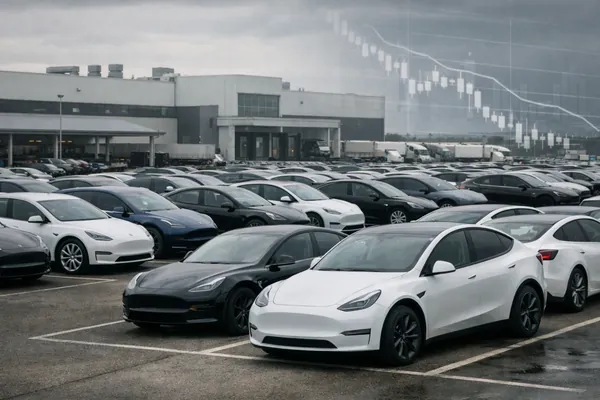
Tesla quarterly deliveries fall more sharply than markets anticipated, marking another pivotal moment for the world’s most closely watched electric vehicle manufacturer. The latest figures underscore mounting pressure from slowing global EV demand, intensifying competition, and shifting government incentives. While Tesla remains a dominant force in electric mobility, its recent performance highlights broader structural challenges confronting the EV industry as it enters a more mature and competitive phase.
Tesla’s Rise and the Changing EV Landscape
For over a decade, Tesla defined the global electric vehicle revolution. Its early-mover advantage, vertically integrated production model, and powerful brand identity enabled rapid expansion across North America, Europe, and parts of Asia. Annual delivery growth became central to Tesla’s valuation and investor confidence.
By the mid-2020s, however, the EV market began to shift. Legacy automakers accelerated their electrification strategies, while Chinese manufacturers expanded aggressively into global markets. At the same time, higher interest rates, inflationary pressures, and the rollback of government subsidies reduced consumer appetite for high-priced electric vehicles.
Deliveries Miss Market Expectations
According to Reuters, Tesla delivered approximately 418,000 vehicles in the fourth quarter of 2025, representing a year-on-year decline of more than 15 percent. The figure fell well short of Wall Street expectations and marked one of the company’s weakest quarterly performances in recent years.
For the full year, Tesla delivered roughly 1.64 million vehicles, down from around 1.79 million the year before. This marked the second consecutive year of declining annual deliveries — a sharp departure from Tesla’s long-standing growth narrative.
Key contributors to the decline include cooling EV demand in the United States and Europe, the expiration of major EV tax incentives, intensifying competition from Chinese and European manufacturers, and growing consumer caution amid economic uncertainty.
Why Tesla Quarterly Deliveries Fall Matters
The fact that Tesla quarterly deliveries fall carries significance beyond the company itself. Tesla has long served as a bellwether for global EV adoption. When its deliveries slow, it often reflects broader industry headwinds rather than isolated corporate missteps.
One major factor is policy dependence. Electric vehicle adoption in many regions has been closely tied to government subsidies. As incentives expire or shrink, underlying price sensitivity becomes more visible, particularly among mainstream buyers.
Market saturation is another challenge. In mature EV markets, early adopters already own electric vehicles, leaving manufacturers to compete for cost-conscious consumers who may be hesitant to switch.
Competition and Strategic Shifts
In 2025, Tesla lost its position as the world’s largest EV maker to China’s BYD, highlighting the growing influence of Chinese manufacturers in the global market. BYD’s broader product mix, including lower-cost models and plug-in hybrids, has proven more resilient as subsidies decline.
Tesla has increasingly emphasized long-term initiatives such as autonomous driving software, artificial intelligence, robotics, and energy storage to sustain investor interest. While these projects may shape Tesla’s future valuation, they offer limited short-term relief for declining vehicle deliveries.
Market Reaction and Industry Response
Financial markets reacted cautiously to Tesla’s delivery report. Shares experienced volatility as investors reassessed near-term growth prospects. Analysts noted that while Tesla remains financially strong, sustained delivery declines could pressure margins and force further price competition.
Industry experts emphasized that Tesla’s challenges reflect a broader normalization of the EV sector rather than a collapse in demand. As the industry matures, growth is becoming harder to sustain without pricing power, infrastructure improvements, and policy support.
Global Impact and Broader Implications
The fact that Tesla quarterly deliveries fall has implications across the global automotive industry. Governments may reassess EV incentive structures, automakers may slow expansion plans, and suppliers may adjust capacity forecasts.
For consumers, increased competition could ultimately lead to lower prices and better technology. However, uncertainty around charging infrastructure, resale values, and long-term battery performance continues to influence purchasing decisions.
Conclusion
Tesla quarterly deliveries fall represents a defining moment for both Tesla and the global electric vehicle market. While Tesla remains an innovation leader, it now faces a more competitive and economically constrained environment. The coming years will test its ability to balance affordability, scale, and technological ambition in a rapidly evolving industry.
Related Global Standard News Coverage
- Mercedes Diesel Settlement Signals Tougher Emissions Enforcement
- Volkswagen Expands China Exports Amid Global EV Competition