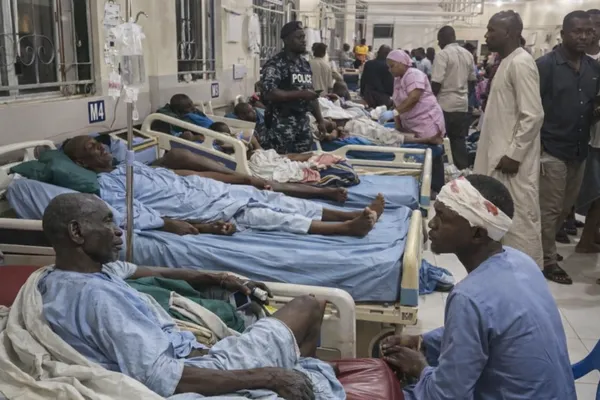
An explosion inside a crowded mosque in Maiduguri, Nigeria, on the evening of December 24, 2025, killed at least five worshippers and left dozens injured. Authorities believe the blast was carried out by a suspected suicide bomber, underscoring ongoing security challenges in northeastern Nigeria and the resilience of armed extremist groups.
Insurgency in Northeastern Nigeria
Nigeria’s northeastern region, particularly Borno State and the city of Maiduguri, has suffered from a violent insurgency for nearly two decades. The militant Islamist group Boko Haram and its splinter faction, the Islamic State West Africa Province (ISWAP), have waged campaigns of terror involving bombings, raids, kidnappings, and attacks on civilian populations since 2009.
The insurgency has caused widespread displacement, with millions forced from their homes, and thousands of lives lost. Although military efforts have reduced large-scale attacks, extremist groups continue to operate and retain the capability to conduct deadly strikes on soft civilian targets.
What Happened: Details of the Attack
On the evening of Wednesday, December 24, 2025, at about 6:00 p.m. local time, a powerful explosion rocked the Al-Adum Juma’at Mosque in the Gamboru Market area of Maiduguri while Muslim worshippers gathered for Maghrib (evening) prayers.
Police and eyewitness accounts indicate the blast occurred inside the crowded mosque, causing immediate chaos and panic as panic spread through the congregation.
Casualties
- At least five people were killed in the explosion. :contentReference[oaicite:5]{index=5}
- Around 35 worshippers were injured and rushed to nearby hospitals for treatment.
- Some community leaders and Muslim faithful suggest a few additional fatalities among the critically wounded, but official figures remain at five confirmed deaths.
Suspected Method
Authorities suspect the explosion was caused by a suicide bomber, with police reporting the recovery of fragments of a suspected suicide vest at the scene and early witness testimony supporting this view. :contentReference[oaicite:8]{index=8} No group has formally claimed responsibility for the bombing.
Evolving Extremist Threats and Security Gaps
The timing of this attack — on Christmas Eve and during evening prayers — highlights a deliberate tactic intended to maximize psychological impact and casualties. Religious sites, often seen as sanctuaries, are nonetheless targeted by violent actors seeking to undermine public confidence and instill fear.
Despite ongoing military operations under Nigeria’s Operation Hadin Kai, extremist groups like Boko Haram and ISWAP have adapted by dispersing into smaller cells and embracing asymmetric tactics, including roadside bombs and suicide attacks.
Security experts note challenges remain:
- Extremist cells exploit porous borders with Niger, Chad and Cameroon to regroup and acquire weapons.
- Urban markets and densely populated locations provide cover for attackers.
- Resource constraints and competing political priorities complicate sustained security operations.
The attack also comes at a time of heightened national debate over security, with opposition political figures criticizing the government’s response to recurring violence.
Reactions and Statements
Government and Security Officials
Borno State Governor Babagana Umara Zulum condemned the attack as “utterly condemnable, barbaric and inhumane,” stressing that religious places should be protected. :contentReference[oaicite:13]{index=13} Security forces have since increased patrols and deployed additional units to guard markets, mosques, churches and major public spaces.
Political Responses
The Nigeria opposition party, the People’s Democratic Party (PDP), condemned the bombing and called for urgent and concrete action to improve national security, emphasizing that “no one should lose their life while worshipping God.”
Public and Community Reaction
Residents of Maiduguri expressed shock and grief, with many shoppers and worshippers recounting scenes of panic as the blast reverberated through the busy market area. Community leaders called for calm while urging authorities to step up protection for civilian spaces
Local and Regional Implications
At a local level, the mosque bombing has shaken a city that — despite its history of violence — has enjoyed relative calm in recent years. The attack risks reigniting fear among congregations and traders in Gamboru Market, potentially impacting economic activity and community cohesion.
Regionally, the incident underscores that violent extremism in the Lake Chad Basin remains a persistent threat. Partners like the United Nations and members of the Multinational Joint Task Force continue to prioritize counter-terrorism cooperation, but sporadic attacks remind the international community that the threat is ongoing.
Conclusion
The Nigeria mosque explosion in Maiduguri on Christmas Eve is a stark reminder that security challenges persist in parts of the country long affected by militant insurgencies. As authorities investigate and bolster security measures, communities continue to grapple with the human cost of extremist violence and the ongoing struggle for peace and stability in the region.
Related GSN Reports
- South Africa Tavern Shooting: Deadly Night at East Rand Bar
- Tanzania Election Protest Killings: Escalating Political Tension