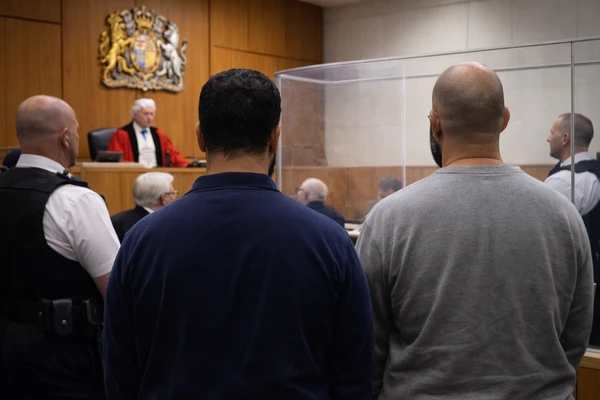
The UK terrorism plot against the Jewish community uncovered by British authorities has culminated in the conviction of two men accused of planning a mass-casualty attack that prosecutors say could have rivaled the deadliest terror incidents in the country’s history. The case highlights persistent extremist threats in Europe even as large-scale militant groups lose territorial control abroad. At its core, the plot underscores growing concerns about antisemitic violence, lone-cell radicalization, and the evolving nature of terrorism in the United Kingdom.
Terror Threats and Jewish Community Security in the UK
The United Kingdom has long maintained one of Europe’s most robust counterterrorism frameworks, shaped by decades of experience combating both domestic and international extremist threats. From conflicts with the Irish Republican Army to Islamist and far-right ideologies, UK security services have adapted to shifting landscapes.
Jewish communities across Britain—especially in London, Manchester, and parts of northwest England—have remained under heightened protection for years. Synagogues, schools, and community centers coordinate with police due to historic and contemporary threats. UK government assessments show antisemitic incidents often rise during geopolitical tensions, amplified by online radicalization and hate speech.
The UK terrorism plot against the Jewish community fits into this context: a convergence of extremist ideology, online propaganda, and operational planning that increasingly relies on small, decentralized networks rather than centralized command structures.
Inside the Foiled Terror Plot
On December 23, 2025, a jury at Preston Crown Court found Walid Saadaoui (38) and Amar Hussein (52) guilty of preparing terrorist acts related to a planned attack against Jewish targets in northwest England. A third man, Bilel Saadaoui (36)—Walid’s brother—was convicted of failing to disclose information about the plot.
Prosecutors told the court the men were inspired by the ideology of the so-called Islamic State and had discussed launching a mass shooting intended to kill large numbers of civilians. They sought access to automatic firearms and significant ammunition, believing such weapons could be smuggled into the UK.
Authorities disrupted the plot through an undercover operation. Walid Saadaoui was arrested in May 2024 after attempting to acquire weapons from someone he believed was a militant contact but who was an undercover police officer. Surveillance evidence and encrypted communications were central to the convictions.
Prosecutors warned that had the UK terrorism plot against the Jewish community succeeded, it could have resulted in casualties unseen in modern British history.
According to reporting by Reuters, police described the plot as extremely dangerous and emphasized the importance of early intervention.
What This Case Reveals About Modern Terrorism
The convictions reveal several critical trends shaping terrorism in the UK and beyond.
First, extremist threats no longer hinge on large, structured cells. Small networks and even individuals can now move quickly from online radicalization to operational planning. The men convicted in this case were ideologically motivated actors seeking to replicate mass-casualty attacks seen globally.
Second, the focus on Jewish targets underscores a disturbing global rise in antisemitic violence. Extremist propaganda frequently frames Jewish communities as symbolic enemies, making them recurring targets worldwide regardless of local context.
Third, the case highlights the effectiveness—and debate—around undercover policing. While such tactics raise civil liberties questions, UK authorities argue early intervention is essential to prevent loss of life. In this instance, intelligence-led disruption stopped a potentially catastrophic event before weapons were obtained.
This mirrors patterns seen in other security events, such as the South Africa tavern shooting, where community resilience and preventative measures are critical.
Global and local counterterrorism strategies increasingly focus on combining enforcement with prevention, similar to how nations address public health crises like Japan’s approach to nuclear energy restart challenges covered in our related reporting.
Reactions and Official Responses
UK officials emphasized the seriousness of the convictions. A senior counterterrorism official described the plot as “one of the most dangerous we have disrupted in recent years,” noting the suspects demonstrated clear intent and capability.
Jewish community leaders welcomed the verdicts but warned against complacency. Regional Jewish organizations reiterated calls for continued security funding, education against antisemitism, and stronger online regulation to curb extremist content.
Legal experts highlighted the importance of the “preparing terrorist acts” charge, allowing authorities to intervene before violence occurs. Civil rights advocates, however, urged transparency to ensure such powers are not overextended.
Analysis by BBC News underlines the ongoing threat environment in the UK and Europe, noting both community concerns and policing challenges.
Global and Local Impact
Locally, the convictions reinforce the importance of vigilance and community-police cooperation. Jewish institutions in northwest England are expected to maintain enhanced security protocols, while local councils review emergency preparedness measures.
Globally, the UK terrorism plot against the Jewish community feeds into wider debates about extremism in the post-Islamic State era. While the group has lost territorial control in Iraq and Syria, its ideology persists online, inspiring attacks far from conflict zones.
European governments are increasingly coordinating intelligence efforts around weapons trafficking and digital radicalization. The case also serves as a warning to diaspora communities worldwide that geopolitical conflicts can have localized security consequences, reinforcing that terrorism prevention requires broad societal resilience.
Conclusion
The convictions stemming from the UK terrorism plot against the Jewish community mark a significant victory for British counterterrorism efforts—but also a sobering reminder that extremist ideologies remain active across digital and physical spaces. Preventing terrorism today depends as much on early intelligence and community engagement as it does on policing alone.