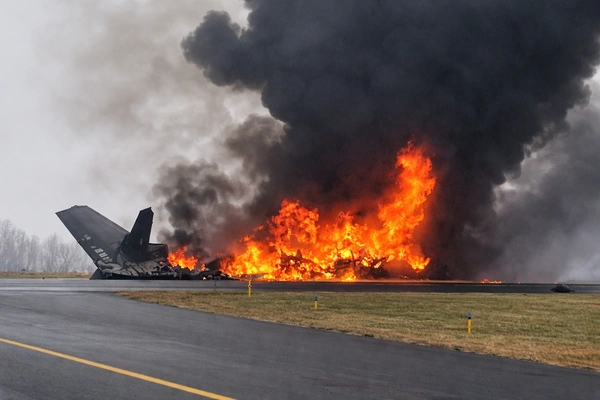
The Statesvill Airport plane crash has sent shockwaves through North Carolina and the wider aviation community after a privately operated business jet went down during an attempted landing, killing multiple people on board. Federal investigators are now working to determine what caused the aircraft to crash and erupt into flames, as authorities caution that definitive answers may take months.
Statesville Regional Airport and the Rise of Business Jet Operations
Statesville Regional Airport (KSVH) is a general aviation airport located in Iredell County, approximately 45 miles north of Charlotte. The facility primarily serves private aircraft, corporate jets, charter flights, and medical transport operations rather than commercial airline traffic.
Over the past decade, airports like Statesville have seen increased business aviation activity, driven by corporate travel demands and the growth of private jet use across the United States. While such airports offer convenience and reduced congestion, they also operate with shorter runways and fewer navigational aids than major commercial hubs, factors that can complicate flight operations during adverse conditions.
Timeline, Aircraft, and Emergency Response
According to information released by local authorities and federal regulators, the aircraft involved in the Statesville Airport plane crash was a Cessna 550 Citation II, a twin-engine business jet commonly used for corporate and charter travel.
The jet crashed shortly before 10:20 a.m. local time on Thursday, December 18, 2025, while attempting to land at Statesville Regional Airport. The impact triggered a significant post-crash fire, which was visible from surrounding communities.
Emergency crews from Iredell County responded rapidly, but the intensity of the fire limited immediate access to the wreckage. Authorities have confirmed multiple fatalities. While early flight information indicates that up to six people may have been on board, officials have not released an official death toll or identified the victims, pending family notifications.
Public aviation records show the aircraft was registered to GB Aviation Leasing LLC, a company linked to retired NASCAR driver Greg Biffle. Investigators have emphasized that ownership does not confirm who was aboard, and no passenger identities have been officially confirmed.
FAA and NTSB Launch Full Federal Investigation
The Federal Aviation Administration (FAA) and the National Transportation Safety Board (NTSB) have opened a formal investigation into the crash. The NTSB will lead the inquiry, examining wreckage, maintenance records, pilot qualifications, air traffic communications, and environmental conditions.
Investigators are also reviewing preliminary flight-tracking data, which suggests the aircraft may have departed and then returned toward Statesville Regional Airport shortly before the crash. Officials stress that flight-path data alone does not indicate cause and must be corroborated with physical and electronic evidence.
The NTSB has cautioned that determining a probable cause could take several months, with interim updates released only if urgent safety issues are identified.
Why the Statesville Crash Raises Broader Aviation Safety Questions
The Statesville Airport plane crash highlights persistent safety challenges within general and business aviation. While U.S. commercial airlines maintain strong safety records, private jet operations face different operational pressures, including smaller crews, tighter schedules, and greater exposure to weather variability.
Airport Infrastructure: Regional airports often lack advanced landing systems available at major hubs. During periods of reduced visibility or wet runway conditions, these limitations can increase risk.
Human Factors: Business jet crews typically operate with fewer pilots, increasing workload during critical phases such as landing. Investigators will closely examine pilot decision-making, fatigue, and cockpit coordination.
Emergency Preparedness: Although first responders acted swiftly, post-impact jet fuel fires can overwhelm even well-trained local emergency services, underscoring the importance of mutual aid planning.
Official Statements and Community Response
Local officials described the crash as one of the most serious aviation incidents in Iredell County’s history. Emergency management authorities have activated support services for first responders and affected families.
The FAA reiterated that no conclusions should be drawn until the investigation is complete. Aviation safety experts have echoed that sentiment, warning against speculation while emphasizing the need for evidence-based findings.
Residents near the airport reported seeing heavy smoke and flames shortly after the crash, with many expressing shock and condolences through local community channels.
Related Global Standard News Coverage
- SpaceX’s $800 Billion Valuation and the Expanding Private Aviation Economy
- Trump Migration Halt and Its Impact on Global Transport and Mobility
Local Tragedy, Global Implications
While the crash occurred at a regional airport in North Carolina, its implications extend far beyond the local community. Private aviation continues to grow globally, making safety oversight at non-commercial airports an increasingly important regulatory issue.
Incidents like this often prompt reviews of runway standards, weather reporting systems, and emergency response coordination, both in the United States and internationally.
Authoritative External Sources
- National Transportation Safety Board – Aviation Investigations
- Federal Aviation Administration Newsroom
- Reuters – U.S. News
Awaiting Answers as the Investigation Continues
As investigators work to determine what led to the Statesville Airport plane crash, families await clarity and the aviation industry watches closely. The findings will be critical not only for accountability but for improving safety across general aviation.
Global Standard News will continue to provide verified updates and in-depth reporting as official information becomes available.