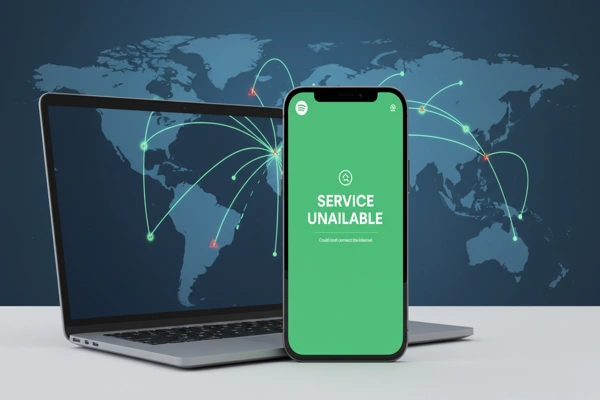
The Spotify outage recorded on December 15, 2025, temporarily cut off access to music and podcast streaming for users across multiple continents. Reports of playback failures, login errors, and app instability surged within hours, prompting widespread frustration among listeners and creators alike. Although Spotify acknowledged technical issues, the absence of immediate technical clarity highlighted the broader challenges faced by global digital platforms operating at massive scale.
Spotify’s Global Infrastructure and Dependency Risks
Spotify is one of the world’s largest audio streaming platforms, serving hundreds of millions of users across more than 180 countries. Its ecosystem relies on complex cloud infrastructure, distributed servers, and third-party content delivery networks to ensure uninterrupted service. While this architecture allows for rapid scaling, it also introduces systemic risk when a single component fails.
In recent years, outages affecting global platforms have underscored how digital services are increasingly interconnected. Similar disruptions have impacted social media platforms, financial applications, and even public-sector digital tools. GSN has previously examined how dependency on centralized infrastructure can expose users to sudden service interruptions, particularly during periods of high traffic or configuration failures.
For example, GSN’s analysis of China’s renewed crypto mining surge highlighted how infrastructure strain and regulatory gaps can create unexpected ripple effects across digital systems.
Timeline of the Spotify Outage
The Spotify outage began in the early hours of December 15, with a sharp spike in user complaints reported through outage-tracking platforms. Users in the United States, United Kingdom, Canada, and several European countries reported being unable to stream music, search for content, or load playlists.
According to real-time monitoring data, the most common issues included complete app failure, repeated error messages, and partial access where offline content worked but live streaming did not. Desktop and mobile users were affected simultaneously, indicating a backend service disruption rather than a device-specific bug.
Spotify’s official support channels acknowledged “ongoing issues” but did not immediately provide a root cause or estimated restoration time. While some users later reported gradual service restoration, reports of instability persisted throughout the day.
Why Large Platforms Still Go Offline
The Spotify outage illustrates a persistent reality in modern cloud computing: scale does not eliminate failure. Large platforms depend on layers of services — authentication systems, databases, caching layers, and global routing — all of which must function simultaneously.
Industry analysts note that outages often stem from configuration errors, software updates gone wrong, or failures within third-party infrastructure providers. Even minor misconfigurations can cascade into global disruptions within minutes.
GSN has explored similar digital vulnerability issues in other sectors. In a recent technology policy feature, GSN examined concerns over digital surveillance tools and system overreach, emphasizing how dependence on centralized digital systems can expose both users and institutions to unintended consequences.
Public and Industry Reactions
User reaction to the outage was swift and vocal. Social platforms filled with complaints from listeners unable to access daily playlists, podcasts, or downloaded libraries. For many users, Spotify functions as an everyday utility — used during commuting, work, and exercise — making even short disruptions highly visible.
Technology analysts stressed the importance of transparency during such incidents. Clear communication, frequent updates, and post-incident explanations are now expected standards for platforms of Spotify’s size.
Content creators and podcasters also expressed concern, noting that outages disrupt listener engagement metrics, advertising impressions, and scheduled content releases — all of which have revenue implications.
Why the Spotify Outage Matters Beyond Music
While the immediate impact of the Spotify outage was entertainment-related, the broader implications extend further. Streaming platforms increasingly serve as distribution channels for news, education, and cultural content. Disruptions therefore affect not only leisure but also information access.
In emerging markets, where streaming adoption is still growing, outages can slow user trust and platform loyalty. Temporary migration to competing services during disruptions can become permanent, particularly in price-sensitive regions.
From an investor and policy standpoint, repeated service outages across the tech sector are prompting renewed discussions about infrastructure resilience, redundancy, and accountability in global digital services.
Lessons from the Spotify Outage
The December 15, 2025 Spotify outage serves as a reminder that even the most established digital platforms remain vulnerable to systemic failures. While service was gradually restored, the incident underscores the need for stronger infrastructure safeguards, diversified dependencies, and clearer public communication.
As reliance on streaming and cloud-based platforms continues to grow worldwide, resilience — not just innovation — will define long-term trust and sustainability in the digital economy.