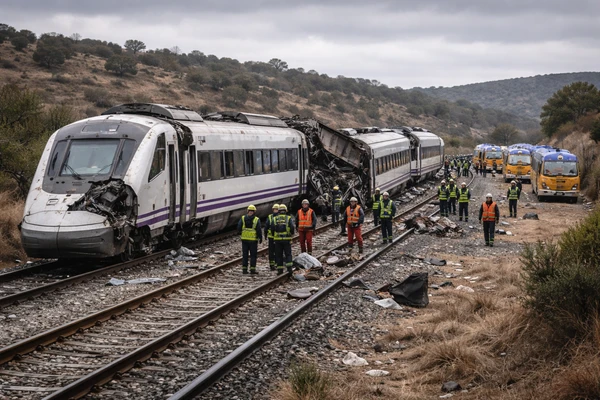
The Japan 7.6 Earthquake has sent shockwaves—both physical and emotional—across the country’s north-east coast. Striking at around 23:15 local time (14:15 GMT), the powerful quake shook homes, offices, and infrastructure for up to a minute in some areas, prompting urgent tsunami alerts and late-night evacuations. From Aomori down through parts of Tohoku, residents fled to higher ground as sirens sounded and emergency alerts flashed on mobile phones. While Japan is one of the best-prepared nations in the world for earthquakes, the scale of the Japan 7.6 Earthquake has once again exposed the delicate balance between preparedness and the raw force of nature.
Life on the Pacific Ring of Fire
Japan lies along the notorious Pacific Ring of Fire, where several tectonic plates interact and generate frequent seismic activity. The Japan 7.6 Earthquake is the latest in a long line of significant tremors, following historic events such as the 1995 Kobe earthquake and the 2011 Tōhoku earthquake and tsunami. The 2011 disaster, in particular, left more than 18,000 people dead or missing and triggered the Fukushima Daiichi nuclear crisis—an event that reshaped global nuclear safety standards.
Since then, billions of dollars have been invested in upgrading infrastructure, strengthening building codes, and expanding Japan’s early-warning systems. The Japan Meteorological Agency (JMA) has refined its monitoring network, enabling automatic alerts that can reach millions of people seconds before strong shaking arrives. Yet, as the Japan 7.6 Earthquake demonstrates, no system can fully eliminate the risks posed by a powerful offshore quake.
Official data from the Japan Meteorological Agency (JMA) confirms that this earthquake struck in a region of elevated stress that has been closely monitored since the 2011 Tōhoku event. It is another reminder that seismic risk in this part of Japan is long-term, complex, and evolving.
Tsunami Alerts, Evacuations, and Disruption
According to JMA, the Japan 7.6 Earthquake occurred at a depth of around 50km (31 miles), roughly 80km off the coast of the Aomori region in north-eastern Japan. The shaking was felt widely across the Tohoku region and as far south as Tokyo, where high-rise buildings swayed and some train lines briefly halted as a precaution.
Tsunami Warnings and Wave Heights
Immediately after the quake, tsunami warnings were issued for parts of the north-east coast. Coastal communities were told to evacuate to higher ground and avoid rivers, harbours, and beaches. As more readings came in, waves of around 70cm (27 inches) were recorded along portions of the coastline. While this was significantly lower than the multi-metre waves feared in worst-case scenarios, experts stressed that even relatively modest tsunami heights can generate powerful currents and dangerous conditions.
As the situation stabilised, authorities downgraded full tsunami warnings to advisories, but urged residents not to return immediately to the shore. The Japan 7.6 Earthquake once again showed how quickly Japan’s alert systems can mobilise millions of people, but also how complex it is to balance caution with real-time data as more precise measurements become available.
Evacuations and Injuries
At the height of the emergency, government officials ordered approximately 90,000 residents across several north-eastern prefectures to evacuate low-lying and coastal areas. Many spent the night in schools, community centres, and designated evacuation shelters. Some families arrived with emergency kits in hand, reflecting the lessons learned from previous disasters and regular evacuation drills.
Early government reports confirmed that at least seven people were injured in incidents linked to the Japan 7.6 Earthquake. Injuries included fractures, falls during evacuation, and people struck by falling objects inside homes and shops. Authorities have warned that casualty figures could rise as damage assessments continue, particularly in remote or mountainous communities that are harder to reach in the immediate aftermath.
Transport, Power and Infrastructure
The quake caused notable disruption to transport and critical infrastructure. Shinkansen (bullet train) services along parts of the north-east corridor were suspended as engineers inspected tracks and overhead lines for damage. Some expressways were closed due to cracks, rockfalls, and minor landslides. Local train services were also briefly halted in areas close to the epicentre.
Power cuts hit tens of thousands of homes and businesses, although electricity companies began restoring supply within hours in many urban centres. In smaller coastal towns, however, residents reported extended outages and damage to local water pipes. The Japan 7.6 Earthquake also triggered minor structural damage to older buildings, including cracked walls, collapsed roof tiles, and damaged shopfronts.
Nuclear Plant Status: No Irregularities Reported
Given Japan’s nuclear legacy, any major quake immediately raises concerns about nuclear safety. In this case, Tohoku Electric Power and other operators reported no irregularities at the Higashidori and Onagawa nuclear power plants following the Japan 7.6 Earthquake. Monitoring systems indicated that reactors and cooling systems remained stable.
Officials also reported no new issues at the disabled Fukushima Daiichi nuclear site, which has remained under long-term stabilisation and decommissioning work since 2011. Radiation levels and key safety indicators remained within expected ranges. These announcements helped to reassure a public still highly sensitive to the possibility of another nuclear-related emergency.
Rapid Activation and Public Warnings
Prime Minister Sanae Takaichi quickly activated an emergency crisis management centre in Tokyo after the Japan 7.6 Earthquake. In a televised address, she called on residents to remain calm but vigilant, emphasising the importance of preparedness and swift evacuation when necessary.
“Reconfirm your daily earthquake preparedness, such as securing furniture, and be ready to evacuate immediately if you feel strong shaking,” Takaichi urged. She also pledged that the government would “make every effort to assess the damage and implement emergency disaster response measures, including rescue and relief operations.”
National and local authorities coordinated through the crisis centre, the National Police Agency, the Fire and Disaster Management Agency, and the Japan Coast Guard. Helicopters and drones were deployed to survey affected areas, while emergency teams on the ground focused on search-and-rescue efforts, debris clearance, and restoring access to critical infrastructure.
What the Japan 7.6 Earthquake Reveals
For seismologists, the Japan 7.6 Earthquake reinforces long-standing warnings about the region’s seismic volatility. The offshore epicentre sits within a zone where tectonic stress has been building for years. Experts say that while the quake itself was powerful, its depth and offshore location helped limit the most catastrophic impacts—though this is little comfort to those whose homes and livelihoods were disrupted.
The likelihood of strong aftershocks remains a significant concern. Historically, Japan has experienced aftershocks above magnitude 6.0 in the days and weeks following a major event. Authorities are urging residents to stay prepared, avoid unstable structures, and pay attention to official guidance. The Japan 7.6 Earthquake is expected to prompt further research into how stress is transferring along nearby fault lines.
Economic analysts note that any prolonged interruption to transport, manufacturing, or port operations in the north-east could have ripple effects across global supply chains. The region hosts key facilities for automotive components, electronics, and other exports. Outlets such as BBC News and other international media have already highlighted how closely global markets now track major quakes in Japan because of this interconnectedness.
In the aftermath of events like the Japan 7.6 Earthquake, reliable power, communication, and first aid can save lives. These items are practical options for households preparing for emergencies. If you purchase through these links, Global Standard News may earn a small commission at no extra cost to you.
- Multiple output ports for phones, lights, and small devices.
- Compact design for use at home or in evacuation shelters.
- Compatible with solar panels (sold separately) for extended outages.
- Includes bandages, tools, and essential survival gear.
- Easily attaches to backpacks or vehicle seats.
- Suitable for home, car, or evacuation centres.
- Receives NOAA weather and emergency alerts.
- Multiple power options: solar, crank, USB, and batteries.
- Built-in flashlight and phone charging for blackouts.
Fear, Memory and Resilience
Across social media and television broadcasts, the human side of the Japan 7.6 Earthquake has been on full display. Videos show swaying high-rises, rattling interiors, and hurried evacuations under tsunami sirens. For many, the emotional impact has been as significant as the physical damage, particularly for those who lived through 2011.
“The shaking was so strong that I couldn’t stand still,” a resident of Hachinohe told local media. “When the tsunami sirens started, all the memories from 2011 came rushing back.” Similar comments have echoed across the region as people share stories of fear, quick thinking, and community support.
Internationally, governments and organisations expressed solidarity with Japan, praising its preparedness and offering assistance if needed. The United Nations Office for Disaster Risk Reduction (UNDRR) highlighted the importance of early-warning systems, noting that Japan’s investments in preparedness are once again helping to save lives during major emergencies like the Japan 7.6 Earthquake.
Global Standard News has covered how different types of crises test systems in unique ways—from digital vulnerabilities examined in the South Korea camera hack scandal to the physical destruction seen in the Afghanistan earthquake disaster. Together, these stories underline a central reality: resilience depends not only on infrastructure, but also on trust, communication, and community.
Global and Local Impact of the Japan 7.6 Earthquake
Locally, the Japan 7.6 Earthquake has disrupted daily life across the north-east. Schools in the most affected areas closed temporarily as staff inspected buildings for structural damage. Fishing fleets remained docked while coastal waters were monitored for lingering tsunami effects and debris. Tourism-dependent towns reported cancellations as travellers reconsidered trips to the region.
Globally, markets briefly reacted to news of the quake, with some analysts warning of potential supply chain delays if factories or ports sustained significant damage. Japan’s role as a key producer of automotive parts, electronics, and industrial components means that even short-term disruptions can have knock-on effects far beyond its borders.
Regional neighbours such as South Korea, Taiwan, and the Philippines issued maritime advisories and monitored wave data, underscoring how a single seismic event in Japan can influence safety decisions and economic expectations across the wider Asia-Pacific region.
A Renewed Test of Japan’s Resilience
The Japan 7.6 Earthquake is a powerful reminder that, despite world-leading preparedness, Japan will always live with seismic risk. Yet it is also a testament to the country’s resilience. Rapid alerts, orderly evacuations, and clear public communication helped to reduce the impact of this major event and prevented a far worse outcome.
As aftershocks continue and full damage assessments unfold, communities along the north-east coast face a familiar challenge: rebuilding, recovering, and learning from yet another encounter with the forces of the earth. For Japan—and for the world watching—this earthquake underscores the enduring need for investment in early-warning systems, resilient infrastructure, and community-based preparedness.