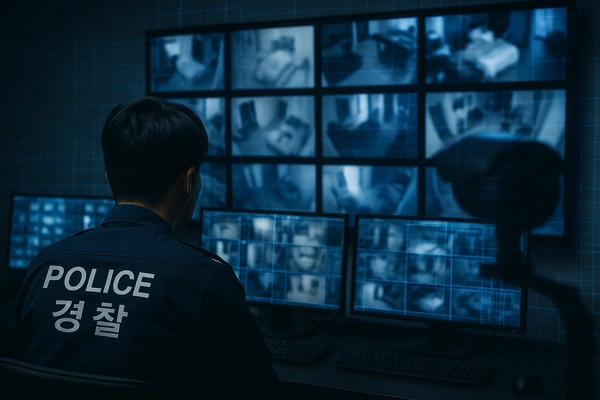
South Korea Camera Hack has become the latest symbol of how modern smart homes can be turned against the very people they are meant to protect. After police revealed that more than 120,000 home and business cameras were allegedly hacked and used to create sexually exploitative footage for an overseas website, the country is once again confronting the dark side of its hyper-connected society — and the world is paying attention.
A Hyper-Connected Nation with a Digital Sex Crime Problem
South Korea is one of the most wired societies on earth. High-speed internet, smart TVs, connected appliances and app-controlled home cameras are part of everyday life. Affordable internet protocol (IP) cameras — small devices that stream footage over Wi-Fi rather than closed-circuit television (CCTV) cables — are widely used to monitor children, pets, domestic helpers, small businesses and even medical spaces.BBC News
But this convenience sits on top of a long-running crisis: so-called molka crimes, in which hidden or hacked cameras are used to secretly film women and men in bathrooms, changing rooms, hotels and workplaces. Human Rights Watch and other rights groups have repeatedly warned that South Korea leads the world in digital sex crimes linked to hidden cameras and online exploitation.
In recent years, high-profile crackdowns on hidden cameras in public toilets, swimming pools and motels have led to thousands of devices being seized. Despite this, perpetrators have increasingly shifted from physically installing hidden cameras to hijacking legitimate IP cameras already installed inside homes and businesses. The South Korea Camera Hack case represents the largest known incident of this kind so far — and it has revived fears that anyone with a smart camera could be at risk.
Current Development: 120,000 Cameras, Four Suspects and a Global Website
According to South Korea’s National Police Agency (NPA), four people have been arrested on suspicion of hacking more than 120,000 internet-connected cameras and using the footage to create sexually exploitative material for an overseas pornography website. The case, now widely known as the South Korea Camera Hack investigation, has shocked a public already weary of digital sex crimes.
Police say the suspects did not operate as a single coordinated gang, but instead acted independently. Each allegedly broke into vulnerable IP cameras that were protected by weak, easy-to-guess credentials — passwords such as “1111” or simple sequential combinations of letters and numbers. Once inside, they scanned live feeds from homes, apartments and offices, bookmarking scenes that could be turned into sexual content.
In one of the most serious cases, an unemployed man is accused of hacking approximately 63,000 cameras, compiling 545 sexually exploitative videos and selling them through overseas platforms in exchange for around 35 million won (about US$24,000) in cryptocurrency.Washington Post
Another suspect allegedly compromised about 70,000 cameras, creating 648 videos and earning around 18 million won.
The hacked cameras were not limited to private homes. Police say compromised devices were found in karaoke rooms, a Pilates studio and even a gynecologist’s clinic, underlining how the South Korea Camera Hack blurred the line between everyday spaces and intimate environments where privacy should be absolute.
Authorities have so far identified victims in at least 58 locations and are continuing to notify them, offering guidance on how to change passwords, secure their devices and request takedowns of any footage that may have been shared online.
How Weak Security Turned Smart Cameras into Surveillance Weapons
At the heart of the South Korea Camera Hack scandal is a simple but uncomfortable truth: many IP cameras are shipped with weak default passwords or are set up in a rush, with owners leaving them on simple codes that are easy for attackers to guess. In some cases, cameras are exposed to the open internet with no firewall, making them searchable through specialized tools that scan for vulnerable devices.
Cybersecurity experts have long warned that cheap smart-home devices are often designed with convenience — not security — as the top priority. When thousands of households reuse the same simple passwords across multiple services, a single data breach can give hackers a roadmap into their cameras, routers and cloud accounts. In the South Korea Camera Hack, police say that weak or default credentials were enough to let intruders quietly observe daily life and harvest intimate moments at scale.
This is not just a South Korean problem. Around the world, there have been multiple cases of IP camera feeds being hijacked for harassment, extortion or voyeurism. In 2019, a U.S. family reported that their Ring camera, installed in their child’s bedroom, had been hacked; an intruder used the two-way audio feature to speak to the child, underscoring how quickly a “security” device can become a threat if poorly protected.
For South Korea, the case lands at a moment when the country is also grappling with broader digital crime trends — from massive data leaks to cryptocurrency-linked schemes. Global Standard News has previously reported on how emerging technologies and underground online markets enable offenders to move money and operate across borders, including in stories such as China Crypto Mining Surge Defies Ban in Stunning Rebound. The South Korea Camera Hack highlights a related reality: once illicit footage is created, it can be traded in encrypted channels and monetized in cryptocurrency with alarming ease.
At the same time, the scandal echoes broader concerns about identity fraud, surveillance and cross-border crime that Global Standard News has explored in cases like UK Visa Fraud Ghana: 1,632 Applicants Hit With 10-Year Ban. In all these cases, digital tools and weak controls become the leverage exploited by criminals — whether they are forging documents or hijacking cameras.
🔐 Practical Ways to Protect Your Home Cameras and Privacy
The South Korea Camera Hack shows how weak passwords and exposed devices can put families at risk. These privacy and security tools are examples of what readers can use to better protect their homes and devices. (Some links may be affiliate links — at no extra cost to you.)
A latest-generation smart camera with 2.5K resolution, color night vision and on-device AI. Useful for replacing older, insecure cameras and giving you more control over what is recorded and where it is stored.
View WYZE Cam v4A sturdy mounting bracket that helps secure compatible video doorbells against theft or tampering at apartments, houses and small businesses — a useful physical layer of protection on top of digital security.
View KIMILAR Anti-Theft MountUltra-thin metal webcam covers for laptops, tablets and phones. A simple, low-cost way to block unwanted access to your camera and reduce the risk of visual spying on personal devices.
View CloudValley Webcam CoversReactions: Outrage, Fear and Renewed Calls for Reform
Public reaction to the South Korea Camera Hack has been swift and angry. Women’s rights advocates and digital privacy campaigners say the case confirms what they have warned for years — that existing legal and technical safeguards are still not enough to protect people from invisible surveillance in their own homes.
Park Woo-hyun, a senior cyber-investigation official at the NPA, condemned the attacks as “extremely serious crimes” that cause deep psychological harm to victims, vowing to “eradicate” IP-camera hacking and illegal filming through aggressive investigations.
Online, the South Korea Camera Hack has reignited debates about whether it is still safe to have cameras inside homes at all. Some users on Korean social platforms have pledged to switch off or uninstall their home cameras; others argue that with proper passwords, encryption and network settings, cameras can still be used responsibly.
Internationally, privacy experts say the case should be a wake-up call. As more countries roll out smart-city and smart-home initiatives, they warn that without rigorous minimum security standards for consumer devices, similar mass hacking incidents could occur elsewhere.
Global and Local Impact: Lessons for Families, Regulators and Tech Firms
The South Korea Camera Hack is more than a national scandal; it is a preview of the risks facing any country racing toward full smart-home integration. If 120,000 cameras can be compromised in one relatively small market, the potential scale of abuse across millions of devices worldwide is staggering.
For families, the immediate lesson is practical: change default passwords, avoid simple combinations, enable two-factor authentication where possible and regularly update firmware on cameras and routers. Experts also recommend segmenting home networks — for example, keeping smart appliances and cameras on a separate Wi-Fi network from laptops and phones — to limit what hackers can access if one device is breached.
For regulators, the South Korea Camera Hack raises questions about whether voluntary guidelines are enough. Consumer advocates have proposed mandatory security labels for IoT devices, minimum encryption standards, automatic password-change prompts on setup and clearer liability rules when manufacturers leave known vulnerabilities unpatched.
For technology companies, the scandal is a reputational test. IP-camera makers must balance ease of installation with automatic safety features that protect less-technical users. Cloud providers and platform operators, meanwhile, face growing pressure to cooperate with law-enforcement efforts to identify, remove and track the circulation of hacked footage, while still respecting due process and free-speech protections.
A Warning Shot for the Smart-Home Era
The South Korea Camera Hack has exposed just how thin the line can be between safety and surveillance in the smart-home era. Devices marketed as tools to protect children, pets and property were quietly repurposed into instruments of abuse — not because of cutting-edge malware, but because of simple passwords and neglected security settings.
As investigations continue, and as victims gradually come to terms with the violation of their private spaces, the world will be watching how South Korea responds — not only in the courtroom, but in regulation, corporate practice and public awareness. For now, one message is clear: securing the future of smart homes requires more than technology. It requires accountability, education and a firm commitment to human dignity in every line of code and every camera installed.