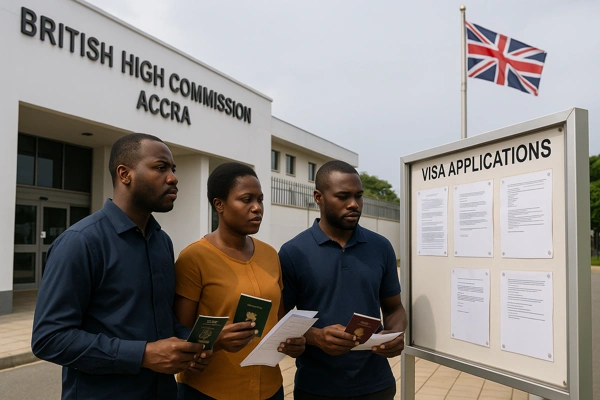
The announcement coincides with the launch of the “Fighting Visa Fraud” initiative, a collaboration between the UK, Australian, and Canadian High Commissions in Ghana, signaling a coordinated international effort to protect immigration systems and prevent exploitation of applicants.
Background
Visa fraud involving Ghanaians is not new, but the scale revealed by the British High Commission marks a significant escalation. The UK has long been a top destination for Ghanaian students, professionals, and families seeking travel or long-term opportunities. In recent years, however, the popularity of visa facilitators—often unlicensed—has contributed to an increase in fraudulent documentation.
According to UK Visas and Immigration (UKVI), fraud typically involves:
- Falsified bank statements
- Fake employment letters and pay slips
- Invented travel histories
- Fake university admission or sponsorship documents
- Altered supporting documents such as marriage certificates
In Ghana, fraudulent visa agents often promise shortcuts to entry into the UK, charging victims thousands of cedis for “guaranteed visas.” Many applicants—especially students and workers—unknowingly submit forged documents provided by these agents, only to face long-term bans.
The 10-year bans now imposed by the UK are among the strictest penalties in the global immigration system and are automatically triggered once fraud is detected. Similar crackdowns have been recorded in Nigeria, Kenya, South Africa, and India.
Current Development
At the press conference in Accra, British High Commissioner Dr. Christian Rogg confirmed that the banned individuals had used clearly fraudulent documentation during the UK’s verification process. This process includes cross-checking financial statements with banks, verifying employment records with companies, and using digital forensic tools to detect document forgery.
Dr. Rogg warned that:
“Most of the fraud we detect originates from unlicensed agents. Applicants must understand that only the visa officer—not any agent—can influence the outcome of a visa application.”
The new joint campaign with Australia and Canada aims to raise public awareness, encourage applicants to use official channels, and reduce reliance on “visa connection men” who operate without legal oversight.
Key elements of the initiative include:
- Nationwide public awareness campaigns
- Media outreach through TV, radio, and social platforms
- Clear guidelines on official visa application routes
- Warnings about the consequences of submitting forged documents
- Collaborations with Ghanaian authorities to identify major fraud networks
This is part of the UK’s broader global strategy to clamp down on irregular migration routes and tighten immigration integrity measures amid rising demand for work, study, and family visas.
Analysis
The crackdown on UK visa fraud Ghana raises important policy questions. First, the scale of fraud—1,632 cases—is unusually high for a single year in a relatively small applicant population. Second, the fact that so many applicants relied on fraudulent agents indicates public misunderstanding of how visa systems work.
Many Ghanaians wrongly believe agents have “inside connections,” fueling a black market for fabricated supporting documents. Unlike some countries, the UK relies on strict verification procedures that make fraudulent documentation extremely risky. The 10-year ban effectively shuts down future opportunities for applicants to study, work, or migrate legally.
Experts also note that economic pressures, limited local job opportunities, and rising demand for higher education abroad push many young Ghanaians into desperate decisions. Fraud networks exploit this desperation, promising unrealistic outcomes.
Meanwhile, global migration systems are becoming more digitally integrated. Fraud that might have succeeded in the past is now detectable through international data-sharing, AI-driven document authenticity checks, and cross-border financial verification.
Stay organised, protect your travel documents, and improve security with these top-rated essentials for international travel and visa preparation.
Disclosure: This section contains affiliate links. If you purchase through these links, Global Standard News (GSN) may earn a small commission at no extra cost to you. This supports our independent journalism.
Reactions and Quotes
Public reaction in Ghana has been swift and divided. Some citizens blame fraudulent agents, while others argue that high visa rejection rates push applicants toward unhealthy shortcuts.
A Ghanaian immigration analyst told GSN:
“The number is alarming but not surprising. Many applicants are victims, not criminals. However, immigration systems have no tolerance for fraud.”
The Australian and Canadian High Commissions echoed similar concerns. A representative from the Canadian mission stated:
“Our goal is to ensure applicants do not lose money to scams. No agent can guarantee a visa. Only official channels should be used.”
On social media, several former students shared stories about how agents nearly misled them into falsifying documents. Others expressed frustration at the scale of fraud, arguing that it harms Ghana’s reputation internationally.
Global and Local Impact
The implications of the UK visa fraud Ghana crackdown are far-reaching. For Ghana, the bans mean fewer opportunities for skilled migration, international education, and family reunification. For the UK, it strengthens immigration integrity but may deter honest applicants who fear being unfairly targeted.
This crackdown also highlights a broader trend: major immigration destinations like the UK, Canada, and Australia are tightening entry systems while increasing scrutiny of applicants from high-risk fraud regions.
Locally, fraudulent agents may face increased police scrutiny as the High Commissions collaborate with Ghanaian law enforcement. The government may also expand public sensitization campaigns to protect citizens from exploitation.
Internationally, the crackdown strengthens diplomatic cooperation on immigration integrity, reinforcing a global shift toward data-driven and AI-powered visa systems.
Internal GSN links for context:
- US Government Brain Drain: 154,000 Workers Quit in 1 Week
- Cocoa Smuggling Crisis: Ghana Loses 150,000 Tonnes in 2023–24 Season
External authoritative sources:
Conclusion
The revelation that 1,632 Ghanaians have been hit with 10-year bans marks a turning point in the fight against immigration fraud. The joint campaign launched in Accra is a reminder that immigration systems are evolving, and fraudulent shortcuts now carry severe, long-lasting consequences. For Ghanaian applicants, the message is clear: the safest—and only—route is the official one. As global migration becomes more competitive and more digital, transparency and authenticity remain the only path to securing a future abroad.