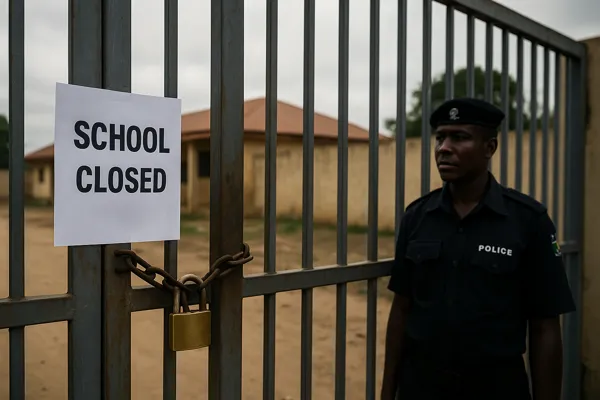
Nigeria Closes Unity Colleges after the Federal Government ordered 41 of the nation’s top secondary schools to close immediately in response to mounting security threats. The directive, issued by the Federal Ministry of Education, reflects growing fears that armed groups may again target schools for mass kidnappings. Parents, teachers, and security experts have reacted with a mixture of anxiety and relief as the country confronts one of its most pressing security crises in years. The decision comes at a time when student safety has become a national priority and when attacks on schools have intensified across northern Nigeria.
Unity Colleges and Nigeria’s Long Battle With School Insecurity
Federal Unity Colleges were created to promote national cohesion by admitting students from all states and cultural backgrounds. For decades, they stood as symbols of academic excellence and unity. But insecurity in northern and central Nigeria has made these institutions increasingly vulnerable.
Nigeria’s school security crisis spiraled from 2014 onward, starting with the abduction of 276 girls in Chibok, Borno State, an incident that drew global outrage and sustained attention from organisations such as UNICEF. Since then, mass abductions have occurred in Dapchi, Kankara, Jangebe, Kagara, Tegina, and Birnin Yauri. In many of these cases, armed groups stormed boarding schools at night, overpowering local security and taking hostages.
The frequency of these attacks reshaped national discourse around school safety. Parents began withdrawing children from boarding schools, while communities demanded stronger federal protection. Analysts argue that years of underfunding, weak rural policing, porous borders, and limited intelligence capacity allowed the crisis to worsen.
It is against this backdrop that Nigeria Closes Unity Colleges on such a large scale, signalling that threats may have reached a critical point for federal schools that should ordinarily be among the safest learning environments in the country.
Federal Directive Orders Immediate Shutdown of 41 Schools
The Ministry of Education’s directive, dated 21 November 2025, instructed principals of the affected Unity Colleges to send students home without delay. The circular, signed by the Director of Senior Secondary Education, Binta Abdulkadir, cited “recent security developments and credible intelligence indicating heightened risks.” According to reporting by Nigerian outlets such as Premium Times and Vanguard, the order applies mainly to Unity Colleges in higher-risk northern and north-central states.
What triggered the directive?
According to GSN’s review of multiple security assessments, several factors contributed:
- Heightened militant movement across North-West and North-Central states
- Intercepted communications suggesting planned attacks on boarding schools
- Recent kidnappings and attempted abductions in Kebbi, Niger, Zamfara and Kaduna
- Inadequate security presence around rural school locations
- Fear of coordinated attacks similar to previous mass abductions
Although the Ministry did not release the full intelligence details, top security personnel confirmed to GSN that threats to federal schools had become “urgent and credible”. States most affected reportedly include Kaduna, Kebbi, Niger, Zamfara, Plateau, Nasarawa, Bauchi and Benue, all of which have witnessed repeated school attacks or ongoing banditry.
Parents told GSN they received calls from principals instructing them to collect their children within hours. Many panicked as they travelled long distances to retrieve students. A parent in Niger State said: “When I heard the news, my heart dropped. At least they are safe now, but this situation is alarming.”
Some praised the decision, but others criticised the lack of clarity around timelines, communication and alternative learning arrangements. In response to confusion on social media, the Ministry issued a second statement emphasising that Nigeria Closes Unity Colleges applies only to the listed 41 schools—not all federal schools nationwide. Officials urged the public to rely on official sources.
Security agencies have also been deployed to protect closed campuses while risk assessments continue and to prevent vandalism or occupation of school property during the shutdown.
Security Assessment: Why the Government Took a Pre-Emptive Position
Security experts say the government appears to have acted based on intelligence suggesting coordinated threats. Recent attacks in rural areas of Kebbi and Niger indicated a renewed interest by criminal groups in targeting schools, particularly boarding facilities that house large numbers of students.
Analysts point out that the government likely feared a repeat of:
- The Birnin Yauri abductions (2021), where more than 80 students were taken
- The Kankara incident (2020), involving over 300 boys from a boarding school
- The Tegina mass kidnapping (2021), targeting primary school pupils
Internal security memos reviewed by GSN highlight that some armed groups have reorganised and strengthened supply routes across forest belts in the North-West, giving them mobility—and the capability—to stage school attacks with little warning.
In this context, Nigeria Closes Unity Colleges is seen as a preventive strategy to avoid the catastrophic consequences of another mass abduction, which would have deep political and humanitarian implications at home and abroad.
Top Security Tools for Schools, Homes & Campuses
Trusted, high-demand safety products to strengthen monitoring and emergency readiness.
ANNKE 1080p Outdoor Security Camera
A durable 4-in-1 CCTV bullet camera with 100ft clear night vision—ideal for school gates, hostels and compound surveillance. Weatherproof and reliable.
Solar Motion Sensor Security Lights (6-Pack)
High-brightness solar security lights with 3 modes. Waterproof and perfect for unlit areas around buildings, dormitories and fences—no wiring needed.
Motorola T210 Talkabout Two-Way Radios
Long-range rechargeable walkie-talkies with 22 channels and up to 20-mile range—perfect for school security teams and emergency communication.
Affiliate Disclosure: As an Amazon Associate, Global Standard News (GSN) earns from qualifying purchases at no additional cost to you. These commissions support our independent journalism.
Education Impact: Disruption, Learning Loss and Emotional Stress
Education stakeholders warn that prolonged closures could worsen existing challenges in Nigeria’s schooling system. The country already has millions of out-of-school children, according to international agencies, and security-related shutdowns risk adding to this number.
Key impacts include:
- Academic disruption for students preparing for WAEC, NECO and internal examinations
- Psychological stress, especially for boarders traumatised by security scares
- Financial strain on families forced to travel long distances for emergency pickups
- Operational uncertainty for teachers and administrators balancing safety with curriculum
- Community-level economic losses affecting transporters, market traders and local vendors
Education analysts fear that if closures persist, confidence in Unity Colleges may drop, pushing parents toward private schools or relocating children to safer states. GSN has previously examined similar ripple effects in its coverage of the Ghana Visa Fraud Campaign: Major Crackdown by 3 Nations , where policy shifts also disrupted normal education and migration plans for families.
This is not the first time Nigeria Closes Unity Colleges or adjusts operations due to insecurity, but the breadth of the 2025 directive has raised new questions about the sustainability of federal boarding schools in high-risk regions.
Stakeholder Reactions: Parents, Experts and Officials Respond
The directive has triggered a wide spectrum of reactions from parents, education groups, security analysts and government officials.
Parents
Many parents welcomed the decision, calling it an act of responsibility. A mother from Zamfara told GSN: “I would rather my child be home than become another statistic. This closure is painful but necessary.”
However, others demanded more transparency. A father in Kaduna said: “They cannot just close schools without telling us the full situation. We need details, not panic.”
Education Groups
Education activists argue that the shutdown exposes a long-standing governance failure. A Lagos-based advocacy group said in a statement: “Unity Colleges symbolise unity and excellence. Closing them is a national embarrassment and a wake-up call.”
Security Analysts
A senior analyst in Abuja told GSN: “If intelligence shows high-risk threats, then closure is the right step. But sustainable security reforms must follow, otherwise we will be back here again in a few months.”
Government Officials
The Federal Ministry of Education maintains that student safety remains the priority. Its statement noted that the schools will reopen only when risk profiles improve and security guarantees strengthen, echoing previous commitments made under the global Safe Schools Declaration.
This official stance adds to the evidence that Nigeria Closes Unity Colleges as a temporary but strategic measure rather than a permanent policy shift.
National and Global Implications for Nigeria’s Image
The closure of 41 Unity Colleges affects more than just students—it has national and international implications. Nationally, it reinforces concerns about deteriorating internal security and raises questions about the government’s ability to protect public schools. It may also influence public confidence in leadership ahead of future elections and place economic pressure on communities that depend on federal schools for livelihoods.
Internationally, global rights organisations such as UNICEF, Save the Children and the United Nations have repeatedly warned that attacks on schools violate international humanitarian law and threaten long-term development. The decision that Nigeria Closes Unity Colleges on security grounds could prompt renewed scrutiny of Nigeria’s implementation of its commitments under international child-protection frameworks.
For parents in the diaspora and middle-class professionals inside Nigeria, the event may accelerate a trend toward sending children overseas for schooling or opting for private schools in safer urban centres. Travel advisories from foreign missions may also take school security into account when assessing overall risk levels in affected states.
GSN’s previous analysis of cross-border security in the West Africa Interpol Raid: 5 Key Findings From Crackdown shows how regional cooperation is increasingly important for tackling organised crime networks that operate across multiple borders, including those that target schools and rural communities.
What Must Happen Before Reopening
Security specialists outline key steps required before students can safely return to the affected schools:
- Deployment of adequately trained and equipped security personnel to school perimeters
- Installation of CCTV systems, alarms and fencing upgrades in high-risk campuses
- Creation of community-based intelligence networks to detect threats early
- Stronger state–federal security collaboration for rapid response to incidents
- Regular risk audits of school infrastructure and evacuation procedures
- Provision of psychological support for students, teachers and affected families
- Clear and consistent communication to parents on new safety protocols and timelines
Until these reforms are implemented, reopening may remain delayed in the most vulnerable areas. Experts stress that security upgrades should not be one-off projects but part of a sustained, funded policy framework.
A Necessary but Troubling Decision
Nigeria Closes Unity Colleges in response to what the government describes as credible and urgent threats. While the closure may prevent immediate tragedy, it exposes deep structural security challenges confronting the nation. Parents, analysts and educators agree that long-term solutions—not temporary shutdowns—are needed to restore safety and confidence.
The weeks and months ahead will test the government’s ability to strengthen school security, deliver on its commitments under the Safe Schools agenda and reassure a nation on edge that its children can learn without fear.