The US World Cup Visa priority system has emerged as one of the most important global travel developments ahead of the FIFA World Cup 2026. With millions of fans expected to travel to the United States, Mexico, and Canada for the tournament, the U.S. government, working alongside FIFA, has announced a new fast-track interview program designed specifically for ticket-holding fans. Known as the FIFA Priority Appointment Scheduling System, or FIFA PASS, the initiative aims to reduce long visa wait times and provide earlier interview slots for verified ticket-holders. This breakthrough has captured the attention of football fans, travel agencies, and immigration experts around the world.
Why the US World Cup Visa Priority System Was Created
The United States is preparing to host the bulk of matches for the 2026 FIFA World Cup, and officials expect record-breaking international attendance. Early estimates suggest that several million visitors could travel to North America for the tournament, putting enormous pressure on existing visa and border-control systems. Historically, U.S. visa wait-times in many countries—especially across Africa, South Asia, and Latin America—have stretched from several months to more than a year because of high demand and limited consular capacity.
According to a detailed report by Reuters: US will prioritize World Cup ticket-holders for visa appointments , the U.S. government has already deployed hundreds of additional consular officers and expanded visa-processing hours in many high-demand posts. The goal is to prevent genuine fans from missing the World Cup simply because they could not secure an interview in time. For host cities such as Los Angeles, New York–New Jersey, Dallas, Miami, and Atlanta, ensuring smooth travel flows is also crucial for local tourism, hotel occupancy, and transport systems.
FIFA, for its part, has emphasized that global accessibility is central to its vision for the 2026 tournament. In a joint announcement with U.S. officials, the organisation confirmed that the US World Cup Visa priority mechanism would be anchored in verified ticket data and coordinated scheduling.
Current Development: How the FIFA PASS System Supports the US World Cup Visa
Under the new framework, fans who have purchased official match tickets through FIFA’s authorised platforms will gain access to special priority interview slots for the US World Cup Visa. The system is being delivered through a digital tool called FIFA PASS – the FIFA Priority Appointment Scheduling System.
In its official media release, FIFA: World Cup 2026 ticket-holders to receive prioritised US visa appointments , FIFA explained that the platform will authenticate ticket purchases and then connect eligible fans to a pool of reserved visa appointment slots at participating U.S. embassies and consulates.
Here is how the US World Cup Visa priority process is expected to operate:
- Ticket verification: Only supporters with official FIFA match tickets or hospitality packages will be eligible for priority appointments. This is intended to reduce fraud and protect consular resources.
- Priority scheduling: Once verified, fans will be allowed to choose among earlier appointment dates that are set aside for World Cup travel. These time slots are separate from the general-visitor queue.
- Applies mainly to B1/B2 visitors: Most fans will apply for standard B1/B2 tourist and business visas. Travelers from countries already in the U.S. Visa Waiver Program will typically continue to travel using ESTA rather than a full visa interview.
- No shortcut around vetting: U.S. officials have stressed that all normal security checks and decision standards will remain in place. Priority access affects appointment availability, not the final visa decision.
- Phased rollout: FIFA PASS will be introduced in phases ahead of the tournament, with full functionality expected during early 2026.
Further details about the US World Cup Visa initiative, including specific embassy participation and local-language guidance, are expected to be communicated through FIFA and U.S. State Department channels over the coming months.
Why the US World Cup Visa Priority System Matters
The US World Cup Visa priority program is more than a simple convenience measure. It is also a strategic decision that reflects the economic, diplomatic, and security stakes of the 2026 tournament. The World Cup is forecast to generate tens of billions of dollars in combined tourism and broadcast-related revenue for North America. If loyal international fans are unable to attend matches because they cannot secure visa interviews, host cities and organisers stand to lose both financially and reputationally.
At the same time, governments are increasingly aware of the risks associated with migration fraud and forged travel documents during major global events. This is why both FIFA and U.S. officials insist that the US World Cup Visa scheme must be grounded in strict verification and unchanged vetting standards. Priority appointments may create a fast lane for genuine fans, but they do not weaken the legal or security requirements needed for U.S. entry.
Recent investigations have already demonstrated how vulnerable visa systems can be. For example, Global Standard News reported on the Ghana Visa Fraud Campaign: Major Crackdown by 3 Nations , in which authorities uncovered extensive networks producing fake documents and exploiting unsuspecting applicants. Cases like these underline why the US World Cup Visa must tightly integrate ticket, identity, and security data.
From an economic perspective, travel agencies, airlines, and hotel chains are already beginning to design packages that assume more predictable visa appointment timelines. A structured, prioritised system allows companies to offer clearer booking windows and refund policies to World Cup travellers.
How Officials, Experts, and Fans View the US World Cup Visa
The announcement of the US World Cup Visa priority system has triggered a wide range of reactions. Many fans and travel professionals welcomed the initiative as a long-awaited solution to chronic appointment delays.
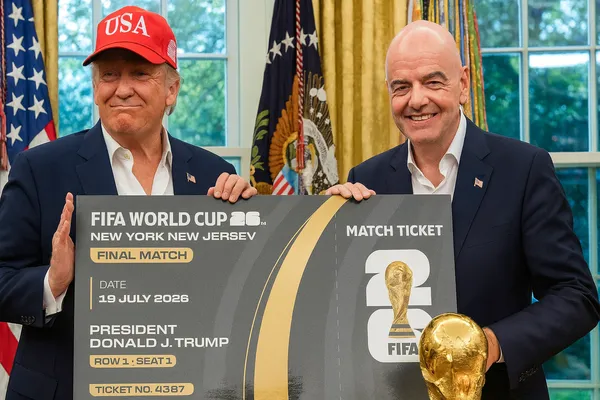
In comments reported by AP News: Trump unveils FIFA World Cup visa fast-track plan , U.S. officials framed FIFA PASS as a way to “make travel for ticket-holders faster, easier and more predictable” while still preserving national security. FIFA President Gianni Infantino described the cooperation with the United States as “a milestone in making the 2026 tournament the most accessible in history.”
Immigration experts, however, have urged fans not to misinterpret the policy. A priority appointment does not ensure visa approval: applicants must still show proof of sufficient funds, strong ties to their home country, and a credible travel plan. Advocacy groups have also stressed the importance of transparent communication so that lower-income and first-time travellers are not misled by informal agents.
Among global fans, reaction has been mixed but cautiously optimistic. Supporters from regions with historically long wait-times—such as West Africa, South Asia, and parts of Latin America—view the US World Cup Visa as a genuine opportunity. Others worry that if demand is extremely high, even priority slots may be snapped up quickly, making early planning essential.
Global and Local Impact: Who Gains from the US World Cup Visa Changes?
The impact of the US World Cup Visa program will be felt at multiple levels. Supporters from Ghana, Nigeria, Kenya, India, Brazil, Argentina, and many other football-loving countries stand to benefit if the system delivers on its promise of shorter queues and clearer timelines. For many young fans, this could be their first-ever trip to the United States.
The travel and hospitality industries are also positioning themselves for a surge in demand. Airlines are expected to launch additional seasonal routes, while hotels in host cities are likely to sell out months before kick-off. Secure digital connectivity will become critical for navigating stadium entry, mobile ticketing, and cashless payments.
The broader public-health context cannot be ignored either. In our coverage of global health trends such as World Diabetes Day: Experts Warn of Rising Global Cases , Global Standard News has highlighted how long-distance travel and mass gatherings intersect with health vulnerabilities. Events on the scale of the 2026 World Cup require robust medical planning, insurance coverage, and clear public-health messaging for visitors with pre-existing conditions.
Locally, host communities across the United States are preparing for both opportunities and challenges. While increased tourism spending is welcome, city authorities must plan for crowd management, transportation, policing, and emergency services. The US World Cup Visa priority system is only one part of a much larger logistical puzzle.
🌍 Travel Essentials for FIFA World Cup 2026 Fans
Disclosure: As an Amazon Associate, Global Standard News (GSN) earns from qualifying purchases. These top-rated travel tools make your 2026 FIFA World Cup journey smoother, safer, and more convenient.
🔗 View on Amazon
Water-resistant, USB charging, and secure for airports and stadiums — ideal for carrying your gear on every match day.
🔗 View on Amazon
All-in-one international adapter with USB-C PD 3.0 and USB-A quick-charge ports — essential for powering your devices in the US and beyond.
🔗 View on Amazon
Compact, airline-safe power bank with USB-C in and out — keeps your phone, tickets, and navigation apps running all day.
The US World Cup Visa priority initiative represents a landmark moment in how major sporting events are managed and accessed. By combining verified ticket data, expanded consular capacity, and a dedicated appointment system through FIFA PASS, the United States and FIFA are attempting to make the 2026 World Cup more accessible than any previous tournament. At the same time, the program preserves strict security and vetting standards, reminding fans that early preparation and honest applications remain essential.
As implementation continues and more operational details are released, Global Standard News will track how the US World Cup Visa system performs in practice—especially for fans in regions that traditionally face long visa queues. For now, one message is clear: serious supporters should secure their tickets, gather their documents, and apply early if they want to be in the stands when football’s biggest show kicks off in 2026.