UN Report Exposes Horrific Wave of Sexual Violence in Darfur
The United Nations has issued a stark warning about a surge in Darfur sexual violence, revealing that women and girls are being systematically targeted amid Sudan’s deepening conflict. Following the seizure of El Fashir, the capital of North Darfur, by the Rapid Support Forces (RSF), UN agencies have documented a pattern of widespread rape, abduction, and the disappearance of children. The report describes a humanitarian catastrophe that recalls the darkest days of the 2000s Darfur genocide.
A Legacy of Conflict and Impunity
Darfur has endured two decades of war marked by atrocities and the weaponization of sexual violence.
In 2003, ethnic militias known as the Janjaweed — precursors to today’s RSF — launched brutal campaigns against non-Arab communities, killing hundreds of thousands and displacing millions. Despite international condemnation and arrest warrants issued by the International Criminal Court (ICC), justice and accountability remain elusive.
The ongoing conflict between the Sudanese Armed Forces (SAF) and the RSF, which reignited in April 2023, has reopened old wounds. The Darfur sexual violence being reported today follows the same horrifying blueprint: rape used to instill fear, punish communities, and drive forced migration. More than 10 million Sudanese have been displaced nationwide, and UN Women estimates that 11 million women and girls in Darfur now face extreme food insecurity, leaving them vulnerable to exploitation as they scavenge for food and water.
Humanitarian Crisis Unfolding: Women Bear the Brunt of Darfur’s War
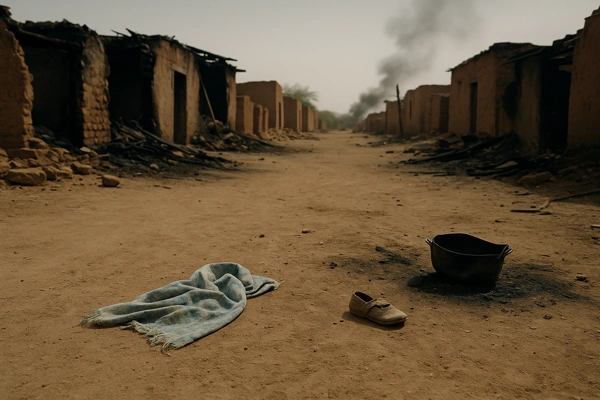
The latest UN Women field assessments paint a grim picture. After El Fashir’s fall on 26 October 2025, RSF fighters reportedly went door to door, abducting women, looting homes, and burning civilian shelters. Survivors told investigators that girls as young as 12 were raped in front of family members, while mothers searching for missing children were assaulted on the outskirts of the city.
Anna Mutavati, UN Women Regional Director for East and Southern Africa, declared:
“Women’s bodies have become a crime scene in Sudan. There are no safe spaces left.”
Medical teams from Médecins Sans Frontières (MSF) operating near Zamzam camp have confirmed a steady influx of survivors seeking treatment for sexual assault. Many arrive with physical injuries, trauma, and no knowledge of their children’s whereabouts.
The Darfur sexual violence epidemic is compounded by starvation and disease. Humanitarian organizations say relief convoys have been blocked for months, leaving communities without food, medicine, or protection. Satellite images analyzed by the UN Office for the Coordination of Humanitarian Affairs (OCHA) reveal entire districts of El Fashir reduced to rubble.
UN Assessment: Systematic Atrocities and Use of Rape as a Weapon of War
According to the UN Human Rights Office, the Darfur sexual violence pattern shows hallmarks of a systematic campaign rather than random acts. Victims across different ethnic groups describe attackers in RSF uniforms using identical methods — abduction, assault, and forced displacement — suggesting organized intent.
High Commissioner Volker Türk warned in Geneva that Darfur is “on the brink of another genocide if the world remains passive.” He urged both warring parties to establish humanitarian corridors and allow access to international investigators.
Witnesses have also reported ethnically targeted killings around hospitals and aid centers. UN field reports confirm at least 200 cases of rape documented between August and October 2025, though officials caution that the real number may be several times higher due to fear and stigma.
Expert Analysis: Gendered Warfare and the Collapse of Justice
Human-rights experts say Darfur sexual violence is a strategic form of control — used to erase identity, break family units, and dismantle resistance. The perpetrators, often acting with impunity, exploit the vacuum of legal authority in Sudan.
Dr. Lamia Abdelrahman, a Sudanese sociologist, explains:
“The psychological warfare behind sexual violence is as destructive as bullets. It silences communities and enforces submission.”
The Sudanese judicial system, already fractured by years of military rule, has virtually collapsed in war zones. Local police no longer function, and survivors have no legal channels for redress. International organizations have called for temporary mobile courts and referral pathways for survivors needing medical and psychosocial care.
Analysts also emphasize that Darfur sexual violence undermines post-war recovery. Beyond individual trauma, it erodes social cohesion, discourages education for girls, and perpetuates inter-generational poverty and stigma.
Reactions and Accountability Calls: Global Leaders Condemn Atrocities
The UN Secretary-General António Guterres has demanded an independent investigation, stating:
“These acts of brutality against women and children are intolerable. Accountability must not wait for peace.”
The United States, European Union, and African Union have all urged Sudan’s rival factions to cease hostilities and grant unrestricted access to humanitarian agencies. The ICC Prosecutor, Karim Khan, said his office is collecting new evidence that could expand existing indictments for war crimes in Darfur.
Human Rights Watch and Amnesty International have echoed the call for sanctions on commanders implicated in organizing sexual violence campaigns. Grassroots women’s groups inside displacement camps have also mobilized to record testimonies, using secure digital tools to protect survivors’ identities and preserve evidence for future trials.
Regional and Global Implications: A Humanitarian and Moral Crossroads
The Darfur sexual violence crisis has implications far beyond Sudan’s borders. Neighboring countries such as Chad and South Sudan are absorbing tens of thousands of refugees, stretching already fragile economies. The influx of traumatized survivors and orphans risks fueling instability in border towns.
Globally, humanitarian observers warn that donor fatigue and competing crises — from Gaza to Ukraine — threaten to overshadow Sudan’s plight. Yet failure to respond decisively could undermine the credibility of the international community’s “Responsibility to Protect” doctrine.
Experts at the International Crisis Group say that without urgent diplomatic pressure, Darfur could become a “black hole” of impunity where gender-based crimes are normalized. The region’s vast ungoverned spaces may also provide cover for transnational criminal networks, worsening regional insecurity.
Recommendations: Urgent Steps Toward Protection and Justice
To curb the Darfur sexual violence epidemic, the UN and its partners are urging a coordinated global response:
- Establish Safe Corridors: Create demilitarized routes allowing women and children to flee conflict zones safely.
- Enhance Survivor Support: Fund trauma counseling, medical care, and livelihood programs targeting survivors.
- Document and Prosecute: Expand ICC and UN investigative mandates to include new cases of sexual slavery and child abduction.
- Strengthen Local Networks: Empower Sudanese women’s organizations to act as frontline defenders and information hubs.
- Ensure Accountability: Impose travel bans and asset freezes on RSF and SAF commanders found complicit in gender-based crimes.
These measures, experts say, could signal a turning point — showing that the world refuses to remain silent in the face of atrocities.
Darfur’s Women Demand the World Listen
The expanding Darfur sexual violence crisis stands as one of the gravest humanitarian failures of our time. The UN’s warnings are not mere reports — they are pleas for immediate action.
If the international community fails to intervene, Sudan risks repeating a history of genocide, silence, and impunity.
For the women of Darfur, justice delayed is survival denied. The world must act now.
Internal Links
External Links
- Reuters – Women in Darfur report rape, lost children amid Sudan violence
- UN Women – Statement on Gender-Based Violence in Sudan