A Former President Walks Free
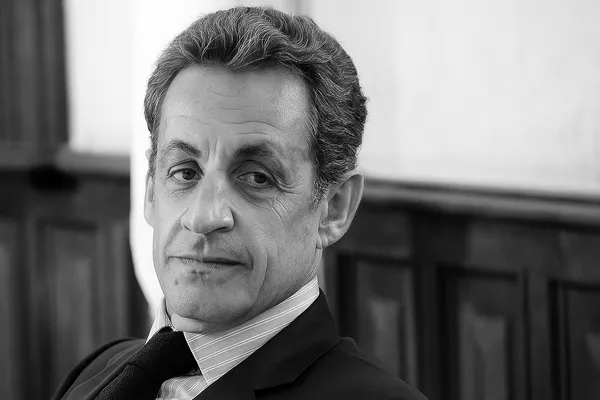
In a ruling that has sent shockwaves through France and beyond, Nicolas Sarkozy Freed became the headline dominating global news. The former French president, convicted of criminal association and illegal campaign financing, was released after just three weeks behind bars. The November 10 decision by the Paris Appeals Court granting him conditional freedom pending appeal reignited debate over judicial fairness, privilege, and political accountability in the French Republic.
From the Élysée Palace to the Prison Cell
Nicolas Sarkozy’s fall from grace has been both historic and symbolic. Once celebrated as a reform-minded conservative who reshaped France’s domestic and foreign policy between 2007 and 2012, he now stands as the first modern French head of state to spend time in prison.
The charges against him stem from the 2007 presidential campaign, where prosecutors alleged he accepted millions of euros from Libyan leader Muammar Gaddafi. According to investigators, the funds were delivered through secret intermediaries, violating French campaign-finance laws and potentially breaching international anti-corruption treaties.
After years of investigation, Sarkozy was convicted on September 25, 2025, of criminal association and illegal campaign financing, receiving a five-year sentence—two years suspended. On October 21, he began serving time at La Santé Prison in Paris. The conviction followed earlier corruption findings in 2021 for influence-peddling, deepening his legal troubles and damaging his political legacy.
Legal Developments: The Court’s Conditional Freedom Ruling
On November 10, 2025, the Paris Appeals Court granted Sarkozy’s petition for provisional release, a rare decision under French law. The judges concluded that he posed no flight risk, had a fixed residence, and had cooperated fully with investigators.
However, the release comes with strict conditions:
- He must remain within French territory.
- He is barred from contacting co-defendants, witnesses, or investigators.
- He must report periodically to judicial authorities.
The court emphasized that the Nicolas Sarkozy Freed order does not overturn the conviction. Instead, it suspends incarceration until the appeals process concludes, likely in spring 2026.
Through his legal team, Sarkozy described the three-week imprisonment as “a personal trial but also a reaffirmation of my faith in justice.” He insisted that he remains determined to prove his innocence, stating,
“I have never betrayed the trust of the French people, and I will fight until the truth prevails.”
Political and Public Reactions: A Nation Divided
The announcement that Nicolas Sarkozy Freed triggered immediate and emotional reactions across France. Outside La Santé Prison, dozens of supporters gathered waving French flags and chanting, “Justice for Sarkozy!” To them, his release symbolized resistance against what they consider judicial overreach.
Opposition figures, however, saw the move differently. Left-wing leader Jean-Luc Mélenchon posted on X (formerly Twitter):
“Three weeks for a five-year sentence—this is not equality before the law. It is privilege before justice.”
France’s Justice Minister Éric Dupond-Moretti, himself a former defense lawyer, defended the judiciary’s integrity, saying:
“The decision was made in accordance with the law. The French judiciary is independent and does not act under political influence.”
Public opinion surveys conducted by Le Monde show a nation split down the middle. Roughly half of respondents believe the decision respects due process; the other half view it as proof that the powerful still receive preferential treatment.
Legal and Ethical Analysis: Equality Before the Law Tested
Legal scholars say the Nicolas Sarkozy Freed ruling highlights a critical dilemma: France’s judiciary must uphold fairness without appearing to bend under political pressure. Under French procedure, detention pending appeal is exceptional—particularly for non-violent, white-collar crimes. The appeals court likely considered Sarkozy’s age (70), health, and previous compliance with judicial summons.
Yet many analysts caution that the optics of the case are damaging. “When an ordinary citizen serves years for smaller offenses while a former president walks free after three weeks, it undermines public confidence,” noted political analyst Dominique Reynié.
Comparatively, France has seen few such precedents. Former presidents Jacques Chirac and François Fillon faced convictions but never served prison time. Sarkozy’s partial imprisonment, followed by early release, thus stands as an unprecedented episode in the history of the Fifth Republic.
Media and Expert Perspectives: Europe Watches Closely
The international press has portrayed the case as both a judicial milestone and a political embarrassment.
- Reuters described it as “a defining test for the credibility of France’s justice system.”
- Al Jazeera called it “a reflection of Europe’s struggle to hold its leaders accountable beyond their tenure.”
- BBC News noted that Sarkozy’s release “exposes deep divisions in France between the rule of law and the perception of privilege.”
Experts in European law emphasize that the Nicolas Sarkozy Freed case could influence how other EU nations handle corruption among political elites. It demonstrates that while legal independence remains intact, public trust is fragile when justice appears inconsistent.
Global Implications: Beyond France’s Borders
The impact of the Nicolas Sarkozy Freed decision extends well beyond French politics. The original charges were intertwined with Libya’s shadowy financing networks, many of which remain under investigation in multiple jurisdictions. European and North African authorities continue to trace the flow of illicit funds linked to Gaddafi’s regime, raising questions about cross-border political financing and international oversight.
Diplomatically, the affair has strained France’s reputation as a moral authority in anti-corruption efforts. Human-rights organizations such as Transparency International have urged the French judiciary to ensure full transparency during the upcoming appeal.
Locally, the case may reshape the future of Les Républicains, Sarkozy’s center-right party. Once a dominant force, it is now fragmented and overshadowed by President Emmanuel Macron’s centrists and Marine Le Pen’s far-right National Rally. Some members view Sarkozy’s ordeal as symbolic of political persecution; others fear it further alienates moderate voters seeking integrity in public office.
A Pattern of Presidential Accountability
France has a complex relationship with presidential immunity and accountability. While its constitution grants temporary immunity during office, once leaders leave the Élysée, they are subject to the same judicial scrutiny as any citizen.
The Nicolas Sarkozy Freed story adds to a lineage of French leaders facing legal reckoning. Former President Jacques Chirac received a suspended sentence in 2011 for embezzlement. François Fillon, a prime-minister-turned-presidential candidate, was convicted in 2020 for misuse of public funds. Sarkozy’s imprisonment—though brief—marks the first actual incarceration of a French head of state, making it a defining moment for France’s democracy.
Public Perception and Democratic Lessons
Sociologists argue that the Nicolas Sarkozy Freed episode reveals both the strength and the fragility of democratic institutions. On one hand, it demonstrates that even former presidents can be tried and punished under the law. On the other, it underscores persistent inequalities in the judicial experience between elites and ordinary citizens.
Citizens interviewed by France 24 expressed mixed feelings: pride in the rule of law, but frustration at the apparent leniency. Many worry that such cases could deepen public cynicism and fuel populist movements that capitalize on anti-elite sentiment.
For France—a country that often defines itself as the cradle of modern democracy—the challenge now lies in restoring confidence that justice truly applies to all, regardless of power or status.
A Nation at a Judicial Crossroads
The decision that saw Nicolas Sarkozy Freed after three weeks may mark only a temporary reprieve. His upcoming appeal in 2026 will determine whether the conviction stands, or whether the former president can reclaim his reputation.
For now, his story is a mirror reflecting France’s ongoing struggle to balance political power with judicial integrity. The world watches as France confronts one of the most consequential legal sagas of its modern era—a test not only of Nicolas Sarkozy’s fate but of the credibility of the Republic itself.
Internal Links: