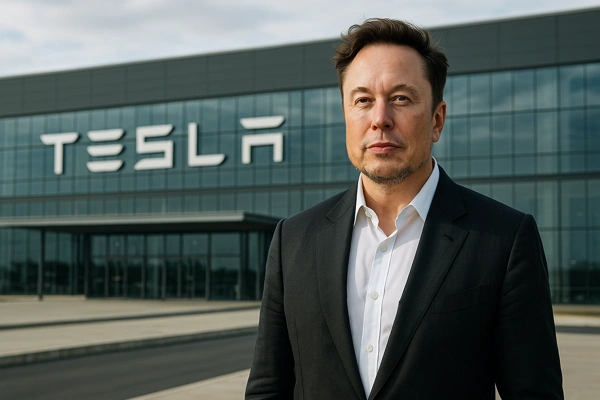
The Elon Musk Tesla Pay Deal has officially been approved by shareholders in a landmark vote that could make Musk the world’s first trillionaire. During Tesla’s annual meeting in Austin, Texas, over 75 percent of investors endorsed the CEO’s massive compensation plan—valued at up to $1 trillion if all performance targets are achieved. The decision cements Musk’s influence not only over Tesla but also over the future direction of the electric vehicle, AI, and robotics industries.
A Record-Breaking Compensation Battle
This pay deal is a revival of a controversial 2018 compensation package previously struck down by a Delaware court earlier this year. That ruling questioned the independence of Tesla’s board and labeled the $56 billion plan “excessive.”
Now, following months of lobbying and investor outreach, the Elon Musk Tesla Pay Deal has returned on an even grander scale—one that links Musk’s reward to Tesla’s ability to achieve monumental growth targets across market capitalization, production, and profitability.
Under the plan, Musk receives no salary or cash bonus. Instead, he will unlock tranches of Tesla stock options if the company meets specific milestones. Each target, tied to market cap and operational performance, could yield billions in equity value—culminating in what analysts estimate as a potential $1 trillion windfall.
This model, Musk argues, aligns his incentives with shareholders’ long-term success. But critics see it as a dangerous concentration of power in a single individual, whose decisions often shape global markets and even public discourse.
Current Development: Shareholders Vote “Yes” to Vision
At Tesla’s Austin meeting on November 6, 2025, the shareholder vote made history. More than three-quarters of votes favored reinstating Musk’s deal, signaling overwhelming investor confidence.
According to filings reviewed by Reuters and AP News, the plan was approved after an intensive campaign by Musk, who personally appealed to retail investors via X (formerly Twitter) and live-streamed Q&A sessions.
Key Terms of the Deal
- Market Cap Target: Tesla’s valuation must reach roughly $8.5 trillion within the next decade.
- Production Goals: Multi-million annual output of EVs, robot-taxis, and humanoid robots.
- AI Integration: Rapid progress in Tesla’s Dojo supercomputer and Optimus humanoid robotics lines.
- Stake Increase: If targets are met, Musk’s ownership could rise from about 15 percent to 25 percent of Tesla shares.
For comparison, Apple’s entire market cap today is about $4.5 trillion—meaning Tesla would need to nearly double that value to fulfill Musk’s full package. Yet, investors who backed him believe his track record justifies the optimism.
“Musk built a trillion-dollar company once—he can do it again,” said Dan Ives, Senior Analyst at Wedbush Securities.
“This plan ensures he stays focused on Tesla’s mission instead of drifting toward his other ventures.”
Analysis: Risk, Reward, and the Future of Corporate Leadership
The Elon Musk Tesla Pay Deal represents both a bold bet and a governance dilemma. On one hand, it could galvanize Tesla’s workforce and shareholders around ambitious innovation—autonomous vehicles, AI robotics, and energy storage. On the other, it exposes Tesla to unprecedented “key-person risk,” where the company’s fate hinges almost entirely on one visionary.
Institutional investors such as Norway’s sovereign wealth fund opposed the deal, citing “excessive scale and inadequate checks on power.” However, smaller retail shareholders—many of whom credit Musk with life-changing returns—were decisive in pushing the deal through.
Financial experts caution that the plan’s targets may be unrealistically aggressive. Achieving an $8.5 trillion valuation would require Tesla’s revenue and profits to multiply several times over, amid fierce competition from Chinese EV giants and legacy automakers accelerating their own AI-driven models.
Still, Musk’s supporters argue that Tesla is no longer just a carmaker—it’s an AI, robotics, and energy conglomerate in the making.
“This is a reward for creating the next era of industrial civilization,” said venture capitalist Chamath Palihapitiya. “If Tesla executes, the value creation will justify every cent.”
Reactions & Global Commentary
The news of the Elon Musk Tesla Pay Deal sparked strong global reactions:
Investor Reactions
- Supporters: Tesla’s biggest retail investors hailed the vote as “democracy in action,” highlighting Musk’s transparency and relentless innovation.
- Critics: Proxy advisory firms like Glass Lewis and Institutional Shareholder Services (ISS) warned the deal undermines board independence and sets a dangerous precedent for executive pay.
Market Reactions
Tesla shares surged 8 percent in pre-market trading following the announcement, with analysts noting increased optimism for long-term AI and robotics integration.
Meanwhile, competitors like Rivian and BYD saw their stock prices dip slightly, as investors rotated back into Tesla.
Political and Social Reaction
Public opinion remains divided. Critics on social media pointed to wealth inequality and the symbolism of a $1 trillion pay plan during a time of inflation and economic strain.
U.S. lawmakers such as Senator Elizabeth Warren called for tighter oversight of executive compensation.
However, others praised the outcome as “a triumph of meritocracy” and a signal that innovation still drives investor trust.
Global and Local Impact
The implications of the Elon Musk Tesla Pay Deal stretch beyond Wall Street.
Global Business Implications
If successful, Tesla could redefine global manufacturing standards in automation, energy storage, and AI systems. The company’s expansion into India, Europe, and Africa aligns with Musk’s broader vision to make Tesla a decentralized global enterprise—powered by AI factories and renewable energy.
Economic Impact
A $1 trillion compensation framework redefines corporate benchmarks worldwide. Executives across industries are expected to push for performance-based mega-deals, reshaping corporate governance norms.
Local (U.S.) Impact
Within the U.S., this decision reinforces Silicon Valley’s dominance in innovation and risk-taking culture. It also reignites debates on income inequality and executive accountability—issues that may influence the 2026 election cycle.
Conclusion: A Bet on Musk—and on the Future
The Elon Musk Tesla Pay Deal is more than a compensation plan; it’s a referendum on faith in one man’s capacity to redefine industries. While critics see excess and risk, supporters see vision and reward for performance.
As Tesla moves deeper into AI, robotics, and global energy systems, this vote positions Musk to lead one of the most consequential corporate transformations in history.
Whether this $1 trillion gamble pays off—or becomes a cautionary tale—will shape not only Tesla’s legacy but the future of capitalism itself.
Internal Links (GSN)
- Germany Pledges GH¢823m to Boost Ghana’s Development Initiatives
- OpenAI Atlas Browser: A Bold New Rival to Google Chrome