Cameroon’s Veteran Leader Extends Four-Decade Rule
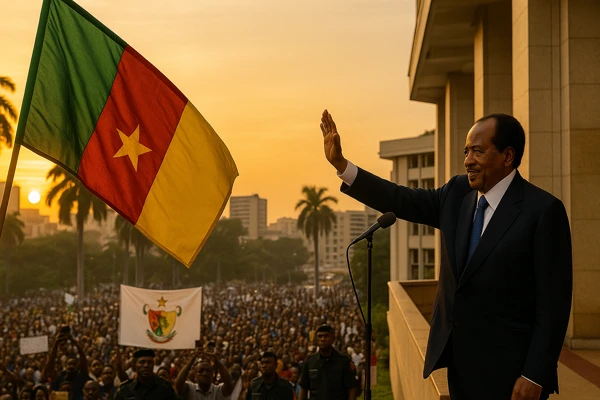
Cameroon’s 92-year-old president, Paul Biya, widely known as the World’s Oldest President, has once again been declared the winner of a controversial national election. Official results released by the Constitutional Council on October 27, 2025, gave Biya 53.66 percent of the vote—extending his rule into a fifth decade. Opposition leader Issa Tchiroma Bakary rejected the outcome as “a democratic tragedy,” alleging widespread manipulation and irregularities that have reignited political tensions across the Central African nation.
Political Legacy and Historical Context
When Paul Biya took office in 1982, few imagined his presidency would span more than four decades. Today, the World’s Oldest President stands as one of the last living links to Africa’s post-independence generation of leaders. Under his Cameroon People’s Democratic Movement (CPDM), Biya has built a reputation for tight political control, balancing authoritarian resilience with limited political liberalization.
Over the years, Cameroon has remained relatively stable compared to some of its neighbors, but this stability has come at a high price—restricted press freedom, limited opposition space, and the persistent Anglophone crisis in the northwest and southwest regions. Critics argue that Biya’s prolonged rule has created a governance system overly dependent on one man’s authority rather than strong democratic institutions.
For many Cameroonians under 35, who make up nearly two-thirds of the population, the World’s Oldest President is the only head of state they have ever known.
Official Results and Opposition Dispute
The October 12, 2025, presidential election featured nine candidates but was dominated by Biya and his former ally, Issa Tchiroma Bakary. According to the Constitutional Council, Biya won with 53.66% of the vote, while Bakary received 35.19%. However, Bakary’s camp claims the results were falsified, asserting that he actually won 54.8% based on their internal tallies.
Nationwide Protests and Security Clashes
Following the announcement, thousands of Cameroonians took to the streets in Yaoundé, Douala, Bafoussam, and Garoua, chanting slogans such as “Enough is enough!” and “Biya must go!” Security forces responded with tear gas, water cannons, and arrests.
Local rights groups reported at least four deaths and dozens of injuries during the clashes. In Douala, several neighborhoods experienced temporary internet blackouts, prompting fears of a government-ordered shutdown similar to that during previous elections.
Electoral Irregularities and Transparency Issues
International observers, including representatives from the African Union (AU) and Transparency International, highlighted several irregularities:
- Relocated polling stations in conflict areas;
- Inflated voter registers containing names of deceased persons;
- Limited access for independent monitors;
- Reports of intimidation of journalists and opposition agents.
The government dismissed the allegations, insisting that the vote was “peaceful, credible, and legitimate.” Yet opposition parties say the result reflects a political system built to sustain the World’s Oldest President, not democratic choice.
Governance and Power Dynamics: A Presidency That Endures
Analysts describe Biya’s survival as the product of an intricate system of patronage, elite alliances, and control over state institutions.
Dr. Mbah Ndifor, a political scientist at the University of Buea, told Global Standard News (GSN) that Biya’s rule represents “a textbook example of political longevity through managed pluralism.”
“He has mastered the art of adapting to crises without ever surrendering real control,” Ndifor said. “The World’s Oldest President doesn’t just lead Cameroon; he personifies its entire political architecture.”
Economically, Cameroon continues to grapple with high youth unemployment, rising inflation, and a weakening currency. Despite being rich in oil, gas, and agricultural resources, systemic corruption and poor infrastructure have hampered development. Critics say these failures stem from a leadership culture that prioritizes regime security over innovation.
A Turning Point for Cameroon’s Democracy
The 2025 election has forced a national reckoning. As the World’s Oldest President embarks on another term, the divide between the ruling elite and younger generations has never been wider.
The Legitimacy Crisis
Dr. Akere Muna, a respected Cameroonian lawyer and governance expert, told GSN that the results symbolize a “democratic fatigue.”
“Cameroon’s institutions are eroding from within. Citizens see the same faces in power for 40 years while their living conditions stagnate. This is unsustainable,” he said.
The opposition’s inability to unite under one candidate has also weakened its effectiveness. Yet the scale of this year’s protests suggests a shift in public consciousness. Many observers believe that civic activism, social media mobilization, and the power of a frustrated youth demographic could gradually reshape the nation’s political trajectory.
Biya’s Dilemma
Analysts say Biya faces a delicate balancing act: securing his legacy as the World’s Oldest President while preventing his nation from descending into unrest. Should the government continue suppressing dissent, Cameroon risks further isolation from Western partners and potential sanctions.
Local and International Voices
Domestic Reactions
Opposition spokesperson Jean Claude Nkou called the vote a “masquerade” and urged citizens to “defend democracy peacefully.” Several churches and civic organizations appealed for calm, warning that violence could plunge the country into another cycle of instability.
Ordinary citizens expressed both fatigue and defiance. In Yaoundé’s Melen neighborhood, 26-year-old entrepreneur Fabrice Mbida told GSN:
“We have respect for Biya’s age, but the future belongs to the youth. It’s time to let go.”
International Observers
The African Union and European Union issued statements recognizing Cameroon’s “sovereign process” while urging transparency and dialogue. The United States stopped short of congratulating Biya, expressing “concern over irregularities and post-election violence.”
A senior Western diplomat in Yaoundé told GSN anonymously:
“The world’s patience with lifelong presidencies is thinning. The World’s Oldest President winning again sends the wrong message about democratic progress in Africa.”
Regional and Global Impact
Cameroon’s political trajectory carries significant implications for the Central African subregion, where stability remains fragile. As a member of the Economic and Monetary Community of Central Africa (CEMAC), Cameroon is a vital trade corridor for landlocked nations such as Chad and Central African Republic.
Prolonged instability or sanctions could disrupt regional commerce, energy projects, and security coordination.
Influence on Other African States
Observers note that Biya’s re-election could embolden other aging leaders to extend their rule. The message from the World’s Oldest President, critics warn, risks normalizing political longevity over institutional renewal. Conversely, it may galvanize youth-led democratic movements across the continent seeking to challenge entrenched regimes.
Domestic Challenges Ahead
At home, the government faces the daunting task of addressing:
- The Anglophone insurgency in the southwest;
- Mounting economic pressure from rising living costs;
- A widening urban-rural divide;
- And increasing diplomatic scrutiny from international partners.
If unaddressed, these issues could overshadow Biya’s final legacy and define how history remembers the World’s Oldest President.
The Weight of Time and the Question of Renewal
Paul Biya’s re-election cements his position as the World’s Oldest President and one of the most enduring figures in modern political history. Yet his victory arrives at a time of deep national unease. The calls for change echo louder than ever, powered by a generation that feels excluded from power and impatient for reform.
Whether Cameroon’s veteran leader uses this renewed mandate to restore confidence and initiate succession planning—or continues down the path of repression—will determine the nation’s fate in the years ahead. For now, the World’s Oldest President remains both a symbol of continuity and a cautionary tale about power, time, and the unfinished promise of African democracy.
Internal Links
- Cameroon Detains Opposition Figures as Election Tensions Rise
- Gold Hits $4,000/oz: Record-Breaking Rally Shakes Global Markets