Unveiling a Hidden Scandal
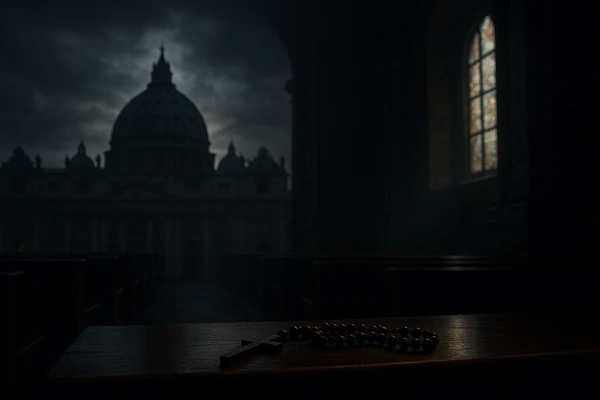
The Italy Church Abuse Report has triggered national and global outrage after uncovering nearly 4,400 victims of priest abuse across the country. Compiled by the survivors’ organization Rete l’Abuso, the report, published on October 24, 2025, details decades of unchecked sexual misconduct by clergy and widespread institutional concealment.
This revelation marks a turning point for Italy, a nation long regarded as the moral and spiritual heart of Catholicism — and now facing one of its gravest moral reckonings.
A Legacy of Silence in Italian Parishes
For years, Italy stood apart from other nations that confronted systemic clerical abuse. While France, Ireland, and the United States launched independent national inquiries, Italy avoided such public accountability. Critics say this silence was enabled by the nation’s close ties with the Vatican, the global epicenter of the Church.
The Italy Church Abuse Report breaks that silence. Drawing on judicial archives, survivor testimonies, and media investigations, Rete l’Abuso documented 4,625 victims, of whom 4,395 were abused by priests.
A staggering 4,451 victims were minors, with 4,108 identified as male — revealing consistent patterns of abuse within seminaries, orphanages, and parish communities.
Out of 1,106 accused priests, only 76 faced internal church trials, with limited disciplinary action:
- 17 were temporarily suspended.
- 7 were reassigned to other parishes.
- 18 were defrocked or forced to resign.
- 5 died by suicide before prosecution.
These statistics reflect decades of evasion and cover-ups, echoing global trends where clergy were relocated rather than removed.
Findings and Developments: A Damning Indictment of Church Oversight
The Italy Church Abuse Report accuses the Italian Bishops’ Conference (CEI) of insufficient cooperation with Vatican safeguarding efforts. Of 226 dioceses, only 81 responded to questionnaires from the Pontifical Commission for the Protection of Minors — a figure described by advocates as “institutional neglect.”
At a press conference in Genoa, Rete l’Abuso founder Francesco Zanardi declared:
“This isn’t an attack on faith — it’s a call for justice. The Church has hidden behind walls of silence for too long.”
The report focuses on cases reported since 2020, though many survivors said their abuse occurred decades earlier, often when reporting mechanisms were nonexistent.
The group says the Church’s partial cooperation reflects a systemic resistance to transparency, one that contradicts Pope Francis’ 2019 global decree on “zero tolerance” for sexual abuse.
Institutional Accountability: Structural Barriers and Legal Complications
Legal experts say the Italian Church’s protection stems from historical and political arrangements. The Lateran Treaties of 1929, which established Vatican sovereignty, created jurisdictional complexities that hinder civil prosecution of clergy.
Dr. Giulia Rossi, a legal scholar on church governance, told GSN:
“The Church in Italy operates under dual legal shields — canon law and state concordats. This duality has made accountability difficult, especially when Church archives remain closed to investigators.”
The Italy Church Abuse Report exposes how this structure fostered a culture of impunity. In many dioceses, accused priests were simply transferred rather than reported to authorities. Victims who spoke out were often silenced or shamed within their communities, deepening trauma and discouraging further disclosure.
Public and Political Response: Pressure Mounts for a National Inquiry
The report’s publication has sparked widespread reaction from survivors, politicians, and international organizations. Advocacy groups described the Italy Church Abuse Report as a “national moment of truth” and demanded an independent public inquiry similar to those in Ireland and France.
Human rights organizations, including Amnesty International Italy and Transparency International, urged the government to legislate mandatory reporting for all clergy.
Members of Parliament across party lines have called for new legislation ensuring victims’ compensation and criminal investigations independent of ecclesiastical influence.
The Italian Bishops’ Conference, in its cautious response, reaffirmed its “commitment to safeguarding,” but denied systemic negligence. Yet, civil society groups argue that Church self-investigation can no longer suffice.
Global Reverberations from the Italy Church Abuse Report
The scandal’s reach extends beyond Italy’s borders. As the home of the Vatican, Italy’s moral credibility directly influences the Church’s global reputation. Survivor networks from Poland, Spain, and Mexico have since cited the Italian findings to demand their own national audits.
The United Nations Committee on the Rights of the Child, which reviews Vatican compliance, is expected to reference the Italy Church Abuse Report in its 2026 evaluation. International observers warn that the Church’s continued opacity may attract global scrutiny similar to that faced by French bishops in 2021.
Even within the Vatican, senior officials acknowledge that Italy’s lack of independent oversight stands in contrast to reforms elsewhere in Europe. Privately, some insiders admit that the Church’s moral authority will continue to erode unless Italy confronts its past with honesty and transparency.
A Crisis of Trust and the Future of Reform
Independent analysts describe the Italy Church Abuse Report as a watershed moment for both justice and faith.
Sociologist Andrea Bellini noted that the scandal “pierces the heart of Catholic identity in Italy, where priests are not only spiritual leaders but also community figures of trust.”
The report’s findings reveal how systemic power and reverence allowed abuse to thrive unchecked. It also raises broader ethical questions: Can the Church investigate itself? Can redemption occur without truth?
The answer, experts suggest, depends on whether Italian Church leaders embrace independent oversight, full disclosure of internal files, and survivor-centered restitution.
Without these reforms, the Church risks not only reputational decline but also moral bankruptcy.
Comparative Perspective: Italy’s Place in a Global Pattern of Abuse
The Italian revelations mirror patterns identified worldwide:
- France’s Independent Commission (2021) estimated 216,000 victims since 1950.
- Australia’s Royal Commission (2017) led to comprehensive compensation frameworks.
- Ireland’s Ryan Report (2009) exposed institutional collusion between Church and state.
By contrast, Italy remains the only major Catholic nation without a state-backed inquiry, relying solely on civil society investigations.
The Italy Church Abuse Report thus stands as both an act of courage and a testament to survivors’ persistence — a civil initiative filling the void left by institutional inaction.
Global and Local Consequences: Reclaiming Faith Through Transparency
The social impact of the Italy Church Abuse Report extends beyond the courtroom. Across parishes, schools, and seminaries, trust between clergy and congregants has been profoundly shaken. Local communities once bound by faith are now questioning the ethics of silence and complicity.
Globally, the report has reignited debates about clerical celibacy, seminary oversight, and mandatory reporting laws. Some Catholic reform groups see the scandal as an opportunity to modernize Church governance and embed accountability into its moral framework.
At the local level, dioceses in Lombardy and Sicily have begun launching new safeguarding offices and survivor helplines — though many critics dismiss these as reactionary measures aimed at restoring public image rather than ensuring justice.
Truth as the Path to Healing
The Italy Church Abuse Report has shattered decades of silence surrounding one of the Church’s deepest crises. For survivors, it represents vindication after years of disbelief. For the Church, it is a call to rediscover moral integrity through transparency and reform.
The path forward must center on truth, justice, and accountability — values that transcend religious identity.
As one survivor told GSN:
“Faith survives only when truth is not feared. The Church cannot preach redemption while hiding its sins.”
If Italy’s Church embraces that truth, healing may finally begin. If not, the scars of silence will endure far longer than the scandal itself.
Internal Links
- Apple App Store Lawsuit UK: Landmark Ruling Redefines Digital Competition
- US Government Brain Drain: 154,000 Workers Quit in 1 Week
- Talc Cancer Case: Johnson & Johnson Hit with $966M Verdict