A Nation in Mourning After a Deadly Fire
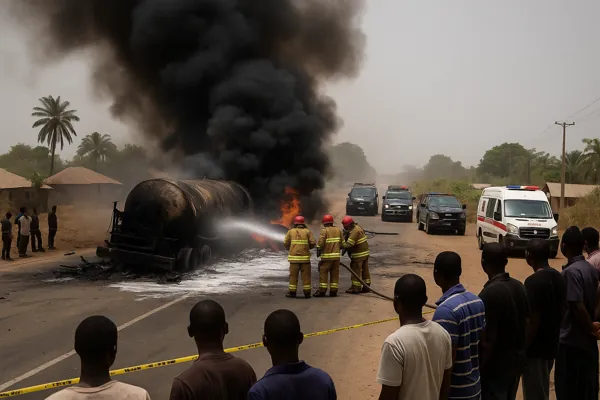
Niger State, Nigeria — A tragic Nigeria Fuel Tanker Explosion has killed at least 35 people and injured dozens more in Katcha Local Government Area, sending shockwaves through local communities and reigniting debate over road safety and fuel transport standards. The inferno erupted on Tuesday, October 22, 2025, after a petrol tanker overturned on the busy Bida–Agaie highway and residents rushed to collect leaking fuel before it exploded.
Emergency services have described the scene as one of the worst road-related fire disasters in recent Nigerian history.
A Recurring Tragedy in Nigeria’s Fuel Transport System
Fuel tanker explosions have become a haunting feature of Nigeria’s transport landscape. With limited pipeline infrastructure and aging road networks, thousands of fuel tankers travel daily across the country, posing constant danger to lives and property.
In 2021, a similar explosion in Oshigbudu, Benue State, killed 50 people, while Lagos and Rivers States have witnessed multiple tanker fires in recent years. Experts have long warned that Nigeria’s overreliance on road-based petroleum distribution is unsustainable and unsafe.
The latest Nigeria Fuel Tanker Explosion adds to this grim legacy, once again exposing regulatory lapses, poor infrastructure, and inadequate public awareness of fuel hazards.
The Moments Before the Blast
According to eyewitnesses and the Federal Road Safety Corps (FRSC), the petrol tanker involved in the Nigeria Fuel Tanker Explosion was traveling from Lagos toward Minna when it lost control on a deteriorated section of the Bida–Agaie highway. The vehicle, carrying thousands of liters of premium motor spirit (PMS), overturned, spilling fuel across the road and into nearby gutters.
Before law enforcement could secure the area, dozens of residents — many struggling with poverty — rushed to the scene with buckets and containers to collect the petrol. Within minutes, a spark — believed to have come from friction or a mobile phone — ignited the fumes, causing a massive explosion.
Witnesses described a deafening blast followed by an inferno that engulfed bystanders, vehicles, and nearby shops. Several motorcycles and a passenger bus caught fire instantly. By the time firefighters and emergency personnel arrived, much of the area had been reduced to ashes.
The FRSC confirmed at least 35 deaths, though local reports suggest the toll could be higher, with over 40 people hospitalized for severe burns in Bida and Minna General Hospitals.
Why Tanker Explosions Continue Unchecked
Transportation and safety experts argue that the Nigeria Fuel Tanker Explosion exposes long-standing systemic failures. Nigeria’s petroleum supply chain relies heavily on road tankers due to vandalized pipelines and a lack of functioning refineries.
Dr. Emmanuel Chukwu, a transportation analyst at the University of Lagos, told Global Standard News that most fuel tankers in use are decades old and poorly maintained. “These vehicles are ticking time bombs. Without enforced maintenance standards and better driver training, the cycle of explosions will continue,” he warned.
Another contributing factor is the risky behavior of locals during fuel spills. Economic hardship and low safety awareness drive people to scoop fuel despite repeated public safety campaigns. Analysts say this reflects both poverty and inadequate civic education on disaster risks.
Calls for Accountability
Niger State Governor Mohammed Umar Bago described the Nigeria Fuel Tanker Explosion as “a heartbreaking tragedy that could have been prevented,” and directed immediate medical and financial support for victims.
The Federal Road Safety Corps (FRSC) has launched an investigation into the cause of the accident and urged citizens to avoid approaching accident scenes involving fuel.
In a statement, the agency said, “The loss of lives in Niger State is deeply regrettable. We appeal to motorists and residents to recognize that spilled fuel is not an opportunity—it’s a deadly hazard.”
Meanwhile, the Nigeria Security and Civil Defence Corps (NSCDC) has been tasked to work with state authorities to monitor tanker routes and ensure compliance with safety standards. The Department of Petroleum Resources (DPR) has also pledged to review operational licenses for transporters found to be using unfit vehicles.
Burn Victims and Grieving Families
Hospitals in Bida and Minna have been overwhelmed with casualties from the Nigeria Fuel Tanker Explosion. Medical workers say most victims suffered third-degree burns, requiring specialized care that many local facilities cannot provide.
The Niger State Emergency Management Agency (NSEMA) confirmed that temporary shelters have been set up for displaced residents whose homes and shops were destroyed.
Community leaders have appealed for donations of blood, food, and medical supplies, while local mosques held mass prayers for the dead.
Eyewitness accounts reveal harrowing scenes — parents searching for children, survivors with severe burns calling for help, and emergency teams working through the night to recover remains. “It was like hellfire on earth,” said a resident who lost two relatives.
Lessons Beyond Niger State
Beyond Niger State, the Nigeria Fuel Tanker Explosion reflects a nationwide infrastructure and governance challenge. Nigeria, Africa’s leading oil producer, continues to import refined fuel, transporting it via thousands of trucks that traverse crumbling highways daily.
International observers note that such tragedies also tarnish Nigeria’s global image and expose broader public safety failures.
The World Bank and United Nations Development Programme (UNDP) have previously highlighted that accidents linked to fuel transportation cost Nigeria billions in property damage, medical care, and lost productivity each year.
Globally, the incident underscores the urgent need for sustainable infrastructure investment and stricter enforcement of transport safety regulations in developing economies. For local communities, it is a call to balance economic survival with personal safety awareness.
Can Nigeria Prevent the Next Tragedy?
Experts say preventing another Nigeria Fuel Tanker Explosion requires bold structural reforms. Key recommendations include:
- Rehabilitating Pipelines: Restoring vandalized fuel pipelines to reduce dependence on road tankers.
- Upgrading Fleet Standards: Enforcing age and maintenance regulations for tanker vehicles.
- Public Awareness Campaigns: Expanding grassroots education on the dangers of fuel scavenging.
- Emergency Response Capacity: Strengthening fire and health services along major transport corridors.
Civil society groups have urged President Bola Tinubu’s administration to treat fuel transport reform as a national emergency. Some have also called for the reintroduction of the Petroleum Equalization Fund (PEF) to support safe and efficient distribution systems.
Public Sentiment and Online Reaction
News of the Nigeria Fuel Tanker Explosion quickly spread across social media, with hashtags such as #NigerStateExplosion, #FuelTankerTragedy, and #PrayForNigeria trending nationwide.
Many Nigerians expressed frustration that similar tragedies continue despite repeated warnings. “We mourn again because nothing changes,” one user posted on X (formerly Twitter).
Others called for mandatory safety inspections of fuel trucks and harsher penalties for transporters flouting safety rules.
In the diaspora, Nigerian communities in London, Houston, and Toronto held vigils to honor victims, describing the tragedy as “avoidable and deeply painful.”
Conclusion: Turning Pain into Prevention
As emergency teams clear debris and families bury their dead, the Nigeria Fuel Tanker Explosion stands as a grim reminder of the human cost of policy failure and neglect. It is not just an accident—it is a call to action.
Without swift investment in safer fuel transport systems, stronger enforcement, and public education, similar disasters will continue to haunt Nigeria’s highways.
For now, Niger State grieves, but the nation must learn — and act — before another fire claims more innocent lives.
Internal Links:
- Ghana Grenada Nurse Recruitment Pact: A Landmark Health Partnership
- Ghana Health Workforce Crisis: GHS6bn Needed as 180,000 Face Unemployment by 2028
External Links:
- Al Jazeera – Nigerian Fuel Tanker Explosion Kills 35
- Reuters – At Least 35 Killed in Nigeria Fuel Tanker Explosion