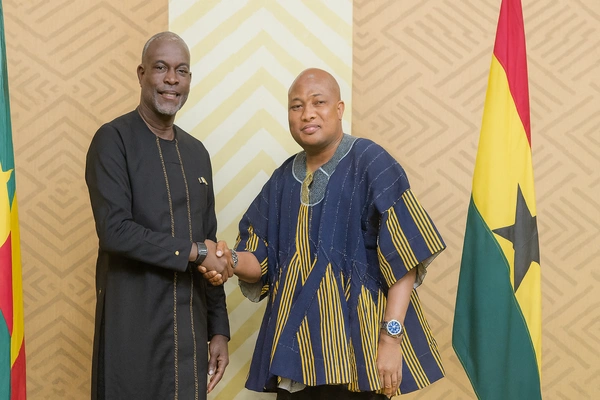
A Historic Health Workforce Accord
The Ghana Grenada pact has officially been signed, establishing a landmark framework for deploying Ghanaian nurses to the Caribbean island nation of Grenada. The Memorandum of Understanding (MoU) was sealed in Accra during the state visit of Grenadian Prime Minister Dickon Amiss Thomas Mitchell.
This historic agreement underscores the growing partnership between Africa and the Caribbean, aiming to bridge healthcare workforce gaps while expanding career prospects for Ghanaian professionals abroad. With both nations emphasizing ethical recruitment and mutual benefit, the deal marks a new era in South–South diplomacy built on shared values and sustainable development goals.
Strengthening South–South Cooperation
For decades, Ghana has earned global respect as a producer of world-class nurses. Institutions such as Korle-Bu Teaching Hospital and KNUST’s School of Nursing have produced thousands of health professionals serving across continents. Yet limited domestic job openings have driven calls for structured overseas placements.
The newly signed Ghana Grenada pact reflects this strategic direction—ensuring skilled migration is organized, transparent, and mutually beneficial. Ghana has previously pursued similar partnerships with Germany, Barbados, and the United Kingdom, emphasizing fairness, worker protection, and capacity-building.
Grenada, with a population of around 120,000, faces chronic nurse shortages in public hospitals. By drawing from Ghana’s trained workforce, the Ghana Grenada pact seeks to stabilize Grenada’s healthcare delivery while maintaining professional and ethical recruitment standards.
The MoU was signed by Ghana’s Foreign Affairs Minister Samuel Okudzeto Ablakwa and Grenada’s Foreign Minister Joseph Andall, marking a shared commitment to strengthen cooperation in health, education, and trade.
What the Agreement Entails
Under the Ghana Grenada pact, Ghana will deploy qualified nurses and allied health professionals to Grenada’s Ministry of Health. These professionals will receive full recognition of their qualifications, fair compensation, and guaranteed work permits.
Key provisions include:
- A Joint Oversight Committee to enforce international labor standards and monitor welfare.
- Exchange programs connecting Ghanaian nursing schools with Grenadian institutions.
- Ongoing training and certification to maintain professional excellence.
- Safe migration provisions, covering accommodation, insurance, and repatriation rights.
Both nations stressed that the Ghana Grenada pact is not a “brain drain,” but a strategic export of professional services, boosting Ghana’s foreign income through remittances and skill exchange.
Recruitment will prioritize experienced nurses with at least three years in clinical or community practice. Pre-departure briefings will prepare recruits for Grenada’s healthcare protocols and cultural environment.
A Win–Win Strategy for Two Nations
Analysts view the Ghana Grenada pact as a win–win innovation in global health diplomacy. It represents a practical model where developing nations collaborate to solve workforce imbalances instead of depending solely on Western assistance.
For Ghana, this partnership aligns with the National Labour Mobility Strategy (2024–2030), promoting ethical global employment for surplus skilled labor. It creates new income opportunities and strengthens Ghana’s global reputation in healthcare training and professionalism.
For Grenada, the pact offers immediate relief to hospitals facing chronic understaffing. It ensures consistent patient care, improved outcomes, and professional mentorship programs. Experts compare it to the Kenya–Jamaica nurse programand Cuba’s health diplomacy model, both seen as precedents of solidarity across developing regions.
Reactions and Official Statements
At the signing ceremony, Samuel Okudzeto Ablakwa hailed the initiative as a moral and economic triumph.
“The Ghana Grenada pact is not just about recruitment — it’s a cultural and humanitarian bridge between Africa and the Caribbean,” Ablakwa stated.
Grenada’s Prime Minister Dickon Mitchell expressed optimism, emphasizing the pact’s potential to transform healthcare services.
“By partnering with Ghana, we are building a stronger medical workforce and reinforcing our shared heritage,” he said.
Public health experts in both nations described the Ghana Grenada pact as a “model for ethical migration.” However, the Ghana Registered Nurses and Midwives Association (GRNMA) urged careful monitoring to prevent domestic workforce gaps.
Meanwhile, global observers from the World Health Organization (WHO) and Caribbean Public Health Agency (CARPHA) praised the pact as an example of responsible workforce sharing between developing nations.
Global and Local Impact
The Ghana Grenada pact carries implications far beyond healthcare. It strengthens Africa–Caribbean unity, aligns with UN Sustainable Development Goals (SDG 3 & 8), and sets a precedent for equitable migration partnerships.
For Ghanaian nurses, it offers career advancement, international exposure, and better income stability. For Grenada, it brings fresh expertise, improved hospital efficiency, and long-term healthcare capacity building.
The agreement may also lead to academic partnerships, medical research collaborations, and increased student exchanges — fostering deeper people-to-people connections across continents.
By showcasing the potential of South–South cooperation, the Ghana Grenada pact sends a clear message: nations of the Global South can solve shared challenges through unity, innovation, and fairness.
A Symbol of Shared Progress
The Ghana Grenada pact stands as a historic symbol of progress and partnership. It goes beyond job creation — it represents how two continents once divided by history are now connected by shared goals for better healthcare and human development.
If implemented ethically, this pact could reshape global perceptions of African expertise while strengthening Grenada’s health system — embodying GSN’s guiding principles: Truth. Depth. Global Reach.
Internal Links
- Odinga Funeral Stampede: 17 Injured as Kenya Mourns Iconic Leader
- Africa’s True Size: Correcting Centuries of Distortion