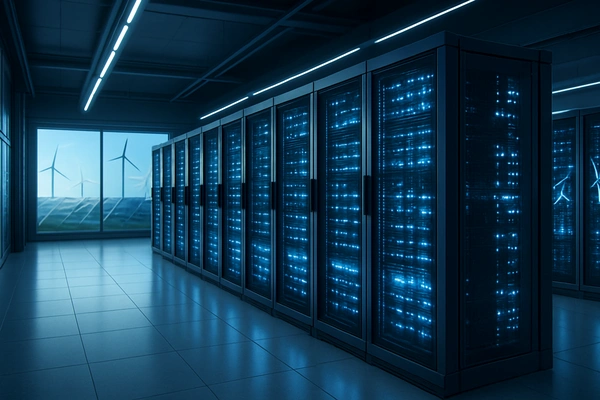
AI Models Driving an Energy Revolution
The launch of Sora 2 and the relentless global dominance of ChatGPT have ignited a high-stakes conversation about AI’s energy footprint. The surge in Sora 2 ChatGPT power usage has forced OpenAI to confront an extraordinary reality: its innovations now consume power on a scale once reserved for small nations.
To keep pace, OpenAI sealed a groundbreaking 10-gigawatt infrastructure deal with Broadcom, representing one of the largest hardware collaborations in technology history. This bold step is more than expansion — it’s survival. As AI models grow more capable, they also grow hungrier, demanding unprecedented electricity and data-center cooling resources. The new deal marks a decisive moment in the global energy-AI relationship, underscoring that intelligence now comes with a measurable wattage cost.
From Digital Brilliance to Energy Burden
When OpenAI unveiled ChatGPT in 2022, few imagined its meteoric rise would reshape the world’s digital habits. Within months, classrooms, companies, and creators were using it to draft, teach, and innovate. Then came Sora 2, the firm’s text-to-video breakthrough capable of producing photorealistic footage in seconds. The combined momentum of both models accelerated AI’s public adoption — and amplified Sora 2 ChatGPT power usage to staggering levels.
Historically, few considered the environmental cost of neural networks. Behind the scenes, clusters of GPUs quietly performed trillions of operations while cooling systems devoured electricity. By 2025, research from Sustainability by Numbers estimated that generating a single 5-second Sora 2 clip could require nearly 1 kWh of energy. Meanwhile, ChatGPT’s daily traffic — hundreds of millions of queries — demanded vast computational throughput from cloud servers spanning continents.
Executives at OpenAI now acknowledge that the next phase of progress is not just cognitive brilliance but sustainable scalability: teaching machines to think efficiently, not just intelligently.
The 10 Gigawatt Broadcom Deal
In October 2025, OpenAI confirmed its strategic alliance with Broadcom to co-design and deploy 10 gigawatts of custom AI infrastructure between 2026 and 2029.
(Sources: Reuters, The Verge)
This sweeping partnership aims to reduce reliance on Nvidia’s chips and to produce new AI accelerators tuned specifically for video generation and large-language inference. The initiative includes next-generation cooling, greener data-center design, and distributed computing hubs across the U.S., Europe, and Asia.
OpenAI executives called it “the world’s largest coordinated AI hardware deployment.” Ten gigawatts — roughly the output of ten nuclear reactors — will supply the power foundation for the next decade of generative models. According to internal sources, Sora 2 ChatGPT power usage was a major catalyst. Together, these models process tens of billions of tokens and video frames daily, creating sustained load profiles that traditional data-center architecture can no longer handle.
The True Cost of Intelligence
The surge in Sora 2 ChatGPT power usage reveals a deeper paradox at the heart of artificial intelligence: the smarter our systems become, the more energy they need. Yet OpenAI’s 10 GW plan reframes this problem as an opportunity for innovation.
Energy economists suggest that, if unchecked, AI data-center demand could account for 1 % of global electricity consumption by 2030. OpenAI claims its solution lies in efficiency — designing chips that deliver greater computational output per joule and anchoring operations to renewable grids. The firm’s roadmap mirrors Microsoft’s promise of 100 % carbon-free energy by 2030, aligning hardware growth with climate responsibility.
This approach highlights a new competitive metric in the AI era: performance-per-watt. Companies that master low-energy computation will not only reduce costs but also shape global standards for green innovation. The Broadcom collaboration thus positions OpenAI as a pioneer in energy-aware AI, setting benchmarks that rivals like Google DeepMind and Meta AI Research are racing to match.
Reactions and Expert Voices
Environmental advocates caution that even green grids have limits.
Dr. Mei Lin, sustainability researcher at Stanford, notes:
“We’re entering an age where computation itself is a climate variable. The question is not whether AI can change the world — but whether the world can power AI responsibly.”
At the same time, policy analysts emphasize the upside. Massive power commitments, they argue, can accelerate renewable investment. Building infrastructure for Sora 2 ChatGPT power usage could, paradoxically, fund the clean-energy transition by guaranteeing long-term electricity buyers.
In Africa, the development resonates strongly. Engineers in Ghana point to Google’s AI Community Center in Accra as proof that high-tech projects can coexist with renewable expansion. OpenAI’s scale may inspire similar initiatives, coupling AI infrastructure with solar and hydro innovation across emerging markets.
From Silicon Valley to the Global South
The ripple effects of Sora 2 ChatGPT power usage are already global. Data-center ecosystems are migrating toward regions rich in renewable potential — Nordic hydro basins, North American wind corridors, and African solar belts. Governments offering clean-energy incentives are vying to host AI clusters that promise jobs, innovation, and digital sovereignty.
For Ghana and other African nations, this could mean a new frontier of AI-energy diplomacy. Countries that invest early in green capacity can attract billion-dollar data-center projects and leapfrog traditional industrial bottlenecks. OpenAI’s model provides a template for blending technology development with environmental stewardship.
Meanwhile, regulatory frameworks are tightening. The EU’s proposed AI Sustainability Directive would compel developers to disclose their training-run emissions and energy sources. OpenAI has publicly supported these transparency measures, signaling its intent to lead not only in capability but also in ethical energy governance.
This intersection of innovation, policy, and ecology could define how civilization powers intelligence itself.
The Next Frontier Is Power Efficiency
The Broadcom alliance represents more than a megawatt milestone — it’s a paradigm shift. The trajectory of Sora 2 ChatGPT power usage proves that the future of AI will hinge as much on kilowatts as on algorithms.
As OpenAI scales toward global infrastructure autonomy, its success will depend on mastering energy efficiency, transparency, and environmental ethics. In the long run, the race to make machines think may evolve into a race to make them think sustainably.
For OpenAI, one truth stands firm: if intelligence is infinite, energy must become renewable.
Internal Links
- OpenAI’s Sora App Breaks Records with 1 Million Downloads in Days
- Inside the OpenAI Video App Copyright Clash Rocking Global Media