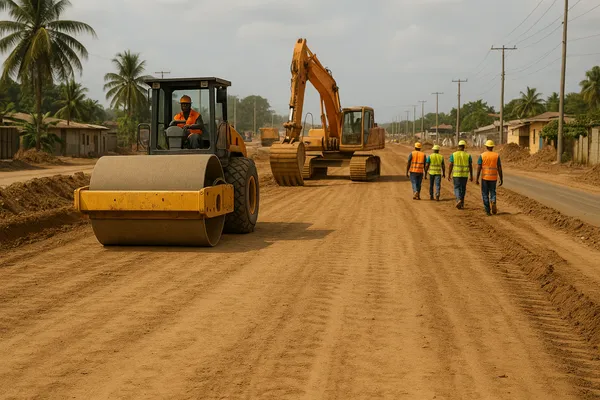
Ghana has signed a landmark Ghana Debt Restructuring agreement with the United Kingdom worth $256 million. The deal, concluded in Accra in September 2025, represents the country’s third restructuring pact of the year and is part of an IMF-backed program to stabilize the economy. Officials say the UK deal will unlock funds for five critical infrastructure projects, signaling fresh momentum in Ghana’s recovery plan.
How Ghana’s Debt Crisis Escalated
Ghana’s current economic challenges did not emerge overnight. By late 2022, debt levels had risen to unsustainable levels, with the debt-to-GDP ratio surpassing 90%. The COVID-19 pandemic reduced government revenues, while rising global interest rates drove up the cost of borrowing. To relieve pressure, the government suspended most external debt payments in December 2022 and entered talks with the IMF.
In 2023 and 2024, discussions with creditor nations intensified. By early 2025, Parliament approved a $2.8 billion debt relief package under the External Creditor Committee, creating the basis for restructuring agreements. Deals were first reached with France and China’s Exim Bank, and the third significant milestone came with the UK’s participation. Without such agreements, flagship projects like road expansions, hospital upgrades, and market redevelopments remained frozen, worsening public frustration and investor uncertainty.
Inside the $256M UK Debt Restructuring Deal
The latest agreement was signed by Finance Minister Dr. Cassiel Ato Forson, representatives from UK Export Finance, and His Majesty’s Trade Commissioner to Africa, John Humphrey. The restructuring covers $256 million of Ghana’s obligations to the UK, providing longer repayment terms and reduced near-term servicing requirements.
Crucially, the arrangement frees resources for five stalled projects that had become symbols of the country’s financial paralysis:
- Bolgatanga Road Expansion – boosting northern connectivity and supporting agricultural trade.
- Obetsebi Lamptey Interchange Phase 2 – easing congestion in Accra’s busiest corridor.
- Kejetia Market Phase 2 – revitalizing Kumasi’s commercial hub for thousands of traders.
- Tema–Aflao Road Upgrade – strengthening Ghana’s trade link to Togo and the ECOWAS subregion.
- Komfo Anokye Teaching Hospital Maternity Block – expanding healthcare services in Ashanti Region.
Combined, these projects represent an estimated 2.8 billion cedis in value. Officials emphasize that the UK’s support not only restructures debt but also ensures communities see tangible improvements in daily life. Forson described the development as “a lifeline for Ghana’s infrastructure ambitions.”
What Experts Say About Ghana’s Debt Path
Analysts argue the Ghana Debt Restructuring process is both a fiscal and political milestone. By easing short-term repayment pressures, the government has more fiscal space to fund essential services and investment. Symbolically, the UK deal reinforces global confidence in Ghana’s reform commitments.
Yet challenges loom. Eurobond holders and private banks remain outside the restructuring framework, and together they represent the bulk of Ghana’s external obligations. Until negotiations conclude with these creditors, the country’s financial position remains vulnerable.
Economists also warn that infrastructure investments must be coupled with improved domestic revenue collection, spending discipline, and export diversification. Cocoa, gold, and oil continue to dominate foreign earnings, but price volatility poses risks. Without broadening the export base, Ghana risks returning to unsustainable debt levels once repayments resume.
Ghana Debt Restructuring: Official Statements and Public Reactions
At the signing ceremony in Accra, Finance Minister Forson remarked:
“This agreement with the United Kingdom is not just about restructuring debt—it is about rebuilding Ghana. These projects represent hope, jobs, and growth for our people.”
UK Trade Commissioner John Humphrey echoed this sentiment, saying:
“The United Kingdom is proud to support Ghana at this critical time. This deal ensures that critical infrastructure will be completed, boosting trade and development in the years ahead.”
On the ground, local responses have been mixed but largely optimistic. In Kumasi, traders at the Kejetia Market expressed relief that long-delayed works may finally resume. Health professionals in Ashanti Region welcomed the revival of the Komfo Anokye maternity block, calling it vital to reducing maternal mortality.
Civil society organizations stressed the importance of transparency. Groups like the Ghana Integrity Initiative warned that strict monitoring will be essential to avoid cost overruns, contract inflation, and misuse of funds.
Impact on Ghana’s Economy and Beyond
The $256M restructuring provides Ghana with fiscal breathing space at a critical juncture. By securing favorable repayment terms, the government can redirect funds toward development priorities rather than servicing old debt. In the short term, this strengthens social programs and supports employment through infrastructure construction.
Internationally, the UK deal enhances Ghana’s reputation as a reform-focused economy. Investors interpret successful restructuring as a signal that Ghana is on track to restore stability. At a diplomatic level, the agreement reinforces UK-Ghana ties, aligning with London’s strategy to deepen trade links across Africa post-Brexit.
Regionally, the Ghana Debt Restructuring model may influence negotiations in countries like Zambia and Kenya, which also face heavy debt burdens. Observers note that creditor nations are more likely to offer concessions when governments demonstrate credible reforms and efficient project delivery. Ghana’s progress could therefore provide a template for other African economies in distress.
The Road Ahead for Ghana’s Recovery
The third major restructuring agreement of 2025, worth more than $256 million with the UK, is an important milestone in Ghana’s recovery strategy. It brings immediate debt relief, restarts projects that citizens have awaited for years, and signals international confidence in reforms.
Still, the outlook hinges on execution. Completing the five projects without delays, negotiating effectively with private creditors, and broadening the economic base will determine whether the gains from the Ghana Debt Restructuringendure. For now, the agreement provides a crucial window of opportunity for stability and growth.
Internal links: