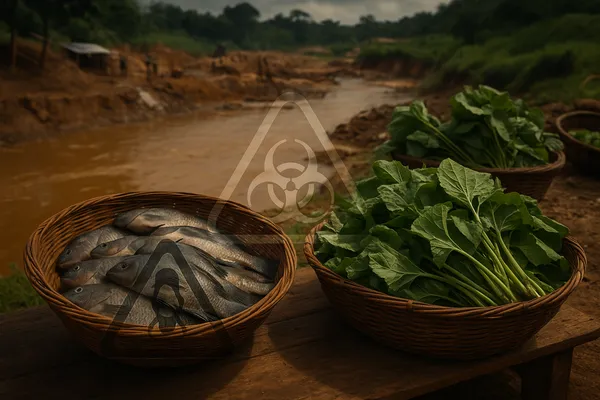
Toxic levels of lead have been confirmed in fish and vegetables from Ghana’s mining regions, according to a nationwide study conducted in 2025 by Pure Earth Ghana in collaboration with the Environmental Protection Agency (EPA). The report highlights widespread contamination in mining-affected communities and warns that prolonged consumption of these foods could have devastating health consequences.
The findings, reported by CitiNewsroom and MyJoyOnline, confirm that foods produced in Central, Ashanti, and Western North Regions exceeded World Health Organization (WHO) safety thresholds for lead in food. Researchers warn that the issue has become a public health emergency.
Fish and Vegetables Exceed Safety Limits
Fish from mining communities such as Konongo Zongo (Ashanti Region) and Akwaboso (Central Region) were found to contain lead concentrations above WHO’s guideline of 0.3 mg/kg for safe consumption. While the study did not disclose precise numbers in all cases, experts noted that some samples were several times above safe levels.
In the Western North Region, pumpkin leaves tested showed dangerously high levels of lead, far beyond WHO limits. Researchers explained that leafy vegetables are particularly vulnerable since they absorb heavy metals through roots when irrigated with contaminated river water.
These results confirm that Ghana’s staple foods—fish and vegetables—are at risk of heavy metal contamination in areas where mining activities pollute soil and waterways.
Health Risks of Lead Exposure
The presence of toxic levels of lead in Ghana’s food chain raises urgent health concerns. According to the WHO:
- Children exposed to lead may suffer reduced IQ, poor concentration, and long-term learning disabilities.
- Adults are at risk of high blood pressure, kidney disease, and cardiovascular problems.
- Pregnant women risk passing lead to unborn babies, causing developmental problems and birth complications.
The WHO emphasizes that no amount of lead exposure is considered safe, as even low doses accumulate in the body and cause damage over time.
Rivers as Pathways of Contamination
The study also revealed that rivers in mining regions—including the Ankobra and Tano Rivers—have become conduits for contamination. Fish from these rivers were shown to contain unsafe levels of heavy metals, including lead and mercury.
Farmers who use river water for irrigation unknowingly introduce these toxic elements into vegetables. In Konongo Zongo, researchers also recorded extremely high levels of mercury in soils (over 1,300 ppm), showing that contamination in mining zones extends beyond lead to multiple hazardous metals.
Food Security and Economic Concerns
The confirmation of toxic levels of lead in food poses not only health risks but also economic challenges:
- Farmers’ livelihoods: Buyers increasingly avoid vegetables grown near mining zones, reducing local incomes.
- Trade risks: Ghana’s agricultural exports could face restrictions if international markets raise concerns about heavy metal contamination.
- Healthcare burden: Long-term exposure increases cases of kidney disease, hypertension, and neurological disorders, putting pressure on Ghana’s health system.
Farmers in towns like Tarkwa and Bogoso have already reported falling sales, with some saying consumers refuse to buy produce suspected of being contaminated.
Policy Gaps and Urgent Action
The EPA has acknowledged the issue and promised stricter food safety monitoring. However, challenges remain due to weak enforcement and the persistence of illegal mining.
Health experts and civil society organizations are calling for urgent interventions, including:
- Regular nationwide soil and water testing in mining communities.
- Bans on farming along polluted rivers and near mining tailings.
- Public education campaigns to inform families about safe food practices.
- Stronger sanctions against illegal miners polluting farmlands and waterways.
The WHO recommends that Ghana also invest in long-term food monitoring systems and adopt safer agricultural practices in high-risk areas to reduce community exposure.
Conclusion
The evidence is clear: toxic levels of lead in fish and vegetables are a growing crisis in Ghana’s mining regions. Unless urgent action is taken, millions risk chronic poisoning from the very foods they rely on daily.
This crisis requires a coordinated response from government, civil society, scientists, and international partners to safeguard Ghana’s food supply, protect vulnerable populations, and prevent long-term damage to public health and the economy.
Internal Links
- South Sudan VP Treason Charges Spark Political Crisis
- Audit Uncovers Babies on NSA Payroll in Shocking Scandal
- Google AI Africa Investment: $37M Boost, Accra Center Opens