A Shocking Rescue That Stunned the Nation
A shocking tragedy has gripped India after a newborn baby buried alive was miraculously rescued by a shepherd in Shahjahanpur, Uttar Pradesh. The 15-day-old girl was found beneath a thin layer of soil near the Bahgul River bridge, her tiny hand sticking out of the ground and her faint cries drawing the shepherd’s attention.
The disturbing discovery on September 19, 2025, has reignited debate over the persistence of female infanticide and the neglect of child protection systems in India’s rural heartlands. For millions following the story, the survival of this child represents both a miracle and a moral reckoning.
Enduring Gender Discrimination in Rural India
Despite legislative reforms and social campaigns, India continues to battle the centuries-old scourge of gender discrimination. The female infanticide crisis, though outlawed, persists in some rural regions where the birth of a girl is viewed as an economic liability due to dowry practices and patriarchal traditions.
According to UNICEF, thousands of newborn girls are abandoned or killed every year in India. Cultural attitudes, combined with poverty and lack of education, have sustained the preference for sons in several states—including Uttar Pradesh, Haryana, and Rajasthan.
The newborn baby buried alive case starkly exposes how deeply entrenched gender prejudice remains. Despite progress in urban centers, rural districts like Shahjahanpur continue to see tragic acts of neglect, revealing that awareness and enforcement alone have not yet transformed social attitudes.
How a Shepherd’s Instinct Saved a Life
The dramatic rescue has been described as nothing short of divine intervention. A shepherd grazing his goats along the Bahgul River noticed muffled cries and saw a small hand protruding from the ground. Overcome by instinct, he began digging with his bare hands until he uncovered the newborn baby buried alive, weak and gasping for air.
Villagers quickly gathered, wrapping the infant in cloth and rushing her to the nearest health center before transferring her to the Government Medical College in Shahjahanpur.
“The baby was in a critical condition—weak, cold, and suffering from infection,” said one attending nurse. “It’s a miracle she survived.”
(Source: Times of India)
The shepherd’s act of humanity has since been hailed nationwide as an example of courage and compassion in a moment of unimaginable horror.
Inside the Hospital: A Fragile Fight for Survival
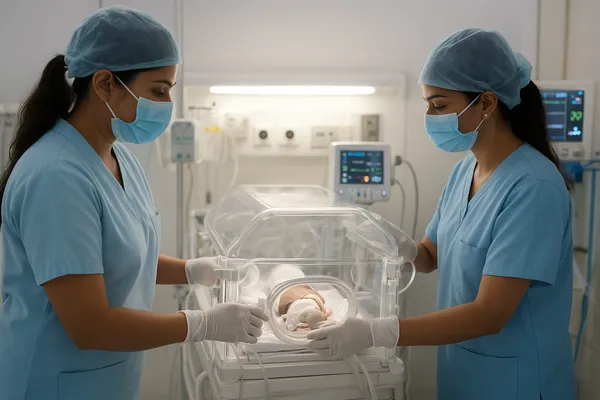
Doctors at the Shahjahanpur Government Medical College confirmed that the newborn baby buried alive is receiving intensive care in the Special Newborn Care Unit (SNCU). Medical officials said the baby suffered multiple wounds—believed to be caused by animal bites—and severe dehydration but is now stable.
“She was brought in a near-fatal state but is breathing on her own,” said a senior pediatrician at the hospital. “We are cautiously optimistic and monitoring her recovery round the clock.”
(Source: NDTV)
Social workers have praised the medical team’s dedication, noting that the infant’s survival symbolizes resilience against cruelty. Once stable, the Child Welfare Committee (CWC) will assume guardianship, ensuring that the child is placed in a safe home or eligible for adoption under the national juvenile justice framework.
Police Launch Criminal Probe into the Incident
Law enforcement officials in Shahjahanpur have opened a high-priority investigation to identify those responsible for burying the child alive. Police have filed charges under sections of the Indian Penal Code (IPC) relating to attempted murder, child endangerment, and abandonment.
“The act of burying a newborn baby buried alive is a heinous crime and an assault on humanity,” stated a Shahjahanpur Police spokesperson. “We will ensure the culprits face the maximum punishment allowed by law.”
(Source: Indian Express)
Preliminary investigations suggest the crime may have occurred shortly after birth, potentially by relatives seeking to conceal or eliminate an unwanted female child. Officers are currently cross-checking local medical records and midwife reports to trace the baby’s origins.
Why Female Infanticide Still Endures
Experts argue that the roots of female infanticide extend beyond poverty and superstition—it is a deeply cultural issue reflecting gender inequality at every level of society. Despite progress in women’s rights, the preference for sons continues to influence family decisions, especially in areas where economic resources are scarce.
India’s Pre-Conception and Pre-Natal Diagnostic Techniques (PCPNDT) Act, which prohibits sex-selective abortions, remains poorly enforced in several states. Additionally, limited access to social welfare schemes discourages families from raising daughters.
“This tragedy is not isolated,” said gender rights activist Anita Sharma. “It is a mirror held up to society’s conscience. Until the value of a girl child equals that of a boy in our collective mindset, cases like the newborn baby buried alive will continue to surface.”
Analysts also note that the digital age, while amplifying awareness, has not yet translated into rural behavior change. The disconnect between national campaigns and ground-level social realities remains India’s biggest challenge.
Public Outrage and the Demand for Reform
The horrifying incident has sparked a wave of outrage and empathy across social media platforms. Within hours of breaking, hashtags like #SaveOurGirls, #StopInfanticide, and #JusticeForNewborn trended nationwide. Millions expressed anger and heartbreak, calling for justice and systemic change.
Prominent figures in politics, Bollywood, and civil society joined the conversation. The National Commission for Protection of Child Rights (NCPCR) condemned the act and urged state authorities to strengthen surveillance in rural maternity wards.
Child rights organization CRY (Child Rights and You) called for the establishment of “emergency awareness teams in gender-sensitive districts” and direct reporting hotlines for suspected cases.
In Shahjahanpur itself, locals held vigils and community prayers for the child’s recovery. For many, the shepherd’s heroism has become a powerful symbol of hope amid despair—a testament to the difference one person’s compassion can make.
A Wake-Up Call for India and the World
The newborn baby buried alive case has reignited the global spotlight on India’s gender disparity crisis. International organizations such as UNICEF, UN Women, and Save the Children have cited the incident as proof that cultural change must go hand in hand with law enforcement.
India ranks low in the World Economic Forum’s Gender Gap Index, particularly in political representation and health outcomes for girls. Despite national campaigns like Beti Bachao, Beti Padhao (Save the Girl Child, Educate the Girl Child), rural outreach remains inconsistent.
Across South Asia, similar incidents reflect how patriarchal customs persist despite modernization. From Pakistan to Nepal, reports of newborn girls being abandoned or harmed underscore a regional challenge that transcends borders.
Experts insist that education, economic empowerment, and social accountability are key to preventing another newborn baby buried alive tragedy in the future.
Internal Links
- Ghanaian Doctors Mental Health Crisis Deepens
- Ghana Signs $1.5 Billion Oil Deal
- Africa Correct The Map: AU Backs Bold Campaign
External Links
UNICEF – India Gender Equality and Child Protection Report
Times of India – Baby Found Buried Alive in Shahjahanpur
NDTV – Uttar Pradesh: Newborn Rescued After Being Buried Alive