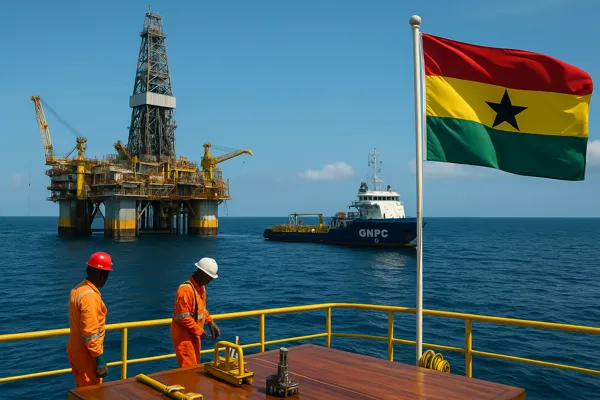
A Milestone for Ghana’s Energy Industry
Ghana Signs USD 1.5 Billion Deal with global energy partners Eni and Vitol, alongside the Ghana National Petroleum Corporation (GNPC), to accelerate oil and gas development under the Offshore Cape Three Points (OCTP) project. The landmark agreement, signed in Accra during Africa Oil Week, reinforces Ghana’s commitment to domestic energy expansion, long-term supply stability, and investor confidence.
Building on Ghana’s Upstream Success
Since the discovery of the Jubilee Field in 2007, Ghana has made steady progress as an oil-producing nation. The OCTP project, launched in 2018, has been vital in delivering natural gas for the country’s power sector. Through this new commitment, The Deal that extends the success of previous investments while setting a new benchmark for energy cooperation.
Under the venture, Eni holds 44.44%, Vitol 35.56%, and GNPC 20%, reflecting Ghana’s balance between national ownership and global partnership. This structure ensures technology transfer, fiscal returns, and job creation within the local economy.
Project Scope: Expansion of the OCTP Infrastructure
The Deal initiative focuses on expanding current operations and developing new fields within Ghana’s offshore basin. Officials confirm that the agreement will fund:
- Expansion of the Sankofa-Gye Nyame and Eban-Akoma reserves
- Installation of advanced subsea systems for enhanced extraction efficiency
- Upgrades to the onshore gas processing facility at Sanzule
- Environmental impact monitoring to maintain global sustainability standards
These activities position Ghana to meet growing domestic energy demand and export potential across the subregion.
Eban-Akoma Discoveries: Engineering Innovation Meets Sustainability
A highlight of the Ghana Signs USD 1.5 Billion Deal is the commercial development of the Eban-Akoma discoveries in Block 4, declared viable in July 2025. The joint partners plan to submit a Plan of Development (PoD) integrating existing OCTP infrastructure — an approach designed to minimize costs and reduce environmental impact.
By reusing subsea networks and leveraging Ghana’s offshore engineering expertise, the development aims to boost oil and gas output by over 20%. This strategy also aligns with Ghana’s energy transition goals, balancing hydrocarbon growth with carbon-conscious practices.
Strengthening National Supply Systems
Energy reliability remains one of Ghana’s top national priorities. Through this partnership, the government aims to ensure uninterrupted fuel supply to the country’s power plants, which depend heavily on gas from the OCTP project.
According to the Ministry of Energy, the additional production will help:
- Stabilize electricity generation for industries and households
- Reduce foreign fuel imports and exposure to price shocks
- Support Ghana’s target of energy independence by 2030
The project’s expanded gas supply is expected to power more than 60% of national electricity needs, directly benefiting millions of citizens and small enterprises.
Investment Beyond Oilfields
Beyond production, Ghana Signs USD 1.5 Billion Deal that includes a strong social development component. The partners—Eni, Vitol, and GNPC—will dedicate USD 10 million to social projects focused on education, healthcare, and skills training.
Initiatives include:
- Building modern classrooms and scholarship programs for STEM education
- Providing clean water systems and sanitation for coastal communities
- Offering entrepreneurship support for micro, small, and medium enterprises (MSMEs)
Over 10,000 Ghanaians are projected to benefit from these programs, reinforcing the government’s broader agenda for inclusive, sustainable growth.
Analysis: Policy Clarity Restores Investor Confidence
Experts say Ghana Signs USD 1.5 Billion Deal at a pivotal moment when investor confidence in Ghana’s upstream sector is regaining strength. Past challenges, such as regulatory ambiguity and field unitization disputes, had slowed progress. However, this agreement signals regulatory maturity, improved governance, and adherence to international standards.
Energy analysts describe the move as “a statement of stability,” highlighting Ghana’s successful balancing of private sector incentives with state participation through GNPC’s 20% equity stake.
This development also supports broader economic recovery goals under Ghana’s IMF-backed fiscal reform frameworkand complements national efforts to increase transparency in natural resource management.
Local Optimism and Global Recognition
Industry observers see the deal as a long-awaited boost for the energy economy. A senior upstream analyst told GSN:
“This is a defining step for Ghana’s petroleum future. It reaffirms that the country is open for business while staying committed to transparency and sustainability.”
Local contractors have also welcomed the agreement, citing potential job creation and supply-chain opportunities. Civil-society organizations, however, have urged consistent environmental oversight, calling for strict adherence to the Petroleum Revenue Management Act (PRMA) to ensure fair distribution of benefits.
Ghana’s Competitive Edge in West Africa
In a rapidly evolving regional market, Ghana Signs USD 1.5 Billion Deal that solidifies its position among leading West African oil producers. The move enables Ghana to compete with neighbors like Nigeria, Côte d’Ivoire, and Senegal, all expanding output amid rising global demand for African hydrocarbons.
The agreement’s transparency and sustainability focus give Ghana a competitive edge, presenting it as a stable, rule-based investment environment—an increasingly rare commodity in the global oil market.
Aligning with the Energy Transition
While the world moves toward decarbonization, Ghana is charting a middle path—pursuing clean growth while leveraging its fossil resources. Through this partnership, Ghana Signs USD 1.5 Billion Deal that demonstrates how developing economies can responsibly exploit hydrocarbons to finance renewable investments and social programs.
This approach reflects Ghana’s pragmatic energy transition policy — ensuring security today while preparing for the low-carbon economy of tomorrow.
Revenue Growth and Job Creation
The Ministry of Finance estimates that the Ghana Signs USD 1.5 Billion Deal could generate over USD 4 billion in state revenue across the project’s lifespan through royalties, corporate taxes, and dividends. Additionally, local participation frameworks under the Petroleum Commission are expected to channel nearly USD 800 million in contracts to Ghanaian firms.
These fiscal inflows could ease national debt pressures and finance public-sector priorities such as roads, education, and renewable infrastructure — provided that transparency and accountability remain intact.
Risk Management and Transparency
Despite its promise, the Ghana Signs USD 1.5 Billion Deal faces potential challenges, including global oil price fluctuations, cost overruns, and environmental hazards. To mitigate these, the partners have pledged adherence to ESG (Environmental, Social, and Governance) standards and frequent audits under the oversight of the Environmental Protection Agency (EPA).
Transparency in revenue allocation and stakeholder engagement will be critical in ensuring that the deal translates into sustainable national development rather than short-term gains.
A Defining Step Toward Energy Independence
Ultimately, Ghana Signs USD 1.5 Billion Deal with Eni and Vitol as a bold declaration of confidence in the nation’s energy potential. The agreement strengthens Ghana’s position as a reliable regional energy hub, secures long-term power stability, and reaffirms its commitment to inclusive economic growth.
If executed with integrity and foresight, this partnership will mark a turning point — moving Ghana closer to full energy independence and long-term prosperity, consistent with GSN’s values of Truth, Depth, and Global Reach.
Internal Links
- Ghana Exploration Wells to Be Drilled by Q3 2026 – Mahama
- Stolen Vehicle Menace: Dealers Union Backs Crackdown
- Japanese Police Apology at Grave Sparks Historic Reform Debate