A Digital Showdown Over TikTok
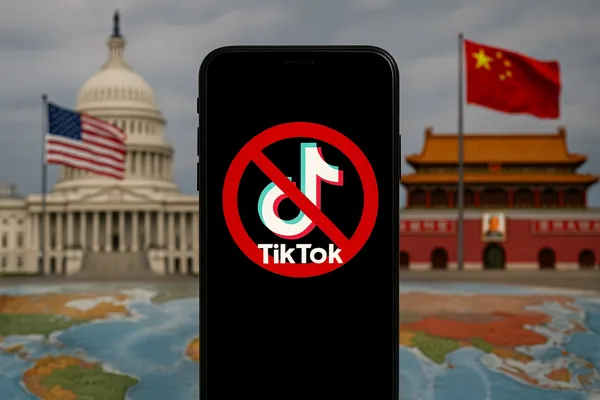
With the TikTok Ban deadline fast approaching, tensions between Washington and Beijing have reached their fiercest level in years. What began as a dispute over one social-media app has grown into a defining contest for control of the global digital order. At stake are issues of data security, economic leverage, and technological sovereignty—each shaping how nations regulate foreign-owned platforms in an increasingly fragmented internet.
Years of Suspicion and Surveillance Fears
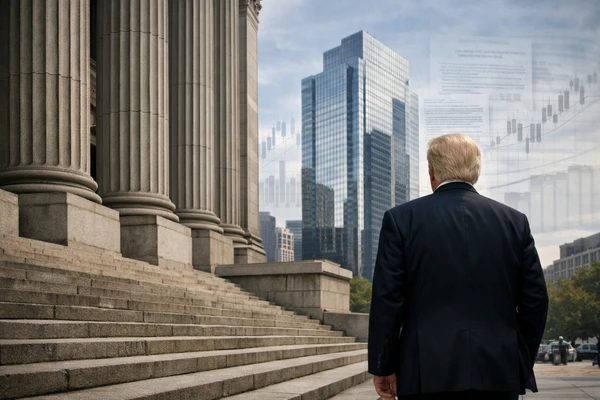
American scrutiny of TikTok started during the Trump administration, when lawmakers warned that ByteDance, the app’s Chinese parent company, could share U.S. user data with Beijing. Despite multiple audits and national-security reviews, both Republican and Democratic officials argued that safeguards remained insufficient.
President Biden’s 2025 legislation, requiring ByteDance to divest TikTok’s U.S. assets or face a full TikTok Ban, formalized those anxieties and brought the conflict to the current boiling point. Since then, the TikTok Ban debate has become emblematic of how national security and global trade intersect in the modern era.
U.S. Warning: Security First, Trade Second
After talks in Madrid on September 15, 2025, senior American officials underscored that national security—not tariff negotiations—must anchor discussions.
“If China does not drop its tariff and tech demands, the United States will move forward with banning TikTok in accordance with U.S. law,” one official said.
Washington insists Beijing stop linking divestiture to broader trade relief or export-control rollbacks. Under the TikTok Ban statute, ByteDance must complete the sale of its U.S. operations by September 17, or Apple and Google will be required to delist the app while internet providers block access nationwide. The warning signals that, for Washington, protecting user data outweighs any short-term economic cost.
Retaliation and Leverage
Beijing has rebuffed Washington’s terms, demanding that the U.S. ease tariffs on Chinese exports and loosen semiconductor restrictions. In a retaliatory move, China launched anti-dumping investigations into major American chipmakers—its clearest signal yet that the fight over the TikTok Ban could escalate into a broader trade war.
Chinese state media condemned the measure as “economic coercion,” portraying it as an attack on one of the nation’s most successful tech brands. Officials in Beijing argue that the ban violates the principles of fair competition and discriminates against Chinese innovation. They have also hinted that retaliatory actions could expand beyond the Ban to include U.S. technology firms operating in Asia.
The Divestiture Deadline: What Happens Next
If ByteDance fails to comply by the September 17 cutoff, enforcement will be immediate:
- App Removal: Apple and Google must delete TikTok from their stores.
- Access Block: Internet service providers must restrict connectivity.
- Sanctions: ByteDance could face financial penalties and legal injunctions.
The fallout could strand more than 170 million American users and disrupt advertising ecosystems worth billions. For countless small creators and brands, the ban threatens to erase years of community building and digital entrepreneurship overnight. Analysts warn that such disruption could reverberate across global social media markets and influencer economies.
Analysis: Beyond an App—A Struggle for Power
Experts agree the dispute now symbolizes the broader contest for technological dominance. The TikTok Ban underscores how digital platforms have become instruments of geopolitical power—capable of shaping public opinion, commerce, and culture.
If enforced, analysts warn, the measure may accelerate a “tech decoupling,” splitting the world into U.S.- and China-aligned digital spheres. Market volatility already reflects this risk as semiconductor and social-media stocks fluctuate amid fears of reciprocal sanctions.
Expert Reactions and Public Debate
Technology scholars and free-speech advocates remain deeply divided:
- Supporters praise the ban as a vital safeguard against data exploitation and foreign influence.
- Critics counter that it risks legitimizing censorship and undermines the open-internet ideal.
“This is digital Cold War diplomacy,” said Dr. Lina Chen, cybersecurity researcher at the National University of Singapore. “What’s at stake is not just one platform, but the rules of technological sovereignty itself.”
Meanwhile, petitions from U.S. content creators urging the government to reconsider have gathered millions of signatures, underscoring how intertwined the platform is with livelihoods and modern communication. For these creators, the TikTok Ban feels like collective punishment for corporate politics.
Global Impact: Europe, Asia, and the Digital Future
The TikTok Ban reverberates far beyond U.S. borders.
European regulators are weighing whether to mirror Washington’s national-security reasoning or preserve digital-trade neutrality under GDPR frameworks.
In Asia, India’s earlier ban on TikTok is cited as justification for tighter data-localization laws, while Japan and South Korea tread carefully to balance economic cooperation with cybersecurity alliances.
Observers warn that the growing patchwork of national rules could fragment the internet, increasing costs for global businesses and reducing cross-border innovation.
Possible Scenarios Ahead
- China Concedes: Beijing separates trade issues from tech, allowing ByteDance to sell TikTok’s U.S. branch and avert sanctions.
- U.S. Imposes Ban: Washington proceeds, prompting Chinese retaliation and investor panic.
- Compromise Extension: Both sides agree to delay enforcement and resume talks under diplomatic mediation.
- Retaliatory Escalation: China responds with tariffs or restrictions on American technology firms operating in Asia.
Whichever path unfolds, the TikTok Ban will serve as a precedent for how democracies and authoritarian systems contest digital influence in the 21st century.
A Test of Global Digital Governance
The approaching deadline transforms the TikTok Ban from a policy dispute into a referendum on the future of the open internet. For Washington, it is about securing national data and limiting foreign propaganda; for Beijing, it is a battle against perceived economic coercion.
As September 17 arrives, the world watches to see whether diplomacy prevails—or whether the era of digital globalization gives way to a divided web defined by politics, power, and protectionism.
Internal Links:
- US Withdraws from UNESCO Again
- Meta Invests Billions in AI Data Centers
- Germany and Spain Target Pro-Russian Hackers
External Links: