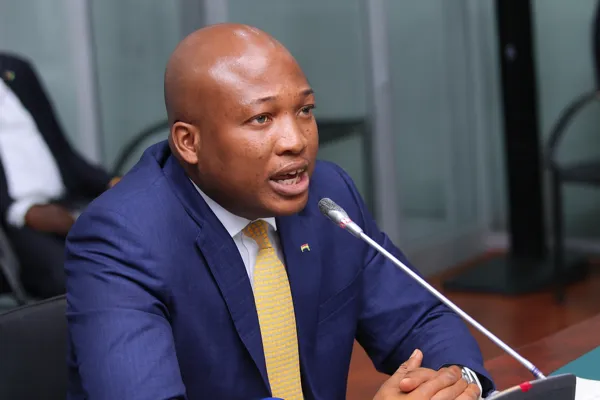
Accra, Ghana – Ghana’s controversial U.S. deportees arrangement has triggered nationwide discussion following statements from Samuel Okudzeto Ablakwa, Ranking Member of Parliament’s Foreign Affairs Committee. Ablakwa clarified that Cabinet has approved only a Memorandum of Understanding (MoU) and that Ghana has not received any financial, material, or logistical benefits under the arrangement. The revelation has heightened debate over national sovereignty, constitutional obligations, and the reintegration of deported citizens.
Understanding the Ghana U.S. Deportee MoU Framework
The Ghana U.S. Deportee MoU was formalized in 2025 to facilitate the repatriation of Ghanaian citizens deported from the United States. Unlike a treaty, the MoU does not have binding legal force under international law.
Article 75 of Ghana’s 1992 Constitution requires Parliamentary ratification for international treaties or agreements. By approving only an MoU, the government bypasses this constitutional requirement, leading to questions about whether executive actions may be overstepping legal limits.
Currently, diplomatic channels indicate that 188 Ghanaian citizens are scheduled for deportation from the U.S., but no structured reintegration programs or support mechanisms are in place. This creates the risk of social and economic pressure on local communities.
Legal Status and Government Clarification
Samuel Okudzeto Ablakwa emphasized that the Ghana U.S. Deportee MoU:
- Is non-binding: The MoU has not undergone Parliamentary approval and therefore cannot be legally enforced as a treaty.
- Provides no tangible benefits: Ghana has received no funding, aid, or logistical assistance from the U.S.
- Raises sovereignty concerns: Bypassing Parliament undermines constitutional oversight and sets a precedent for unilateral executive actions in international affairs.
Ablakwa stated, “This is not an agreement that has been ratified by Parliament. It is an MoU, which by definition is non-binding. We must be clear on this distinction.”
Media reports suggesting that Ghana has received U.S. support are inaccurate. Currently, Ghana bears the full responsibility for preparing to reintegrate deportees into society without external assistance.
Policy Implications and Governance Analysis
Legal and policy experts argue that the non-binding nature of the Ghana U.S. Deportee MoU could create constitutional and operational challenges. Avoiding Parliamentary scrutiny may invite judicial review, potentially resulting in a landmark test case on executive power and international agreements.
From a migration policy perspective, the absence of financial support and reintegration programs raises concerns about human rights protections for deportees. Without structured plans, deportees may face housing shortages, unemployment, social exclusion, and other economic pressures, which could have wider societal impacts.
Comparatively, other countries with similar U.S. deportee agreements, such as Nigeria and Jamaica, often secure reintegration funding and technical support. Ghana’s lack of such benefits highlights a potential imbalance in negotiating power and underscores the importance of transparent, enforceable MoUs.
Civil Society and Expert Reactions
Civil society groups and migration experts have highlighted the risks of proceeding without constitutional or practical safeguards. One advocate told GSN, “This deportee MoU cannot be one-sided. Ghana must insist on clear terms that safeguard our sovereignty and protect citizens.”
Social media reaction has been mixed. Some support the MoU as a necessary step to maintain good relations with the U.S., while critics argue that Ghana gains no economic or technical advantages and risks overburdening local services.
Migration experts also warn that deportees may experience psychological stress and economic hardship without government support, potentially leading to long-term social challenges.
National and International Implications
The Ghana U.S. Deportee MoU has consequences both locally and internationally. Within Ghana, deportee reintegration without support could strain housing, employment, and social services. Internationally, the MoU reflects broader U.S. deportation policies, prioritizing domestic immigration management rather than partner country welfare.
Legal analysts suggest that Ghana’s handling of the MoU could influence future bilateral agreements, highlighting the need for proper constitutional oversight, enforceable terms, and citizen protections.
Public Debate and Political Considerations
Public opinion remains divided. Proponents argue that Ghana must comply with international obligations to maintain strong U.S. relations. Critics, led by Ablakwa, insist that Ghana gains nothing tangible and risks undermining national sovereignty.
The debate raises key questions: Should Ghana treat the MoU as binding, or suspend its implementation until Parliament deliberates and approves it? The outcome may define Ghana’s approach to international agreements and constitutional compliance.
Conclusion
The Ghana U.S. Deportee MoU remains a point of national debate. While officially framed as a procedural arrangement, its non-binding status and lack of benefits have sparked critical discussions on sovereignty, Parliamentary oversight, and citizen reintegration.
Going forward, Ghana faces the challenge of establishing a reintegration framework that protects deportees, respects constitutional processes, and maintains international credibility.
Internal Links
- Ghana-US Deportation Agreement Called ‘Unconstitutional’
- Minority Raises Concerns Over U.S. Counterterrorism Training
- Human Trafficking Victims Rescued at Ngleshie Amanfro