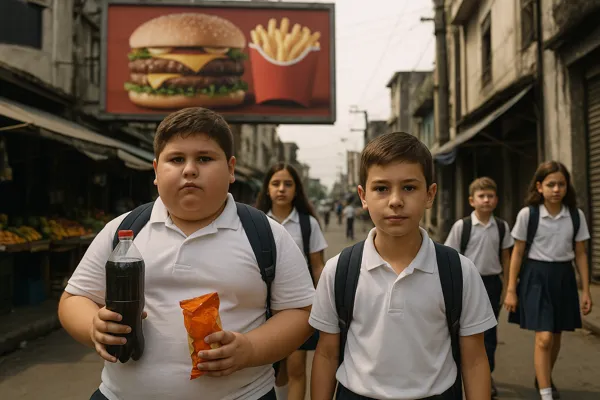
The Children Obesity UNICEF Report has revealed a historic turning point in child nutrition: for the first time in history, more children worldwide are obese than underweight. Released on September 10, 2025, the report highlights that 9.4% of children aged 5–19 are now obese compared to 9.2% who are underweight.
This means 188 million children and adolescents are currently living with obesity, surpassing the global count of underweight children. The Children Obesity UNICEF Report describes this shift as one of the most alarming public health challenges of the 21st century.
Rising Trends in Global Childhood Obesity
In 2000, about 13% of children were underweight while only 3% were obese. Within just two decades, the trend has reversed dramatically. The Children Obesity UNICEF Report attributes this surge to the rapid expansion of ultra-processed foods (UPFs), aggressive marketing strategies targeting children, and limited access to affordable healthy diets.
Ultra-processed foods—such as sugary drinks, chips, and packaged snacks—are energy-dense, cheap, and widely available. Their marketing often specifically targets children through social media, games, and influencers, shaping preferences early in life. The Children Obesity UNICEF Report stresses that these food environments are tipping the balance away from traditional, nutrient-rich diets.
Regional Disparities in Childhood Obesity
The Children Obesity UNICEF Report reveals striking differences across regions:
- Pacific Islands report the highest obesity levels: Niue (38%), Cook Islands (37%), and Nauru (33%).
- Wealthier nations are also struggling, with Chile at 27%, and both the United States and United Arab Emiratesshowing 21% of children obese.
- In sub-Saharan Africa and South Asia, underweight remains more common—but obesity rates are climbing steadily as urbanization and processed food markets expand.
This data shows that obesity is no longer just a “Western” issue; it is a global phenomenon, affecting low-, middle-, and high-income countries alike.
Health and Economic Consequences
The Children Obesity UNICEF Report warns of dire long-term health outcomes. Children with obesity face significantly higher risks of:
- Type 2 diabetes developing at younger ages
- Cardiovascular disease linked to high cholesterol and hypertension
- Certain cancers due to chronic inflammation and poor diet
Beyond health, the economic impact is enormous. By 2035, UNICEF projects the global burden of obesity-related diseases will exceed USD 4 trillion annually. This financial weight will hit developing nations hardest, where healthcare systems are already stretched.
What UNICEF Recommends
The Children Obesity UNICEF Report calls for immediate, coordinated government action. Recommendations include:
- Restricting marketing of sugary and fatty foods to children.
- Banning ultra-processed foods in schools.
- Introducing taxes on unhealthy foods and subsidies for fruits and vegetables.
- Enforcing transparent nutrition labeling to empower parents.
- Shielding public health policies from food industry lobbying.
Without these systemic changes, the report warns, childhood obesity rates will continue to climb unchecked.
UNICEF’s Call to Action
Henrietta Fore, UNICEF’s Executive Director, said:
“The Children Obesity UNICEF Report is a wake-up call. The health of millions of children is being compromised for profit. We must act now to prioritize nutrition and well-being over processed food industries.”
Experts emphasize that this crisis is not just about personal choice. The Children Obesity UNICEF Report highlights that global food systems, economic pressures, and marketing practices shape what children eat and how they live. Tackling obesity requires structural reforms, not just lifestyle advice.
The Bigger Picture
The Children Obesity UNICEF Report closes with a sobering reminder: child obesity is a global injustice. While one in ten children is underweight due to food scarcity, another one in ten is obese due to overexposure to unhealthy, processed foods. Both outcomes reflect deep inequalities in food access, affordability, and policy regulation.
UNICEF urges world leaders to address these inequalities urgently. If not, the next generation will inherit an even heavier burden of preventable disease, reduced life expectancy, and economic instability.
Internal Links (GSN articles)
These should connect to related stories on Global Standard News:
- Measles Resurgence in U.S. Southwest
- Trump HIV/AIDS Funding Halt Puts Millions at Risk
- Understanding Uterine Fibroids
External Links (authoritative sources)
These provide credibility and backlink authority: