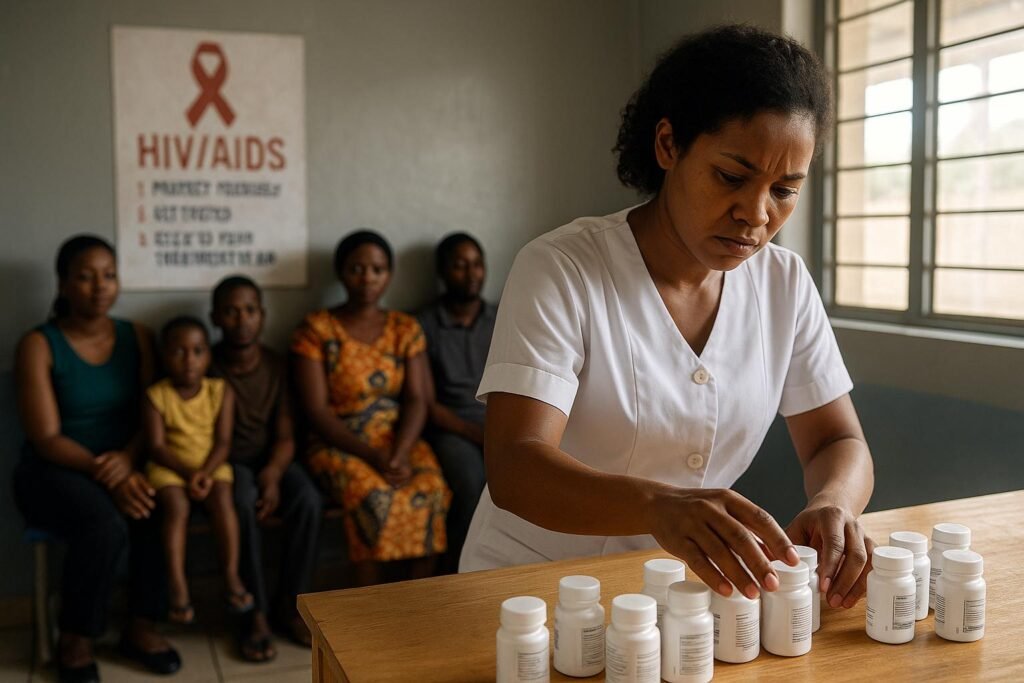
The Trump HIV/AIDS funding halt has set off alarm bells across the global health community. With the administration pausing U.S. support for programs like PEPFAR, experts warn that millions of people living with HIV could face treatment disruptions, rising infection rates, and a reversal of decades of progress in the fight against the epidemic.
Background: Why the Trump HIV/AIDS Funding Halt Matters
On January 20, 2025, President Donald Trump signed Executive Order 14169, freezing foreign development assistance for a 90-day review. The Trump HIV/AIDS funding halt quickly became one of the most controversial aspects of this pause, since the U.S. has historically been the world’s largest donor to HIV/AIDS programs through initiatives like the President’s Emergency Plan for AIDS Relief (PEPFAR) and USAID.
While the order included provisions to exempt “life-saving” services, implementation has been inconsistent. In practice, many clinics and NGOs have reported stop-work orders, delayed grants, and supply chain interruptions. The Trump HIV/AIDS funding halt has therefore been more disruptive than policymakers anticipated.
Global Dependence on U.S. HIV Funding
For two decades, PEPFAR has been a cornerstone of the global HIV/AIDS response, providing antiretroviral therapy (ART), prevention of mother-to-child transmission, HIV testing, and community outreach. The Trump HIV/AIDS funding halt jeopardizes these services in more than 55 countries, particularly in sub-Saharan Africa, where U.S. support is often the primary funding source.
Countries like South Africa, Uganda, Kenya, and Nigeria — all with high HIV burdens — rely on U.S. funding for treatment programs that serve millions. Ghana, for example, has seen major progress in scaling up ART coverage thanks to PEPFAR support. The Trump HIV/AIDS funding halt threatens to erode these gains by interrupting medication supplies and prevention campaigns.
Early Warnings: WHO and UNAIDS
According to the World Health Organization, at least eight countries are at risk of running out of HIV treatment drugs due to the freeze in U.S. funding. UNAIDS has also warned that unless replacement funding is secured, the Trump HIV/AIDS funding halt could lead to millions of additional HIV infections and deaths by 2029.
UNAIDS chief Winnie Byanyima described the situation bluntly: “We are headed for disaster if the world does not step in to fill the gaps left by the Trump HIV/AIDS funding halt.”
The Human Impact
For people living with HIV, the Trump HIV/AIDS funding halt is not just a political story — it’s a matter of life and death. Antiretroviral treatment requires consistent daily dosing. Even a few weeks without medication can cause viral rebound, drug resistance, and increased risk of transmission.
Reports from community organizations suggest that some patients in affected countries are already rationing pills or skipping doses to make supplies last. Prevention programs targeting vulnerable groups, including sex workers, men who have sex with men, and young women, are also facing disruption or reduced operations.
The Domino Effect on Other Health Programs
The Trump HIV/AIDS funding halt does not just affect HIV treatment. PEPFAR funds are also critical for health system strengthening, including labs, clinics, and workforce training. These facilities also provide services for tuberculosis, malaria, and maternal health. Cutting HIV funds risks destabilizing entire health systems in low-income countries.
For example, during the COVID-19 pandemic, PEPFAR-supported labs were repurposed to provide COVID testing. Without PEPFAR, countries will lose a critical backbone for responding to future health emergencies.
Critics and Defenders
Critics argue that the Trump HIV/AIDS funding halt is shortsighted and will undo 20 years of progress. Former U.S. Global AIDS Coordinator Dr. Deborah Birx called the move “a catastrophic mistake that will cost lives.” Advocacy groups like ONE Campaign, amfAR, and AIDS Healthcare Foundation have also mobilized to lobby Congress and international donors to step in.
Defenders of the policy argue that U.S. foreign aid needs to be reassessed for efficiency and accountability. They claim that the pause allows Washington to ensure funds are spent wisely and aligned with U.S. strategic priorities.
What Happens Next?
The Trump HIV/AIDS funding halt is technically a 90-day pause, but analysts warn it could be extended or converted into long-term funding cuts. Congress could intervene, but political divisions in Washington make swift action unlikely.
Meanwhile, global health leaders are urging other donors, including the European Union, the U.K., and private philanthropies, to step up. However, none of these actors has the financial capacity to match U.S. contributions dollar-for-dollar.
Conclusion
The Trump HIV/AIDS funding halt represents one of the gravest threats to global HIV progress in decades. While the full impact is still unknown, early signs point to rising infections, treatment shortages, and the erosion of fragile health systems. Unless swift action is taken, much of the progress made in the global fight against AIDS may be undone.
Internal Links
- Diabetes Study Uncovers Silent Health Threat
- Congo Ebola Outbreak: 15 Dead in Kasai Province
- Quack Medical Practitioners Arrested in Ghana Raid