A Deadly Turning Point
The Assembly Member killed Mpatuam tragedy has sent shockwaves through Ghana’s Ashanti Region, reigniting national debate over transparency, militarization, and accountability in the gold-mining sector. On September 9, 2025, what began as a community protest in the mining town of Mpatuam escalated into deadly violence between youth, security forces, and Asanko Gold Mine’s private guards. The confrontation left one Assembly Member dead and two others injured, exposing the deep distrust that continues to define relations between mining companies and host communities.
Longstanding Fault Lines in Ghana’s Mining Sector
Mining-related conflict has long plagued Ghana’s resource-rich regions. From Ashanti to Western and Northern territories, communities have repeatedly clashed with corporate concession holders over land rights, pollution, and unfulfilled development promises.
The Assembly Member killed Mpatuam incident mirrors earlier tensions in Obuasi and Tarkwa, where small-scale miners—locally known as galamseyers—often face military crackdowns. Despite the 2023 Mining Reform Act, critics say militarization endures under the guise of safeguarding “strategic national assets.” Residents argue that the profits from gold extraction rarely translate into tangible benefits such as jobs, infrastructure, or social welfare, leaving resentment to fester across mining zones.
Chronology of the Incident: How the Clash Unfolded
According to eyewitnesses and police briefings, the Assembly Member killed Mpatuam, Hon. Samuel Danquah, tried to mediate tensions between angry protesters and armed soldiers deployed to secure Asanko Gold Mine. The unrest began after reports surfaced that mine security had allegedly killed a local miner the previous day.
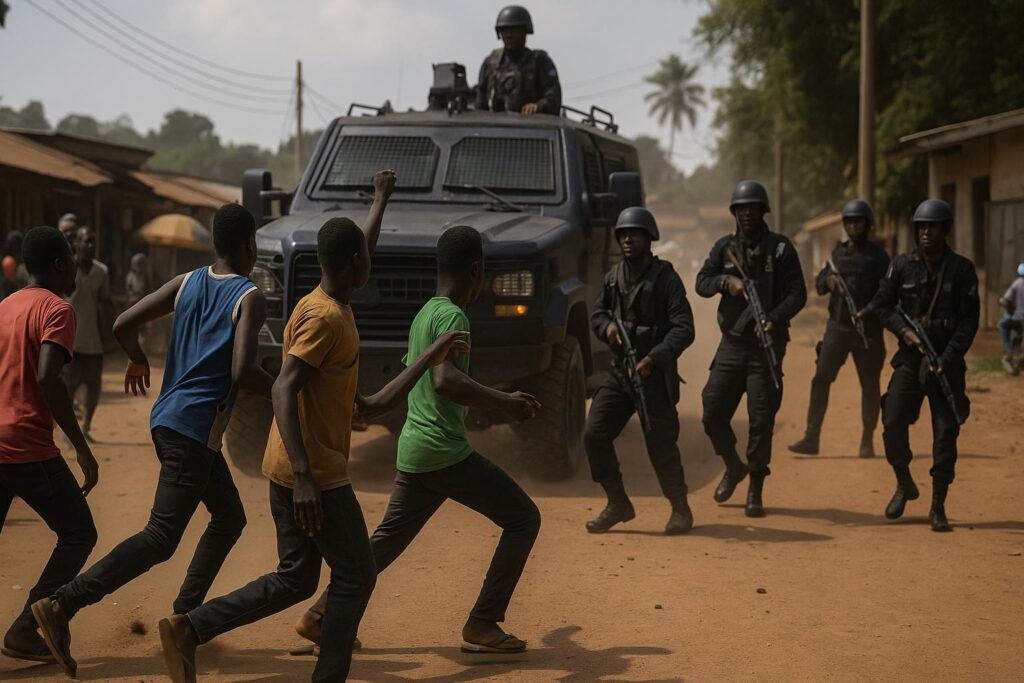
When demonstrators blocked access roads to the concession, soldiers opened fire to disperse the crowd. Danquah, standing in the middle of the confrontation, was struck by multiple bullets and later died at the district hospital. Two others sustained injuries.
Videos circulating on social media showed scenes of panic—burning vehicles, fleeing residents, and chaos near the mine’s gate. The Ghana Police Service confirmed the death and announced a joint investigation with the Ghana Armed Forces, vowing to uncover the full circumstances surrounding the Assembly Member killed Mpatuam tragedy.
Corporate Accountability: Asanko Gold’s Response Under Scrutiny
In the aftermath, Asanko Gold Ghana Ltd. issued a statement expressing “deep regret” over the Assembly Member killed Mpatuam case. The company emphasized that the soldiers on-site were deployed under state authorization in collaboration with the Ghana Chamber of Mines, pledging cooperation with investigators.
“Asanko Gold deeply regrets the loss of life and remains committed to transparent investigations and dialogue with the community,” the company said in a statement published by NewsGhana on September 10, 2025.
The Ministry of Lands and Natural Resources also appealed for calm while announcing plans to review the presence of security forces at mining concessions. However, activists dismissed the gesture as inadequate, insisting that systemic reform—not temporary reviews—is needed to prevent another Assembly Member killed Mpatuam scenario.
Community Grief and Civil Society Demands
In Mpatuam and surrounding areas, grief quickly turned to outrage. Vigils held for the Assembly Member killed Mpatuam drew hundreds of mourners, many describing him as a man of integrity who “died for peace.”
Civil society organizations such as the Centre for Natural Resource Governance and Occupy Mines Movement have demanded an independent inquiry into the killing, accusing the military of excessive force.
A local elder told GSN, “Hon. Danquah tried to protect both sides, but the system that failed to protect its people made him a casualty.”
The hashtags #JusticeForDanquah and #StopMineMilitarization have trended nationwide, amplifying public anger and putting Ghana’s mining governance under renewed scrutiny.
The Militarization Dilemma
Analysts warn that the Assembly Member killed Mpatuam tragedy exposes deeper institutional flaws in Ghana’s civil–military relations. Dr. Efua Mensima Asare, a political scientist at the University of Ghana, observes that while the constitution allows limited military involvement in internal security, oversight is weak and accountability often absent.
“When state security forces protect private companies without transparent command structures, it blurs the line between public service and private interest,” she explained.
Economically, Ghana’s mining sector contributes over $6 billion annually in export revenue, making it a cornerstone of national growth. Yet, experts caution that recurring violence like the Assembly Member killed Mpatuam incident risks eroding investor confidence and undermining Ghana’s reputation as a stable mining destination.
Unrest, Accountability, and Public Trust
The Assembly Member killed Mpatuam tragedy reflects broader governance challenges that have surfaced in recent years. The Cocoa Smuggling Crisis, which cost Ghana approximately 150,000 tonnes in lost output during the 2023–24 season, and the Road Safety Emergency, where over 1,500 citizens died in early 2025, both reveal how weak oversight undermines development.
Residents in mining towns argue that they shoulder environmental and social costs while seeing little of the revenue derived from their lands. Polluted rivers, devastated farmlands, and rising youth unemployment continue to fuel the anger that led to the unrest in Mpatuam. The death of the Assembly Member killed Mpatuam has therefore become both a symbol of public frustration and a call for institutional reform.
Parliament Demands Answers
In Parliament, Minority Leader Cassiel Ato Forson denounced the Assembly Member killed Mpatuam incident as “a grave violation of civilian rights.” He called for the Defence and Interior Committee to initiate urgent hearings to examine military conduct in mining towns.
Members of the Ashanti Caucus also visited the bereaved family, pledging support and pushing for compensation. The Ministry of Defence has since confirmed an internal military investigation, though it denied issuing any “shoot-to-kill” orders.
Skeptics argue that internal probes often end inconclusively, citing the Appiatse explosion and Obuasi protests as examples of inquiries that produced reports but no accountability. Many fear the Assembly Member killed Mpatuamcase could follow the same pattern unless Parliament enacts lasting oversight reforms.
Public and Media Reactions: A Nation in Debate
Local outlets including Otec FM, Luv FM, and MyJoyOnline have maintained continuous coverage of the Assembly Member killed Mpatuam developments, while editorials in The Chronicle and Daily Graphic urge authorities to prioritize justice over rhetoric.
Public vigils continue across Kumasi and Obuasi, where protesters carry placards reading “Justice for Danquah” and “Stop the Killings in Mining Towns.”
For many citizens, the tragedy represents more than an isolated incident—it has become a mirror reflecting Ghana’s uneven balance between human rights and economic ambition.
Continental Lens: Lessons for Africa’s Mining Frontiers
The international community has joined calls for accountability. Human Rights Watch urged Ghana to uphold the UN Basic Principles on the Use of Force, emphasizing that civilian protection must not be sacrificed for profit.
Analysts compare the Assembly Member killed Mpatuam case to similar unrest in South Africa’s Marikana Mine and Burkina Faso’s Inata Mine, where militarized responses led to civilian deaths. Global investors warn that unchecked violence at mine sites could deter responsible investment across West Africa’s resource sector.
Moving Forward: Toward Justice and Reform
Authorities have outlined several measures:
- A government inquiry into the Assembly Member killed Mpatuam incident.
- A comprehensive review of military involvement in commercial mining zones.
- A compensation plan for victims’ families and affected residents.
Civil society organizations remain skeptical, stressing that Ghana needs enforceable legal frameworks, not verbal commitments. They argue that true justice for the Assembly Member killed Mpatuam will depend on transparency, reform, and the courage to hold institutions accountable.
Conclusion: Honoring a Legacy Through Justice
The Assembly Member killed Mpatuam has come to symbolize Ghana’s ongoing struggle to reconcile economic growth with human rights and social equity. Hon. Samuel Danquah’s death is more than a statistic—it is a moral challenge to the nation’s conscience.
Whether Ghana rises to deliver justice or allows this tragedy to fade into history will determine how the world perceives its commitment to democracy, accountability, and the sanctity of civilian life.
Internal Links
- Phone Theft UK Gang: 40,000 Stolen Phones Seized
- Unpaid Nurses Protest as Ghana’s Health Workers Go 10 Months Without Pay