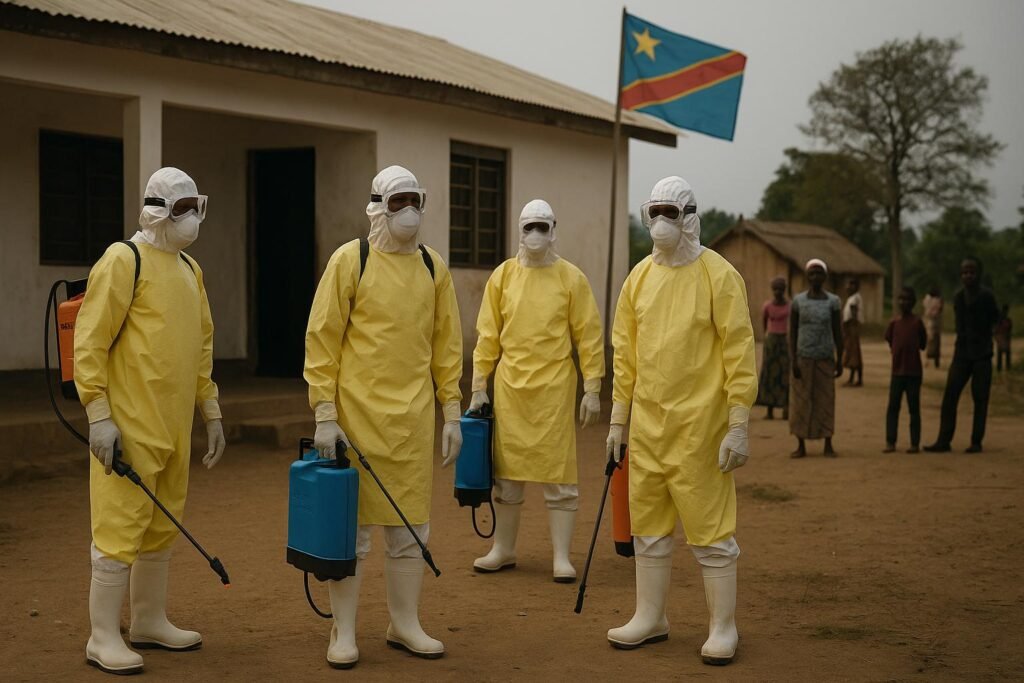
Kasai, DRC — September 4, 2025: A new Congo Ebola Outbreak has been declared by the Democratic Republic of the Congo’s (DRC) Ministry of Health, just three years after the last epidemic. The resurgence has already claimed 15 lives out of 28 suspected or confirmed cases, sparking urgent international concern and raising fears of another large-scale epidemic in Africa.
Rising Cases and Fatalities
The Congo Ebola Outbreak is centered in Kasai Province, specifically in the Bulape and Mweka health zones. Officials confirmed the index case was a 34-year-old pregnant woman who was hospitalized on August 20, 2025 and later died. Her illness triggered a chain of infections that spread through her family and community.
So far, 15 people have died, including four healthcare workers, raising alarm about the risks faced by frontline staff. With a fatality rate of nearly 54%, the outbreak highlights just how deadly the virus remains. Survivors report symptoms such as severe fever, vomiting, and hemorrhaging.
Zaire Strain Confirmed
Laboratory analysis confirmed the outbreak is caused by the Zaire ebolavirus, the most lethal strain of Ebola. This is the same variant that fueled the 2014–2016 West Africa outbreak, which killed more than 11,000 people across Guinea, Liberia, and Sierra Leone.
Health experts warn that while vaccines and treatments exist, the rapid spread of the Congo Ebola Outbreak in rural areas complicates containment. Kasai is a remote region with poor roads, limited hospitals, and fragile infrastructure. Many families rely on traditional healers, making it difficult to identify and isolate cases quickly.
Government and International Response
The Congolese Ministry of Health has deployed a Rapid Response Team with support from the World Health Organization (WHO) and the Africa Centres for Disease Control and Prevention (Africa CDC).
WHO has already delivered two tonnes of medical and laboratory supplies, and 2,000 doses of the Ervebo Ebola vaccine are pre-positioned to protect health workers and immediate contacts of confirmed cases. Vaccination campaigns are expected to begin within days.
“Declaring the outbreak early is critical to mobilizing resources. Our focus is rapid containment, protecting frontline workers, and ensuring community trust,” said Dr. Matshidiso Moeti, WHO Regional Director for Africa.
Historical Context of Ebola in Congo
This is the 16th Congo Ebola Outbreak since the virus was first identified in 1976. Kasai Province has battled Ebola before, most notably in 2007–2008. The most recent outbreak, in Equateur Province in 2022, was contained in under three months due to swift intervention and international support.
However, every Congo Ebola Outbreak presents new challenges. In Kasai, deep-rooted mistrust of authorities, misinformation about vaccines, and limited access to health facilities could worsen the crisis. Experts emphasize that combating stigma is just as important as delivering medical supplies.
Regional and Global Concerns
Although cases remain within Kasai Province, the risk of regional spread is real. The province shares borders with Angola and other Central African nations. Neighboring governments have raised alert levels, boosting border surveillance and screening travelers for symptoms.
Public health specialists stress that Congo Ebola Outbreaks do not only threaten DRC but global health security. In today’s interconnected world, viruses can cross borders rapidly, reaching urban centers and even international destinations if not contained quickly.
What’s Next
Authorities are conducting intensive contact tracing, monitoring hundreds of individuals who may have been exposed. Emergency vaccination campaigns will target health workers, family members of confirmed cases, and residents of high-risk areas.
The Africa CDC has urged African countries to strengthen preparedness, while the United Nations has pledged logistical support for the Congo government. Aid agencies are also deploying communication campaigns to educate communities about symptoms, safe burials, and the importance of early reporting.
Ultimately, experts say halting this Congo Ebola Outbreak will depend on three key pillars:
- Medical response — rapid testing, isolation, and treatment.
- Community trust — overcoming fear, stigma, and misinformation.
- International solidarity — financial and technical support to sustain containment until the outbreak is over.
Conclusion
The Congo Ebola Outbreak of 2025 is a stark reminder of the ongoing threat posed by deadly viruses. With 28 suspected cases and 15 confirmed deaths, the stakes are high for Kasai Province and the wider region. While vaccines and rapid response teams provide hope, success will depend on collaboration between communities, health authorities, and the international community.
If the lessons of past epidemics are applied — rapid response, transparency, and trust — this outbreak may be controlled before it spirals further. But if not, the Congo Ebola Outbreak could once again test the world’s ability to manage a deadly epidemic.
🔗 Internal Links (GSN)
- Heart Attack Drug Risk Women: Study Finds Higher Death Rate
- Opioid Abuse Ghana Youth: Mental Health Authority Warns of National Failure
- Student Mental Health 2025: 12 Life-Saving Tips to Thrive in School