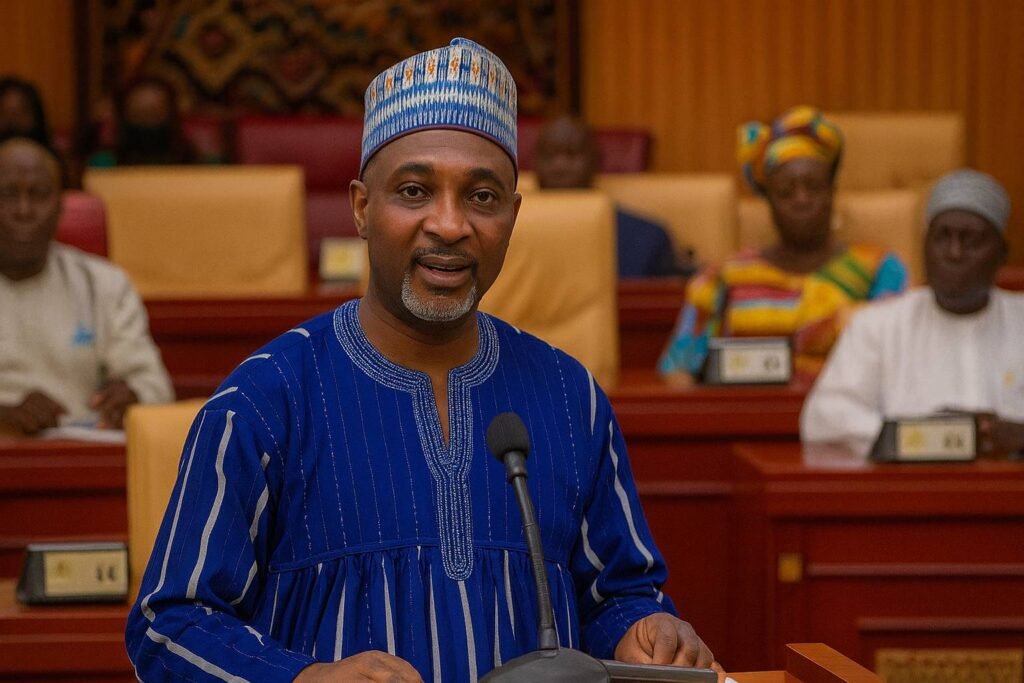
The Gbinyiri Clashes Ghana have triggered a major humanitarian crisis in the Savannah Region, forcing more than 13,000 residents to flee across the border into Côte d’Ivoire, Interior Minister Mohammed Mubarak Muntaka has confirmed.
The violence, which erupted on August 24, 2025, stems from a longstanding land dispute that has become one of Ghana’s most severe internal conflicts in recent years.
According to the National Disaster Management Organisation (NADMO), the displacement extends beyond Ghana’s borders, with thousands also seeking refuge in Burkina Faso. Humanitarian agencies warn that without swift coordination, the situation could deteriorate further.
Mounting Humanitarian Impact
The humanitarian toll of the Gbinyiri Clashes Ghana continues to escalate. NADMO reports that 13,253 Ghanaianshave crossed into Côte d’Ivoire, while another 14,000 people remain displaced within Ghana’s borders.
Early assessments suggest the total number of those affected could exceed 48,000. Most displaced individuals are women, children, and the elderly, many of whom fled without food, documents, or shelter.
Families now live in overcrowded camps with little access to clean water or medical care. Relief workers describe scenes of fear and fatigue in Sawla and Dormaa West, where temporary shelters have been hastily erected.
Reports from aid groups and community leaders indicate 17 to 31 deaths, though the actual toll may be higher as insecurity blocks access to several villages.
Government Measures and Emergency Response
In a national briefing, Interior Minister Muntaka reaffirmed the government’s determination to restore calm and provide relief for victims of the Gbinyiri Clashes Ghana.
He said the state is working with security agencies, traditional authorities, and local administrations to contain tensions and foster dialogue.
“We cannot abandon our citizens in distress. Both NADMO and our security services are actively engaging with counterparts across the border to ensure their safety,” Muntaka declared.
The Ministry of the Interior has sought additional support from the United Nations High Commissioner for Refugees (UNHCR) to enhance humanitarian aid. Emergency consignments of food, medicines, and tents have been dispatched, though officials concede that supplies are limited.
Security reinforcements from the Ghana Armed Forces and Police Service continue patrols in affected areas, working to stabilize volatile communities.
International Assistance and Relief Operations
The regional dimension of the Gbinyiri Clashes Ghana has drawn increased international concern.
Côte d’Ivoire has opened emergency reception centers in Vonkore and Bin-Houyé, while Burkina Faso reports new arrivals in its southern districts.
Agencies such as UNHCR, UNICEF, and the Red Cross are scaling up aid deliveries to provide food, water, and health services. Yet humanitarian officials caution that if hostilities persist, relief capacity will soon be overwhelmed.
In Ghana’s Bono Region, NADMO warns of severe shortages of food and hygiene items, particularly for children and expectant mothers.
Malnutrition and disease outbreaks pose growing threats in crowded settlements. Civil society leaders have called on the government to address the root causes of the Gbinyiri dispute — chiefly land ownership, chieftaincy, and ethnic boundary issues that continue to fuel violence.
Regional Ripple Effects Across West Africa
The Gbinyiri Clashes Ghana illustrate how local conflicts can destabilize broader regions. Ethnic and resource-based disputes in border zones frequently spill into neighboring states, intensifying humanitarian stress.
Authorities in Côte d’Ivoire confirm the arrival of thousands of Ghanaian refugees, while Burkinabé officials coordinate with ECOWAS and UN bodies to manage the influx.
Analysts warn that prolonged instability could invite armed groups and smuggling networks operating across the Sahel to exploit weak border control.
The unfolding crisis underscores the urgent need for collective regional security mechanisms and cross-border cooperation.
Voices from the Displaced: Human Stories of Survival
Behind the headlines of the Gbinyiri Clashes Ghana are stories of endurance and heartbreak. Families recount days of travel through forests to escape the fighting.
Mothers describe carrying infants for miles, while farmers speak of losing entire harvests and livestock.
“We left with nothing but the clothes on our backs. We don’t know when it will be safe to return,” one displaced woman told local reporters.
Children who once prepared for school exams now live in makeshift camps, their education and future uncertain. These accounts reveal the immense human suffering behind the statistics and highlight the urgent need for sustained humanitarian intervention.
Roadmap to Reconciliation and Lasting Peace
Experts argue that lasting peace in the Gbinyiri Clashes Ghana area depends on reconciliation and structural reform.
Traditional leaders, elders, and faith figures are being urged to engage in dialogue under the guidance of neutral mediators and government representatives.
The Gbinyiri land dispute has deep historical roots tied to contested boundaries and competing claims of traditional authority. Without comprehensive reforms in land governance and conflict resolution, analysts warn that tensions may resurface.
The government has pledged to launch an independent mediation process supported by ECOWAS and international partners. Though challenges persist, many see this as a vital first step toward rebuilding trust and ensuring community coexistence.
Conclusion: A Nation at a Crossroads
The Gbinyiri Clashes Ghana stand as a sobering reminder of how unresolved disputes can escalate into full-scale humanitarian disasters.
With more than 13,000 refugees in Côte d’Ivoire and nearly 50,000 people affected, the crisis has become one of the most significant displacement emergencies in Ghana’s modern history.
As aid organizations intensify their relief operations and security forces work to restore order, Ghana faces a pivotal test of leadership.
The coming weeks will reveal whether the nation can convert emergency response into sustainable peace — and prevent future conflicts from uprooting thousands more.
Internal Links
- Gold Price Record High: Gold Surges Past $3,500 Mark
- Ghana Cyber Crime Hits GH₵15m Losses in 2025
- Californium Production: Inside the $27 Million Element That Can’t Be Found in Nature
External Links
- MyJoyOnline – Gbinyiri clash: Over 13,000 Ghanaians flee
- Graphic Online – Over 13,000 Ghanaians flee Gbinyiri clashes
- ModernGhana – Gbinyiri conflict displacements