Supreme Court Takes Up a Global Flashpoint
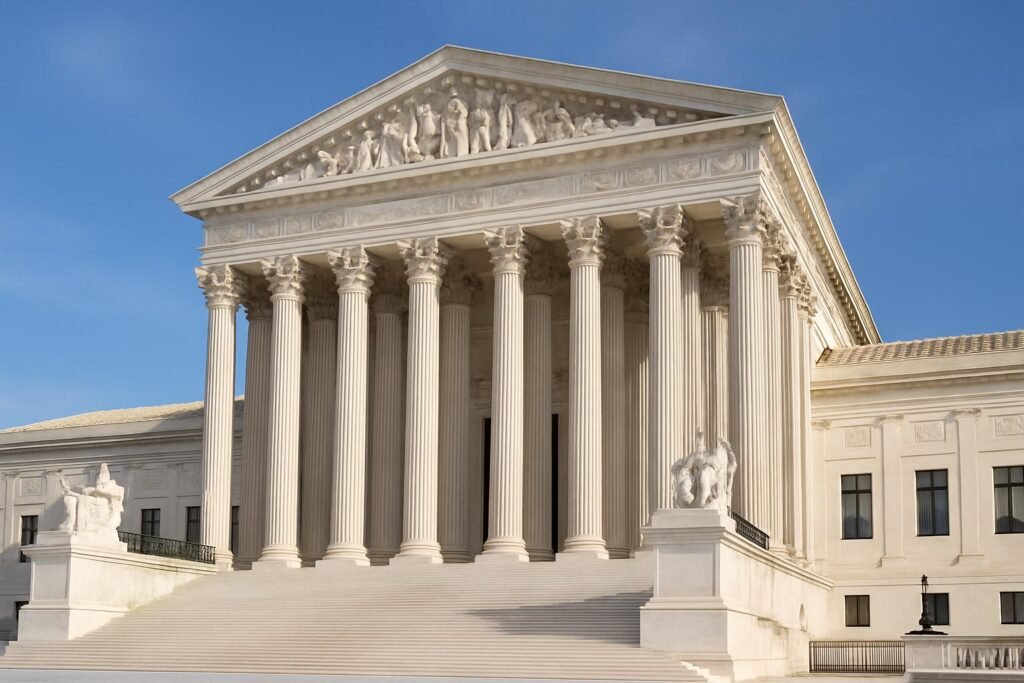
WASHINGTON, Aug. 26, 2025 — The Trump Foreign Aid Freeze has escalated into a full-blown constitutional confrontation as the U.S. Supreme Court prepares to hear an emergency appeal from the Justice Department. The case, which could determine the fate of up to $12 billion in foreign assistance, represents one of the most consequential tests of executive power in recent American history.
The administration argues that withholding aid falls within presidential discretion, while critics insist it violates congressional control over spending. The outcome could reshape how Washington balances political authority, fiscal oversight, and humanitarian responsibility.
How the Trump Foreign Aid Freeze Began
The Trump Foreign Aid Freeze originated on January 20, 2025, just hours after Donald Trump’s second inauguration. Through an executive order, the president announced a 90-day suspension of most U.S. foreign assistance programs, claiming a need to review how funds were spent abroad.
Although the initial pause expired in April, the administration continued to delay disbursements. Officials argued that the reviews were ongoing, while humanitarian groups accused Washington of weaponizing aid for political leverage.
By midyear, projects in over 50 countries — from HIV prevention in Africa to democracy-building in Asia — had been halted or scaled back. The administration maintained that funds were “under reassessment,” yet no timeline was offered for resumption.
This growing uncertainty transformed the Trump Foreign Aid Freeze from a policy audit into a global controversy, sparking legal challenges that have now reached the highest court in the land.
Judicial Developments: The Road to the Supreme Court
On August 26, 2025, the Justice Department filed an emergency appeal seeking to overturn lower-court injunctions that forced the government to resume foreign aid payments.
The D.C. Circuit Court had previously ruled that only the Government Accountability Office (GAO) — not private groups — could challenge executive funding delays. However, District Judge Amir Ali’s earlier injunction ordered payments to continue, citing irreparable harm to affected organizations.
This judicial back-and-forth has created a rare institutional clash. The Supreme Court’s expedited review will determine whether presidents can legally suspend or delay congressionally appropriated funds — a decision with implications far beyond the Trump Foreign Aid Freeze itself.
Legal Analysis: Testing the Boundaries of Executive Authority
At the core of the Trump Foreign Aid Freeze dispute is the Impoundment Control Act of 1974, which restricts the president’s power to withhold funds approved by Congress.
Supporters of the administration argue that temporary pauses for review do not constitute “impoundment,” and that the president must retain flexibility to respond to evolving international conditions.
Critics counter that the act was explicitly designed to prevent presidents from unilaterally blocking spending — a lesson learned after similar confrontations during the Nixon era.
“The Supreme Court must clarify whether executive oversight can override legislative appropriation,” said constitutional expert Prof. Laura McKinney. “This case will define the balance of power for decades.”
If the Court validates the Trump Foreign Aid Freeze, future presidents could assert far greater discretion in foreign spending. If it upholds the lower court’s injunction, Congress’s constitutional “power of the purse” will be reinforced, curbing potential overreach.
Programs in Peril: Global Impact of the Aid Suspension
The Trump Foreign Aid Freeze has disrupted several critical international initiatives:
- Health Programs: HIV prevention and treatment efforts in sub-Saharan Africa face drug shortages and halted deliveries.
- Food Security: Agricultural training and nutrition programs in Latin America report funding gaps and staff layoffs.
- Democracy Support: Media and governance grants in Southeast Asia have lost up to 60% of operational budgets.
According to the Associated Press, Secretary of State Marco Rubio has restructured or eliminated 83% of USAID programs. Humanitarian organizations describe the situation as dire, citing “an erosion of decades of development progress.”
“Every day of delay costs lives,” said a Nairobi-based NGO director. “Communities that once trusted American support now face abandonment.”
The Trump Foreign Aid Freeze has also sparked fears among global partners that U.S. reliability as a humanitarian leader is fading, paving the way for geopolitical rivals to expand influence.
Allies Concerned, Rivals Opportunistic
The world is watching the Trump Foreign Aid Freeze with a mix of alarm and calculation.
European governments have voiced strong objections, warning that prolonged delays could cripple multinational development projects co-financed by the U.S. and the EU. African Union leaders described the freeze as “a breach of partnership,” emphasizing that joint health and infrastructure programs rely on timely American funding.
In contrast, China and Russia are capitalizing on the vacuum, increasing their diplomatic and aid presence in emerging economies. Beijing’s Belt and Road Initiative has fast-tracked new projects across Africa and Latin America, highlighting America’s perceived retreat from global responsibility.
“Every suspended dollar strengthens our competitors’ hand,” noted former U.S. ambassador Rachel Connors. “The Trump Foreign Aid Freeze risks surrendering decades of soft-power influence.”
Domestic Perspective: Divisions in Washington
At home, the Trump Foreign Aid Freeze has become a polarizing political issue.
Republican lawmakers largely defend the president’s actions, citing chronic inefficiencies and corruption within the aid system. “Taxpayers deserve accountability,” said Sen. Tom Cotton. “We must ensure funds serve American interests first.”
Democrats, however, warn of constitutional violations. House Minority Leader Hakeem Jeffries called the freeze “an abuse of executive authority that undermines Congress’s role in governance.”
Public sentiment mirrors this divide. A Pew Research survey found 47% of Americans support pausing aid for “review and oversight,” while 49% oppose such freezes, citing moral and strategic harm to U.S. leadership abroad.
Why the Outcome Matters
Policy analysts agree that the Supreme Court’s ruling on the Trump Foreign Aid Freeze could permanently alter the balance between presidential initiative and congressional control.
If upheld, future administrations could cite this case to delay not just foreign aid but also climate finance, defense allocations, and international commitments. Critics warn it would effectively blur the constitutional line between executive enforcement and legislative authority.
Economists further note that abrupt halts in aid undermine long-term stability in developing economies. When U.S. funding falters, local currencies weaken, projects collapse, and humanitarian agencies lose trust in multi-year commitments.
The Broader Implications: Redefining U.S. Global Leadership
Beyond legal and financial arguments, the Trump Foreign Aid Freeze raises deeper questions about America’s role in global governance.
For decades, the United States has used aid as both a tool of compassion and a strategic instrument of diplomacy. By freezing assistance, Washington risks eroding that dual advantage, leaving room for authoritarian states to redefine global development norms.
Analysts at the Council on Foreign Relations (CFR) note that this case “symbolizes a larger ideological shift — from multilateral engagement toward transactional nationalism.” If the Supreme Court legitimizes the freeze, U.S. diplomacy may become more conditional and unpredictable.
Conclusion: Awaiting a Verdict with Global Consequences
As the Supreme Court deliberates, billions remain locked, and millions of lives depend on its verdict. The Trump Foreign Aid Freeze is no longer just an administrative decision; it has become a defining moment in America’s constitutional and moral identity.
A ruling is expected before September 30, 2025, coinciding with the fiscal-year deadline. Whether the justices side with Congress or the president, the decision will echo across continents — shaping how nations view America’s word, its power, and its promise.
External Links
- Reuters – Trump administration asks US Supreme Court to halt foreign aid payments
- Politico – Justice Department asks Supreme Court to allow Trump to withhold aid
- AP – Secretary Rubio says purge of USAID programs complete
Internal Links
- Bank of Ghana Dollar Ban
- Nigeria Shea Nut Export Ban
- Diddy Civil Sex Assault Suit Dismissed on Statute Grounds