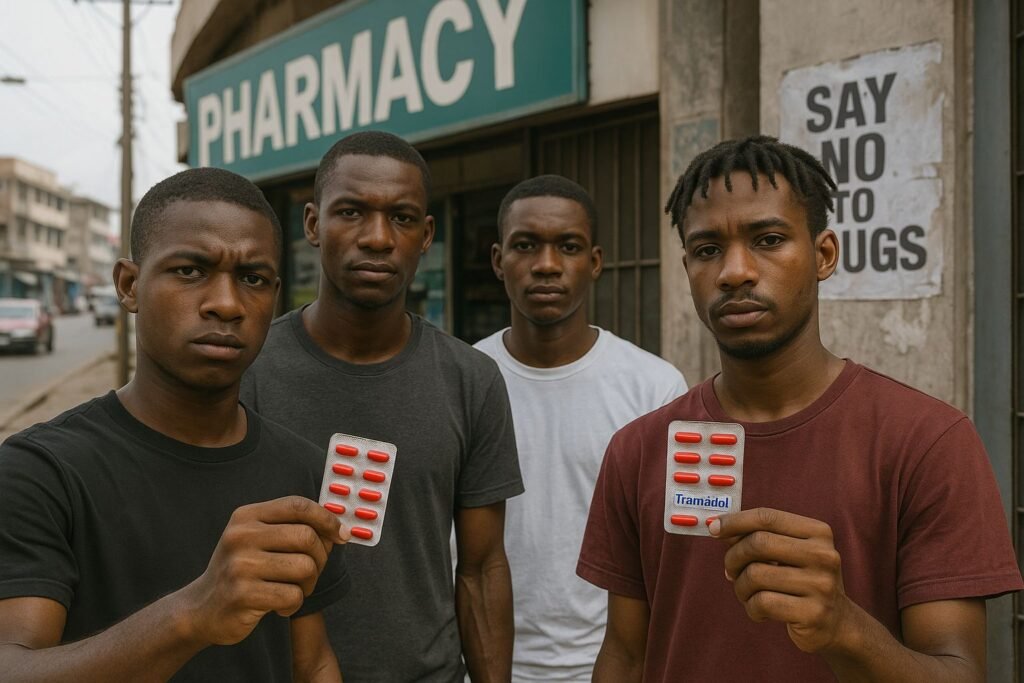
The Mental Health Authority has issued a strong warning that Ghana is failing its young people in the face of rising drug misuse. At a JoyNews dialogue themed “Breaking the Chains: Ghana’s Opioid Crisis,” Chief Executive Dr. Eugene K. Dordoye said opioid abuse Ghana youth trends show the country is losing the battle to protect its next generation.
Youth at High Risk
Dr. Dordoye explained that adolescents are especially vulnerable because of their developing brains. Once dependence starts, tolerance builds rapidly—forcing young users to increase their doses for the same effect.
“What you took today will not give you the same high tomorrow,” he cautioned. “When dependence develops, overdose becomes a constant risk, and withdrawal can even kill. As a nation, we are failing them.”
Research indicates that if opioid abuse Ghana youth begins before age 19, there is a 1 in 4 chance of lifelong dependence. Those who start after age 24 face only a 1 in 9 chance, proving how early exposure dramatically deepens the crisis.
This makes prevention at the adolescent stage not just urgent but critical. Once entrenched, addiction rewires the brain, making recovery more difficult and relapse more likely.
Dangerous Drugs Driving the Epidemic
The most commonly misused substances include:
- Tramadol, often abused by young men in tough labor jobs such as construction, trucking, and mining.
- Tapentadol and Carisoprodol, potent illicit imports, widely available under street names like Tafrodol and Timaking.
“These drugs are flooding communities cheaply and fueling an epidemic that directly threatens our youth,” Dr. Dordoye warned.
In addition, syrups laced with codeine, sometimes disguised as “energy boosters,” have become popular among students. These substances are not only addictive but often adulterated with unknown chemicals, further increasing health risks.
Government and Regulatory Response
The government has intensified efforts to control the crisis through:
- Reclassifying Tramadol as prescription-only.
- Drug seizures and destruction led by the Ministry of Health and the Food and Drugs Authority (FDA).
- Inter-agency task forces involving Customs, NACOC, and FDA to block illicit imports.
- Nationwide campaigns like “Daabi—Say No to Drug Abuse.”
Yet despite these measures, weak border controls and limited inter-agency coordination undermine results. As a result, opioid abuse Ghana youth cases continue to rise, especially in low-income and peri-urban areas where demand is strong and enforcement is weak.
Students and University Drug Culture
The crisis is not limited to street corners or rural communities—it is firmly entrenched in educational institutions. Youth and Sports Minister George Opare Addo shared shocking statistics:
- 28% of students misuse codeine and cough syrups.
- 12% abuse cocaine, 11% heroin.
- 59% have tried cannabis edibles.
- 49% use shisha, and 41% misuse prescription pills.
He described universities as “epicentres of drug access,” particularly during hall week celebrations when parties and concerts often turn into hotspots for experimentation.
This proves that opioid abuse Ghana youth is not just a problem for marginalized street youth but also affects middle-class families whose children are pursuing higher education.
Law Enforcement Gaps
Chief Superintendent Dr. Birgit Nuro-Panin noted that the justice system hampers drug enforcement.
“Too often, suspects are granted bail within an hour of arrest, frustrating investigations and allowing traffickers to regroup.”
Such judicial loopholes allow dealers to continue operating with impunity. Police efforts are often undone by corruption, slow prosecutions, and light sentencing, which together create a revolving door of arrests and releases.
Without legal reforms, the fight against opioid abuse Ghana youth will remain an uphill battle.
Social and Economic Impacts
The effects of youth drug abuse ripple far beyond health:
- Education: Dropouts are increasing as addicted students fail exams or abandon studies altogether.
- Employment: Employers report a rise in absenteeism and accidents linked to drug misuse, particularly in transport and construction.
- Health Costs: Hospitals face mounting admissions for overdoses, psychosis, and organ damage.
- Crime: Rising addiction fuels petty theft, violence, and gang involvement among youth desperate to fund their habits.
If left unchecked, Ghana risks losing a significant portion of its human capital to addiction, undermining national productivity and development goals.
Cultural and Community Factors
Experts also highlight how cultural taboos about discussing drugs prevent open dialogue. Parents often ignore early signs of addiction, dismissing them as “normal youthful behavior.” Meanwhile, peer pressure and social media glorification of drug use normalize risky habits.
Community leaders, churches, and mosques are increasingly urged to break the silence and speak out. Prevention requires shifting societal attitudes, not just enforcement.
Urgent Call to Action
Dr. Dordoye and other experts agree that a stronger, coordinated national response is urgently needed. Key recommendations include:
- Holistic youth protection with drug education integrated into school curricula from primary level upward.
- Recovery programs designed for young users, emphasizing therapy, mentorship, and community reintegration.
- Legal reforms to prevent traffickers from exploiting bail loopholes and to ensure tougher sentencing.
- Community outreach campaigns led by parents, traditional authorities, and peer advocates.
- Investment in mental health services, ensuring treatment is available and affordable nationwide.
“The youth are our future,” Dr. Dordoye stressed. “Protecting their minds from opioids must be Ghana’s priority.”
The Road Ahead
The evidence is clear: unless urgent steps are taken, opioid abuse Ghana youth cases will continue to rise, threatening the country’s human capital and long-term development.
The challenge is not insurmountable. Countries such as Portugal and Iceland have reduced youth drug misuse through education, strict regulation, and youth-focused rehabilitation. Ghana can learn from these models while tailoring interventions to local realities.
Moreover, digital platforms and youth networks can be harnessed to deliver drug-prevention campaigns. Social media, which often glorifies risky behavior, can be repurposed as a tool for education, awareness, and peer-led interventions. This could become a critical strategy in reversing the growing trend of opioid abuse Ghana youth across schools and communities.
Every delay allows another young life to be lost to addiction. The nation must act now, not only with policy and enforcement but also with compassion and commitment.
Internal Links
- How to Protect Your Mental Health as a Student
- Ghana’s Road Safety Emergency: Over 1,500 Lives Lost
- Cocoa Smuggling Crisis: Ghana Loses ~150,000 Tonnes