Brutality Returns to North Kivu
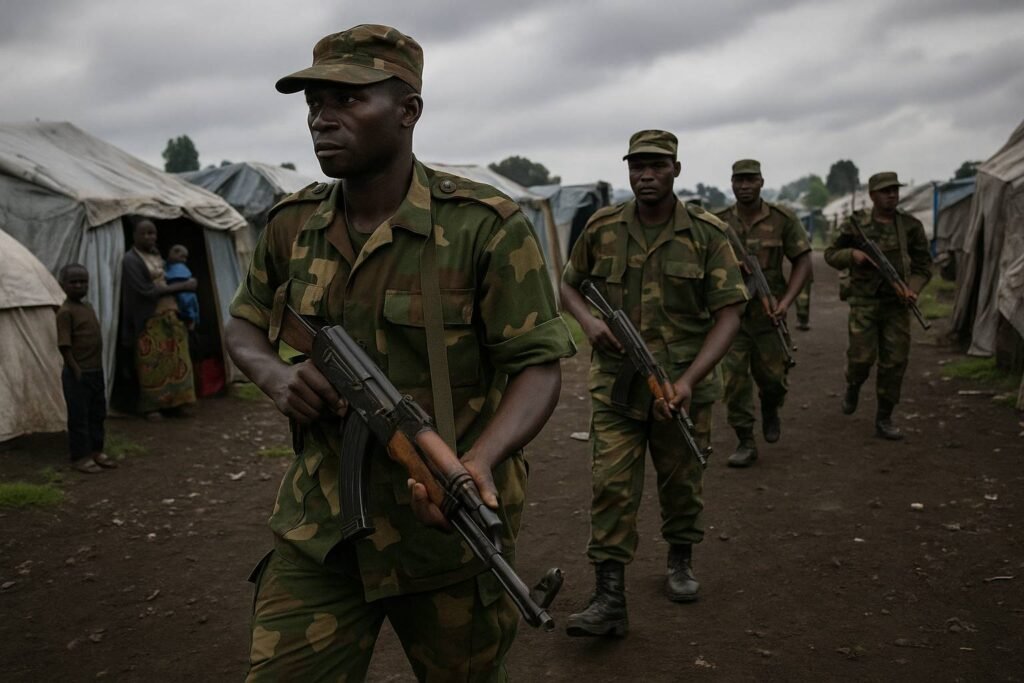
The M23 Congo Massacre in July 2025 stands among the bloodiest incidents in eastern Democratic Republic of Congo’s modern history. Human Rights Watch (HRW) confirmed at least 140 civilians summarily executed near Virunga National Park, while the UN reported 319 people killed in Rutshuru territory, including women and children. This atrocity has reignited international outrage and renewed calls for accountability as peace efforts falter.
A Region Caught in Perpetual Conflict
North Kivu remains the volatile heart of Congo’s eastern wars, where rebel groups and militias operate with devastating impact. The M23 rebellion—revived in 2021 after years of dormancy—claims to defend Tutsi interests but faces mounting allegations of atrocities against Hutu and Nande civilians.
Since its resurgence, the United Nations Office for the Coordination of Humanitarian Affairs (OCHA) estimates over 7 million people have been displaced across eastern Congo.
The M23 Congo Massacre occurred within this power vacuum, where weak governance, armed group rivalry, and alleged foreign interference fuel persistent instability across Rutshuru and the Virunga corridor.
UN and HRW Detail Atrocities
Investigators from HRW interviewed survivors who described mass shootings, summary executions, and forced burials in at least 14 villages bordering Virunga Park. Many victims were Hutu farmers trapped between M23 operations and FDLR-controlled zones.
The United Nations confirmed that July 2025 registered the highest monthly civilian death toll since M23’s return, with 319 people killed. Bodies were left unburied or hastily covered in shallow graves, while survivors fled through dense forests in terror.
Pattern of Violence: Inside the M23 Congo Massacre
| Aspect | Details |
|---|---|
| Primary Locations | Villages near Rutshuru and Virunga National Park |
| Perpetrators | Suspected M23 fighters targeting Hutu civilians |
| Methods Used | Executions, mass shootings, and forced burials |
| Timeline | July 2025 during peak M23–FDLR clashes |
| Casualties | 319 killed (UN), 140 verified by HRW |
Humanitarian groups call the M23 Congo Massacre a “coordinated terror campaign” designed to secure mineral-rich trade routes and suppress dissenting communities.
M23 Leadership Reaction: Denial Amid Global Outcry
In a statement to the press, M23 spokespersons rejected all accusations, calling the HRW findings “fabricated propaganda.” They accused the Congolese army (FARDC) and the FDLR militia of staging the killings to discredit them.
However, both Amnesty International and local monitors documented consistent evidence linking M23 troops to the violence. Analysts note that the M23 Congo Massacre fits prior patterns of abuse dating back to earlier offensives in 2012 and 2022, raising serious questions about chain-of-command responsibility.
International Response: Rising Pressure for Accountability
The M23 Congo Massacre prompted swift condemnation from the United States, the European Union, and African Union envoys. The UN Security Council is expected to debate a resolution imposing travel bans and sanctions on commanders linked to the killings.
Human Rights Watch outlined a four-step accountability roadmap:
-
Preserve forensic evidence before it is destroyed.
-
Investigate the military hierarchy behind the killings.
-
Enforce international sanctions and arms embargoes.
-
Provide reparations and long-term support to survivors.
Regional governments have also been warned against cross-border aid or logistical support that may sustain the M23 insurgency.
Peace Process Deadlock: Doha Mediation Losing Credibility
The Qatar-mediated talks designed to restore calm in eastern DR Congo have largely stalled. Disagreements between Kinshasa and Kigali over M23’s participation have crippled progress.
Analysts say excluding M23 from binding discussions risks prolonging violence, as rebel operations continue independently of formal peace frameworks.
Reports from Reuters and Al Jazeera confirm that the Doha process remains frozen, while local ceasefires are repeatedly violated.
Humanitarian Emergency: Millions Displaced and Destitute
The United Nations estimates that more than seven million people are now displaced within the DRC — the highest figure in the country’s history. The M23 Congo Massacre triggered another wave of flight from Rutshuru, Nyiragongo, and surrounding districts.
Refugee camps near Goma are overwhelmed, lacking basic sanitation, food, and shelter. NGOs like UNICEF and Médecins Sans Frontières (MSF) report alarming spikes in cholera, malnutrition, and gender-based violence.
Local leaders warn that unless security stabilizes, displacement may reach catastrophic levels by year’s end.
Survivors Speak: Lives Torn Apart by Violence
Eyewitness accounts from survivors paint a picture of unimaginable horror.
“They shot people in front of their children. We buried them with our own hands,” said one displaced farmer from Busanza.
Community leaders are compiling testimonies and photographs to assist future investigations. Humanitarian groups emphasize that trauma from the M23 Congo Massacre will take generations to heal, especially among children who witnessed killings and destruction firsthand.
Analytical View: Breaking the Cycle of Impunity
Experts argue that the M23 Congo Massacre reflects deeper structural failures in Congo’s justice and security systems. Without international oversight, cycles of violence will persist.
Analysts recommend an African Union–UN hybrid tribunal to investigate crimes committed by all armed actors, not just M23. Strengthening MONUSCO’s mandate to protect civilians and improving early-warning mechanisms are also key recommendations to prevent recurrence.
Closing Perspective: Justice Under the Shadow of Virunga
The M23 Congo Massacre serves as a grim reminder that North Kivu’s suffering will not end without justice and inclusion. Peace talks that exclude major actors and ignore victims’ voices risk perpetuating the same tragedies.
Rights groups and the UN continue to urge credible investigations, transparency, and humanitarian access to all affected zones.
Until accountability is achieved, the fertile lands around Virunga National Park will remain stained by grief and unanswered cries for justice.