A Bold Reform Announced on the Global Stage
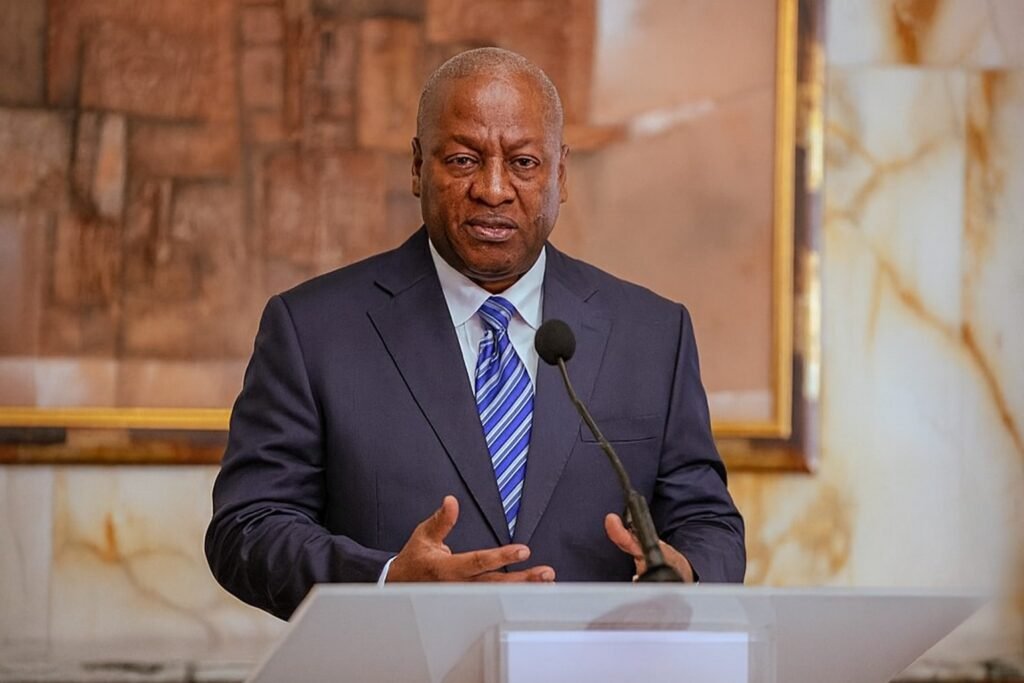
At the 9th Tokyo International Conference on African Development (TICAD-9) in Yokohama, President John Dramani Mahama unveiled one of Ghana’s most significant economic reforms in decades — a measure now widely described as Mahama Removes Investor Capital.
The reform eliminates the minimum capital thresholds that had long limited foreign participation in Ghana’s economy. It signals a major step toward inclusive economic globalization, making Ghana one of Africa’s most open and accessible investment destinations.
“Whether you bring $100,000, $50,000, or less — Ghana is open for business,” Mahama declared at the Ghana Presidential Investment Forum in Japan.
From Restrictive Policy to Inclusive Investment
Under the previous Ghana Investment Promotion Centre (GIPC) Act, foreign investors were required to meet strict minimum capital requirements before setting up operations. The law demanded:
- $200,000 for joint ventures with Ghanaians
- $500,000 for wholly foreign-owned enterprises
- $1 million for trading firms employing at least 20 citizens
These thresholds were initially introduced to protect local traders from unfair competition. However, over time, they discouraged thousands of small and medium-scale investors — particularly from Asia, Europe, and the diaspora — who lacked such large capital bases.
The decision that Mahama Removes Investor Capital requirements therefore represents a philosophical and economic turning point — one that recognizes the potential of smaller investors, start-ups, and innovators as engines of growth.
Ghana Opens Its Doors Wider
The revised GIPC framework abolishes all minimum capital requirements for foreign participation. The new rule is designed to promote equitable investment access and attract diverse investors — from technology innovators and agricultural entrepreneurs to service providers and manufacturers.
The reform introduces:
- Zero minimum capital thresholds for all sectors except those deemed strategic.
- Fast-track business registration through an online GIPC portal.
- Special incentives for green, tech, and rural-industrial projects.
- Encouragement of joint ventures between foreign investors and local youth-owned enterprises.
By ensuring that Mahama Removes Investor Capital restrictions, Ghana positions itself as a flexible, investor-friendly economy ready for post-pandemic growth and AfCFTA integration.
A Reform Backed by Recovery
The announcement comes at a moment of renewed optimism in Ghana’s macroeconomic landscape. Key indicators show a clear turnaround:
- Inflation dropped from 22.8% in 2024 to 13.7% by mid-2025.
- The Ghana Cedi 2025 emerged as the world’s best-performing currency, strengthening business confidence.
- Fitch upgraded Ghana’s sovereign outlook to B-Stable, citing improved fiscal discipline.
These figures form the backbone of Mahama’s investment pitch: a stable economy anchored on reform and resilience. Economists believe the removal of capital thresholds — that is, the moment Mahama Removes Investor Capital barriers — will attract a new wave of diversified foreign capital to Ghana’s financial, digital, and industrial sectors.
Why Mahama Removes Investor Capital Is a Strategic Masterstroke
Analysts describe the reform as one of Ghana’s most strategic economic moves in a decade. It aligns with global trends emphasizing inclusivity and fair access to developing markets.
1. Empowering Small Investors
The old GIPC thresholds limited participation to large corporations. Now, micro and medium-scale investors from Japan, Singapore, South Korea, and Europe can enter Ghana’s market easily, bringing innovation, technology transfer, and job creation.
2. Leveraging the AfCFTA Gateway
Ghana hosts the Secretariat of the African Continental Free Trade Area (AfCFTA), providing access to a continental market of 1.3 billion people. With the reform, Mahama Removes Investor Capital restrictions, turning Ghana into the natural launchpad for firms targeting pan-African trade.
3. Supporting the 24-Hour Economy Vision
The reform reinforces Mahama’s 24-Hour Economy Initiative, aimed at fostering continuous productivity and employment. By easing entry for foreign investors, Ghana can develop around-the-clock industries in manufacturing, logistics, ICT, and renewable energy.
Expert Insights: Balancing Opportunity and Oversight
Dr. Kwame Antwi-Boasiako, a development economist, praised the policy’s inclusiveness but warned of potential market saturation:
“Ghana must strike a balance between openness and protection. While we celebrate that Mahama Removes Investor Capital, we must also build the capacity of local entrepreneurs to compete fairly.”
Industry groups such as the Ghana Union of Traders Association (GUTA) echoed similar sentiments, advocating for training, technology transfer, and regulatory oversight to ensure local businesses benefit equally.
Still, international observers — including Reuters and Bloomberg — have commended Ghana’s reform as “a pragmatic, pro-growth pivot suited for modern investment flows.”
Regional and Global Reaction: Japan and Asia Lead the Applause
In Japan, business leaders hailed the decision as a major leap in Ghana-Asia relations. Corporate giants such as Toyota Tsusho, Mitsui, and Panasonic already operate in Ghana and are poised to expand under the new law.
Japanese investors see the policy — where Mahama Removes Investor Capital barriers — as a sign of long-term stability and openness to partnership. The Japan External Trade Organization (JETRO) described the reform as “a rare opportunity to integrate Japanese precision with African creativity.”
Regional analysts in Kenya and Rwanda have also taken note, with some suggesting Ghana’s model could influence broader African policy shifts toward investor inclusivity.
Local Implications: Opportunities for Youth and SMEs
Domestically, the elimination of minimum capital requirements opens new frontiers for Ghana’s youth and small business sector.
The GIPC Act reform is expected to enable:
- Easier access to foreign mentorship and funding.
- Greater integration of youth-led enterprises into global value chains.
- Joint-venture partnerships that share expertise and risk.
By ensuring that Mahama Removes Investor Capital, Ghana signals that innovation, not wealth size, will define participation in its new economic future.
This inclusive approach also supports Ghana’s Digital Economy Agenda, simplifying investor verification, land registration, and e-commerce taxation through fully digitized systems.
From Announcement to Ratification
The revised GIPC bill will be presented to Parliament in Q4 2025 for debate and approval. Once enacted, it will:
- Legally abolish capital thresholds.
- Establish a Foreign SME Support Fund.
- Protect sensitive sectors under clear strategic-interest clauses.
- Streamline investor processing timelines from 30 days to 10 days.
Finance analysts project that this single act — the point where Mahama Removes Investor Capital constraints — could generate up to $3 billion in new foreign direct investment (FDI) within its first two years.
Global and Local Impact: Ghana’s Message to the World
Globally, the reform positions Ghana among Africa’s most attractive and transparent investment destinations, rivaling Mauritius, Rwanda, and South Africa.
Locally, its success will depend on implementation, enforcement, and stakeholder engagement. Should regulators maintain oversight while promoting fairness, Ghana could see an unprecedented surge in partnerships, technology inflows, and job creation.
Economists view this as a long-term structural reform, capable of reshaping Ghana’s industrial base and positioning it as a West African innovation hub.
A Defining Moment for Ghana’s Investment Future
The day Mahama Removes Investor Capital requirements will likely be remembered as the day Ghana reset its investment philosophy.
The reform represents not merely a legislative update but a signal to the world: Ghana values inclusion, collaboration, and innovation over bureaucracy. By removing financial walls, the nation extends an open hand to entrepreneurs of all sizes — from global corporations to first-time investors with modest resources but big ideas.
As Parliament moves toward ratification, one truth stands clear: Ghana’s future growth will be powered not just by capital, but by confidence.
Internal Links
- Nestlé Fires CEO Laurent Freixe After Relationship Scandal
- Stop Foreign Currency Cash Payments: BoG Orders Banks