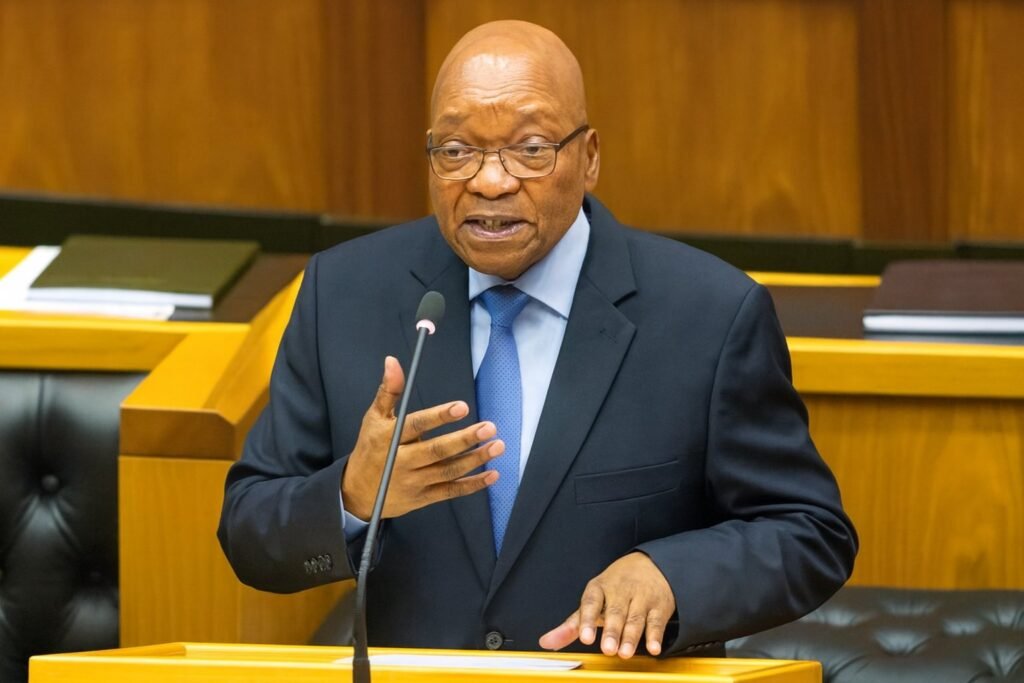
Zuma Renews the Call for Monetary Independence
The Africa Single Currency debate has returned to the center of continental discourse following a powerful statement by former South African President Jacob Zuma.
Speaking at a high-level African economic forum, Zuma urged governments to free the continent from dependence on foreign currencies, describing such reliance as a “modern form of economic control.”
“Around 80% of African trade is settled in foreign currencies. If they can sanction our banks, we must build our own banks. If they can switch us off, we must switch on Africa,” Zuma declared, earning resounding applause.
His remarks have reignited the long-standing conversation around monetary sovereignty and the continent’s vision for a unified financial system through the Africa Single Currency initiative.
The Vision Behind the Africa Single Currency
The concept of an Africa Single Currency dates back to the Abuja Treaty of 1991, which envisioned the formation of an African Economic Community (AEC) and a unified central bank by 2028.
The idea aimed to reduce transaction costs, stabilize exchange rates, and give Africa greater negotiating power in global markets.
Over three decades later, the goal remains aspirational. The Economic Community of West African States (ECOWAS)has pursued its own sub-regional version — the Eco — but repeated delays and macroeconomic disparities among member states have slowed progress.
Experts say the renewed conversation signals that Africa is once again considering how financial integration could complement its broader trade initiatives under the African Continental Free Trade Area (AfCFTA).
Zuma’s Economic Message to the Continent
Zuma’s appeal for an Africa Single Currency comes at a time of global debate about de-dollarization and the rise of alternative trading systems.
Citing examples from the BRICS bloc, Zuma argued that Africa must follow the same path of financial independence by creating its own banks, credit systems, and payment mechanisms.
“Africa cannot remain a spectator in the global economy,” Zuma said. “If we continue trading in other people’s money, we will never own our destiny.”
His message underscores growing frustration among policymakers over Africa’s dependence on the U.S. dollar and euro for intra-continental trade — a situation that leaves economies vulnerable to sanctions, exchange fluctuations, and inflationary shocks.
Opportunities and Structural Challenges
Proponents of the Africa Single Currency argue that a shared currency could:
- Boost intra-African trade by removing currency conversion barriers.
- Enhance macroeconomic stability through coordinated fiscal policies.
- Reduce transaction costs and encourage cross-border investments.
- Strengthen Africa’s global bargaining power in trade negotiations.
However, analysts caution that implementation will require immense discipline, political will, and institutional reform.
Challenges include wide economic disparities between member states, uneven inflation rates, and varying levels of financial infrastructure development.
According to economic analyst Dr. Aisha Wekesa, “Monetary union must be built on fiscal convergence, sound institutions, and transparent governance — otherwise, it risks repeating the mistakes seen in earlier regional experiments.”
A Generational Mission for Economic Sovereignty
Zuma’s speech also emphasized the role of African youth in shaping the future of the Africa Single Currency.
He urged young entrepreneurs, innovators, and economists to view monetary independence as part of their generational mission.
“Young people must embrace this vision,” he said. “They must take responsibility for Africa’s competitiveness and drive the industries that will sustain a single currency.”
Zuma linked the success of any future currency to Africa’s ability to add value to its raw materials, create manufacturing jobs, and build digital financial ecosystems that empower local businesses.
He argued that industrialization — not extraction — must define Africa’s next economic chapter.
Insights from Global and Regional Models
Across the world, similar currency unions offer valuable lessons. The European Union’s euro demonstrates how shared monetary policy can increase integration — but also how economic asymmetries can create tension.
Regionally, the West African CFA franc and Common Monetary Area (CMA) show that integration is possible, but alignment must be rooted in shared fiscal and regulatory discipline.
The Africa Single Currency, if realized, could merge these lessons — building a uniquely African system designed for digital trade, mobile payments, and resource-based economies.
The Road Toward 2028
The African Union (AU)’s roadmap envisions operationalizing an African Monetary Institute (AMI) as a precursor to a continental central bank.
Officials hope that progress under the AfCFTA — which currently connects 54 countries — will accelerate the groundwork for the Africa Single Currency by harmonizing trade and customs policies.
Nevertheless, the 2028 target may prove ambitious given political and fiscal disparities among nations. Economists suggest a phased approach, beginning with digital payment interoperability and currency-swap frameworks before full monetary unification.
A Continent at the Crossroads of Economic Destiny
The renewed debate over the Africa Single Currency reflects Africa’s broader quest for self-determination in the global economic order.
While challenges remain steep, Jacob Zuma’s call has reignited a vision rooted in the continent’s shared aspirations for independence, integration, and prosperity.
Whether or not the single currency arrives by 2028, the momentum it creates could redefine Africa’s path toward collective strength — proving that economic unity is not just a dream, but a necessity for true liberation.
Internal Links
- Trump Birthright Citizenship Ban Overturned: 5 Bold Wins
- Google AI Africa Investment: $37M Boost, Accra Center Opens
- US Student Visa Ban: 6,000 Visas Revoked Over Crimes,