Strengthening India’s Industrial Base
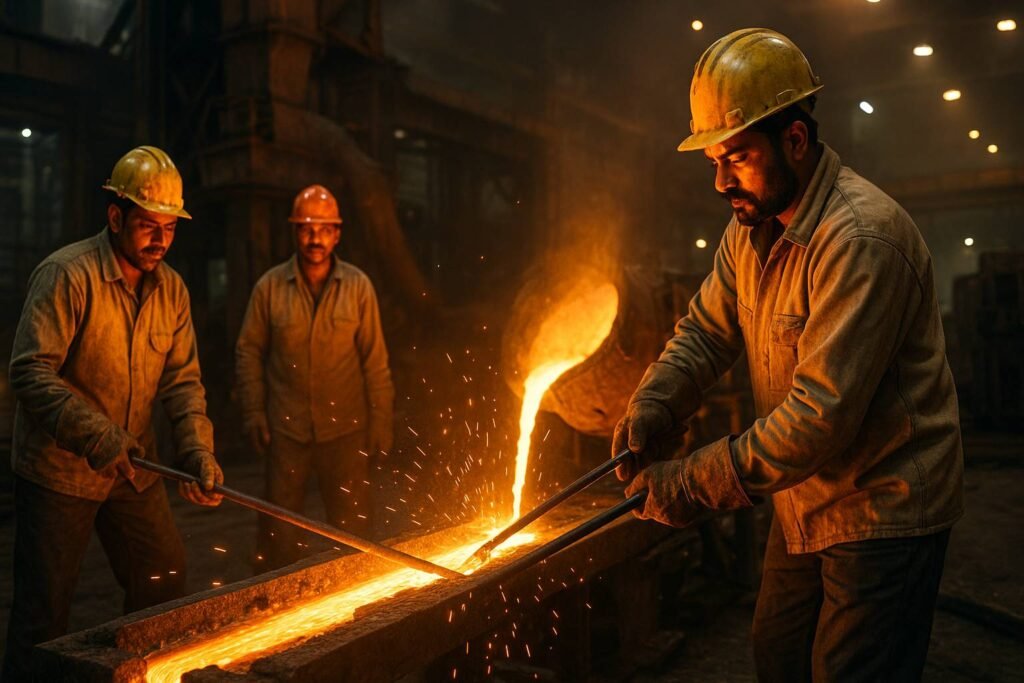
The India Steel Import Tariff represents a critical move to protect domestic steel manufacturers from surging low-cost imports. Following a detailed investigation by the Directorate General of Trade Remedies (DGTR), India has approved a three-year safeguard duty beginning at 12% in the first year, tapering to 11.5% and finally 11% by the third.
Government officials describe the India Steel Import Tariff as a timely step toward industrial stability, though analysts remain divided on whether it will curb inflation or raise long-term costs in key sectors such as construction, automobile production, and infrastructure.
Why India Is Acting Now
The tariff emerged from a DGTR inquiry after a sharp spike in flat-rolled steel imports—primarily from China and Vietnam—between 2024 and 2025. These low-priced shipments threatened to destabilize local industries and put thousands of jobs at risk.
To curb this, India introduced a temporary 12% duty in April 2025 for 200 days. The DGTR’s final report, released in October, found evidence of “serious injury” to domestic producers and proposed the following duty structure:
- Year 1: 12%
- Year 2: 11.5%
- Year 3: 11%
Officials say the India Steel Import Tariff aligns with broader goals under Atmanirbhar Bharat and Make in India, promoting self-reliance and industrial modernization.
“India must protect its manufacturing core from predatory dumping practices,” a Commerce Ministryspokesperson stated. “This safeguard duty is a calibrated measure to restore fair competition.”
Products and Implementation Strategy
The India Steel Import Tariff covers key flat-rolled steel categories that form the backbone of multiple industries, including:
- Hot-rolled coils
- Cold-rolled sheets
- Galvanized steel
- Alloy-coated products
These materials are essential for:
- Construction and Real Estate: Residential buildings and pipelines
- Automotive and Appliances: Vehicle chassis and manufacturing components
- Infrastructure Development: Metro rail, bridges, and energy projects
To ensure compliance, DGTR has directed customs authorities to implement stricter port checks, real-time import tracking, and data sharing with regional trade offices to block transshipment through Malaysia, Indonesia, and Singapore.
Winners and Concerns
Domestic Steelmakers Applaud the Move
The India Steel Import Tariff has been hailed by local manufacturers as a crucial lifeline. Following the announcement, shares of Tata Steel, JSW Steel, SAIL, and JSPL rose by up to 3%, signaling investor confidence.
“This is a welcome decision. Without protection, India’s steel ecosystem risked collapse under unfair foreign pricing,” said Vidya Rattan Sharma, Managing Director of JSPL.
Analysts predict the India Steel Import Tariff will stabilize local prices and attract new investments into green steel projects—a key component of India’s sustainability and net-zero strategy.
Construction and Auto Sectors Raise Red Flags
However, real estate and automobile sectors have voiced concern over rising input costs. According to Ahuja Analytics, construction costs could rise by 5–8%, potentially affecting housing affordability and government infrastructure timelines.
“We’re already battling high cement prices; this will make projects more expensive and delay completion,” said Neha Bhandari, a Pune-based civil contractor.
The tariff could also pressure automakers to increase vehicle prices by early 2026 to maintain profitability.
Economic Impact: Protection vs. Productivity
Economists argue that the India Steel Import Tariff illustrates India’s attempt to balance economic protectionism with industrial competitiveness. Similar protective duties have been introduced by the United States, European Union, and Brazil to defend against China’s export surge.
India’s steel industry employs 2.5 million people and contributes nearly 2% of national GDP. With consumption expected to grow from 128 million tonnes in 2024 to 170 million tonnes by 2030, domestic capacity expansion remains essential.
However, experts warn that reliance on measures like the India Steel Import Tariff must remain temporary.
“Safeguard duties must be paired with innovation and efficiency,” said Dr. Renu Kaur from the Indian Institute of Foreign Trade. “Prolonged protection can lead to stagnation rather than growth.”
Global Trade Implications: Diplomatic and WTO Effects
The India Steel Import Tariff has drawn mixed reactions globally. China and Vietnam have voiced opposition, with Beijing-based trade bodies hinting at potential WTO challenges.
Indian authorities maintain that the India Steel Import Tariff complies with Article XIX of the GATT and the WTO Safeguards Agreement, arguing it’s a temporary remedy to protect national interests.
“Our objective is economic stabilization, not retaliation,” a DGTR official clarified.
The policy also signals a shift in India’s trade alignment, with closer cooperation among Quad partners—the U.S., Japan, and Australia—to diversify supply chains and reduce dependency on China.
Market Outlook: Consumers and Investors Adjust
For consumers, the tariff may slightly increase property and automobile prices as costs ripple through the supply chain. Builders could face tighter profit margins, while infrastructure firms may renegotiate project budgets.
Investors, however, have shown optimism. The NSE and BSE both recorded surges in steel-sector trading volumes, with forecasts suggesting continued gains through 2026 as government projects boost domestic demand.
Strategic Outlook: Pathway to Industrial Self-Reliance
Beyond protection, the tariff serves as a bridge toward self-reliance and supply chain resilience. It grants domestic producers a crucial three-year window to expand capacity, modernize facilities, and improve energy efficiency.
If well executed, India could transform from a net steel importer into a net exporter by 2030, strengthening its role in Asia’s industrial economy. The challenge will be maintaining competitiveness once the tariff expires and global markets reopen fully.
Testing India’s Industrial Resolve
The tariff is both a shield and a strategy. It safeguards domestic industries from predatory dumping while challenging policymakers to drive long-term innovation and cost efficiency.
While short-term cost pressures are inevitable, the measure could reshape India’s manufacturing sector—turning protection into productivity and dependency into independence.
In the end, success will depend on how effectively India leverages this three-year window to realize the goals of Atmanirbhar Bharat and position itself as a resilient force in the global steel market.
Internal Links:
- Mpox Ghana Cases Surge: 37 New Infections Raise Alarm
- Long COVID Global Impact: 5 Urgent Health Risks the World Must Address
- Apple Global Investment Shift: $100B to U.S., $1.5B to India in Bold Strategic Pivot
External Sources: