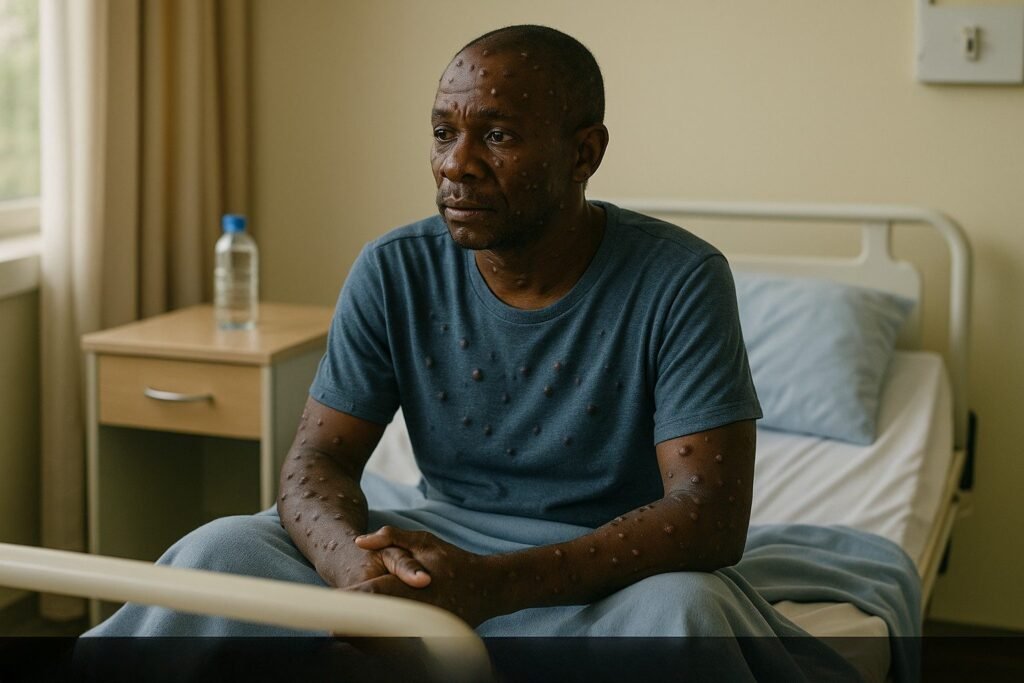
Mpox Ghana: The Latest Numbers Raise Alarm
Mpox Ghana has reached a worrying milestone, with 409 confirmed cases as of August 14, 2025. The Ghana Health Service (GHS) confirmed 37 new infections and reported that two patients remain hospitalized, underscoring the urgency of the outbreak. While no additional deaths have been recorded since the first fatality earlier in the year, the new numbers highlight the virus’s persistent threat in Ghana and across Africa.
Health experts warn that even though most patients are recovering through community-based care, Mpox Ghana’s steady spread could escalate if vigilance weakens. The virus, which often presents with fever, rash, and swollen lymph nodes, remains highly transmissible through close contact.
Historical Context of Mpox in Ghana
Mpox, once considered a rare zoonotic infection, has evolved into a recurring health challenge in West and Central Africa. Ghana confirmed its first Mpox cases in 2022 during the global outbreak that saw nearly 100,000 infections worldwide. That crisis, concentrated in the Americas and Europe, drew international attention before the World Health Organization (WHO) declared it over in May 2023.
However, the global declaration of “end” did not erase risks in Africa. Countries including Ghana, Nigeria, and the Democratic Republic of Congo continued to face localized outbreaks tied to limited access to vaccines and public health infrastructure.
In Ghana specifically, Mpox has often clustered in densely populated urban centers like Accra and Kumasi, where human-to-human transmission spreads faster. The lack of a dedicated Mpox vaccine program, combined with diagnostic gaps and community stigma, has complicated control measures.
Current Developments in 2025
According to the GHS situation report, Mpox Ghana continues to spread slowly but steadily:
- 37 new cases recorded on August 14, 2025
- 409 total confirmed cases since the outbreak began
- 2 patients hospitalized in Accra and Kumasi under clinical observation
- Majority of infections managed via community surveillance and contact tracing
- No new deaths since the country’s first Mpox-related fatality in early 2025
Public health authorities are responding with increased awareness campaigns in schools, bus stations, and marketplaces. In Accra, radio jingles in Twi, Ga, and Ewe urge residents to report unusual rashes early. Health centers are being supplied with rapid diagnostic kits to reduce delays in case confirmation.
Mpox Ghana: Expert Insights on Why This Matters
The resurgence of Mpox Ghana illustrates the fragility of Africa’s post-pandemic recovery. While most countries have shifted their priorities toward economic rebuilding, neglected infectious diseases such as Mpox continue to undermine stability.
Key points from health experts include:
- Underreporting is likely because stigma and fear prevent some patients from seeking care.
- Immunocompromised individuals, especially those living with HIV, remain at the highest risk of severe illness.
- Though Ghana’s outbreak is modest compared to the 2022–2023 global wave, it could act as a regional spark for neighboring West African states if not controlled.
Dr. Patrick Kuma-Aboagye, Director-General of GHS, stated:
“We must treat Mpox with the same seriousness as any epidemic. Surveillance, early detection, and community education are our strongest defenses against escalation.”
Reactions and Public Response
- WHO Africa Office: Reaffirmed Mpox as a Public Health Emergency of International Concern, citing Ghana’s outbreak as part of a broader African resurgence.
- Africa CDC: Urged cross-border surveillance given Ghana’s busy trade and migration routes with Côte d’Ivoire, Burkina Faso, and Togo.
- Local voices: At Accra’s Makola Market, traders reported fears of declining sales as rumors about contagion spread, even in areas without confirmed cases.
Community feedback suggests that while most citizens are aware of Mpox symptoms, misinformation—including false links to witchcraft or HIV—continues to complicate public education.
Global and Local Impact
The Ghana outbreak is part of a wider African resurgence. Nigeria and the DRC are reporting rising numbers, with WHO estimating tens of thousands of infections across the continent in 2025.
On the global stage, Mpox Ghana has implications for travel and trade. Airlines have begun monitoring passengers arriving from West Africa more closely, while businesses worry about renewed restrictions if cases spike. Scientists also warn that climate change and deforestation could expand Orthopoxvirus habitats, creating opportunities for Mpox-like viruses to spread beyond historical regions.
For Ghana, the stakes are high. A worsening outbreak could:
- Overwhelm regional health centers already managing malaria and cholera cases.
- Damage public trust in the government’s pandemic preparedness.
- Harm the tourism industry, especially in Accra and Cape Coast, if cases rise further.
Mpox Ghana: Public Health Response Measures
Authorities are implementing a multi-tiered response:
- Community engagement: Chiefs, imams, and pastors are being trained to help spread accurate health information.
- Hygiene campaigns: Posters and radio/TV broadcasts emphasize handwashing, disinfection, and safe isolation practices.
- Hospital preparedness: Isolation wards in Accra, Kumasi, and Takoradi are being readied for potential case surges.
- Pharmaceutical measures: While Ghana lacks a Mpox-specific vaccine, authorities are considering the use of smallpox vaccines, which provide up to 85% protection. The antiviral Tecovirimat may also be deployed in severe cases.
Prevention Measures for Individuals
The GHS urges all Ghanaians to:
- Isolate visible rashes or lesions until fully healed.
- Wash hands frequently with soap or use alcohol-based sanitizers.
- Avoid sharing towels, linens, or clothing.
- Disinfect frequently touched surfaces at home and in workplaces.
- Seek immediate medical evaluation if symptoms such as fever, rash, or lymph node swelling appear.
Looking Ahead: What Mpox Ghana Means for the Future
With Mpox Ghana now at 409 cases, vigilance remains critical. Though hospitalizations are currently low, the outbreak is a stark reminder that emerging infections remain an ever-present threat. Ghana’s ability to maintain trust, implement effective communication, and secure international support will determine whether this outbreak fades or escalates.
For the broader continent, the outbreak emphasizes the need for African-led solutions, including investment in local vaccine production, improved diagnostics, and long-term surveillance systems.
Internal Links
- Children Obesity UNICEF Report Warns of Global Health Crisis
- Toxic Levels of Lead in Fish, Vegetables Threaten Public Health