Fame, Fraud and the Fall of Sean Kingston
On August 15 2025, the music world witnessed a dramatic reckoning as Jamaican-American artist Sean Kingston—known worldwide for his 2007 hit Beautiful Girls—was sentenced to three and a half years in federal prison.
The Sean Kingston sentenced verdict capped a year-long investigation revealing how celebrity aura can be twisted into criminal opportunity. His mother, Janice Eleanor Turner, was also convicted, exposing how fame and family can merge into moral collapse.
From Social-Media Deals to a Federal Scam
Federal prosecutors trace the Sean Kingston sentenced saga to April 2023, when investigators noticed irregular luxury purchases.
Court filings from the U.S. Attorney’s Office (S.D. Florida) detail how Kingston and Turner targeted high-end vendors—jewelry houses, car dealerships, mattress retailers, and a maker of a 232-inch LED television.
Using Kingston’s celebrity image, they negotiated deals online, then sent fabricated wire-transfer receipts showing payments that never cleared. Vendors, dazzled by his fame, released merchandise immediately.
By March 2024, the duo had acquired more than $1 million in goods, including a bullet-resistant Cadillac Escaladeand designer watches—all financed by illusion.
Sentencing and Immediate Custody
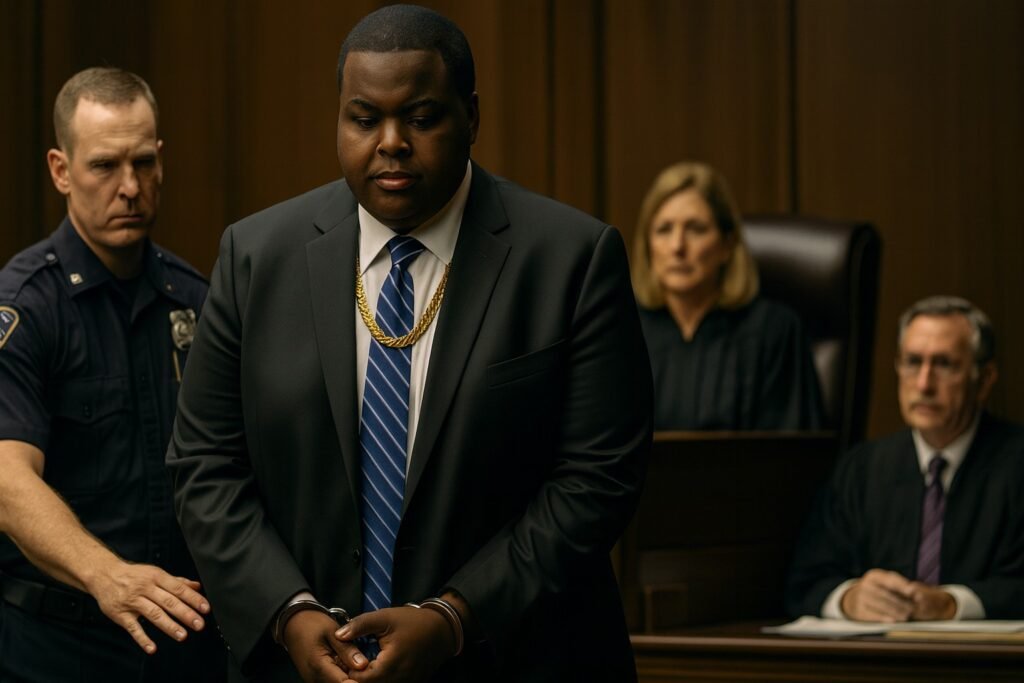
At the Miami Federal Courthouse, Judge Evelyn Rodriguez delivered a sharp message: fame is no shield from justice. She handed Kingston 42 months in prison, three years of supervised release, and ordered full restitution.
Prosecutors labeled the artist “a thief influenced by entitlement.”
Defense attorney Robert Grayson argued that Kingston’s youthful success left him “financially illiterate and easily misguided.” Yet the judge refused a request for delayed self-surrender, citing prior non-compliance.
The Sean Kingston sentenced decision saw him taken into custody immediately.
His mother received five years in prison and three years’ probation, reflecting her role as the administrative architect of the fraud.
How the Fraud Operated
Documents revealed a calculated system. Kingston would advertise his star status on social media, promise public endorsements to vendors, and then email counterfeit wire receipts bearing official-looking bank logos.
These “proofs of payment” persuaded retailers to deliver merchandise on trust—often within hours.
When payments failed to arrive, Kingston ignored follow-ups, and his mother sent assurances that banks had “technical delays.”
Federal agents retrieved the bulletproof SUV, luxury jewelry, and the massive TV from his Florida mansion during a May 2024 SWAT raid, cementing evidence for the Sean Kingston sentenced case.
Celebrity Power as a Tool of Deception
The Sean Kingston sentenced episode illustrates a modern paradox: public adoration can erode due diligence.
According to criminal-justice scholar Dr. Lydia Michaels, “Fame is capital that can buy trust faster than money. But when used deceptively, it destroys institutions built on good faith.”
Analysts warn that celebrity fraud cases are rising as businesses move transactions to social media, where verification is casual and influencer clout replaces traditional credit checks.
In Kingston’s case, a few digital screenshots were enough to outwit seasoned retailers—a lesson in how trust without proof invites abuse.
Disbelief and Disillusionment
Reactions to the Sean Kingston sentenced ruling ranged from heartbreak to anger.
Social-media platforms flooded with comments from fans recalling his inspirational lyrics about love and resilience. Many questioned how a man who sang about hope could engineer fraud.
Music executive Angela Martins told Vulture that “the industry must prioritize financial education. We lose talent when success outpaces maturity.”
Federal prosecutor Damian Williams responded firmly: “Fame does not excuse crime. The law applies to every citizen equally.”
Impact on Global Entertainment
The Sean Kingston sentenced decision echoed far beyond U.S. courts. In Jamaica, his birthplace, radio hosts debated whether the conviction tarnishes Caribbean representation in global music. In Ghana and the U.K., where he has large followings, commentators called for mentorship programs for young artists.
The case also feeds a growing conversation about accountability in the era of digital celebrity culture—where reputation travels faster than truth.
Industry advocates urge labels to offer legal audits and compliance training to prevent similar falls from grace.
Understanding Federal Wire Fraud
Under 18 U.S.C. § 1343, wire fraud covers schemes using electronic communications to obtain money or property by false pretenses.
Maximum penalty: 20 years in prison and substantial fines.
The Sean Kingston sentenced ruling of 42 months was mitigated by his cooperation and lack of criminal history, but the court ordered $968,000 in restitution and asset forfeiture.
Turner’s five-year term was enhanced because she managed the documentation and benefited directly from proceeds.
Lessons from Other Celebrity Frauds
The music industry has seen similar falls. Ja Rule’s Fyre Festival case and Todd Chrisley’s bank-fraud convictionshow how public figures can blur lines between influence and illegality.
Analysts say the Sean Kingston sentenced story fits this pattern—proof that wealth and fame do not guarantee ethical judgment.
Each scandal erodes public confidence in artists who once symbolized success and resilience.
Redemption and Reform
After his release, Kingston will remain under supervision for three years with strict limits on major financial transactions. He plans to launch an anti-fraud initiative for young musicians, a move officials will monitor for authenticity.
Public relations experts believe his redemption depends on sustained restitution payments and transparent conduct. If sincere, it could recast the Sean Kingston sentenced chapter as a story of rehabilitation rather than ruin.
A Cautionary Tale of Integrity Over Illusion
The Sean Kingston sentenced verdict stands as a landmark reminder that no amount of celebrity protects against the rule of law.
In an era where online influence equals currency, Kingston’s downfall warns that credibility must be earned through honesty—not fabricated wires or borrowed status.
For fans, artists, and businesses alike, the message is clear: trust is precious, and fame without integrity is a liability.