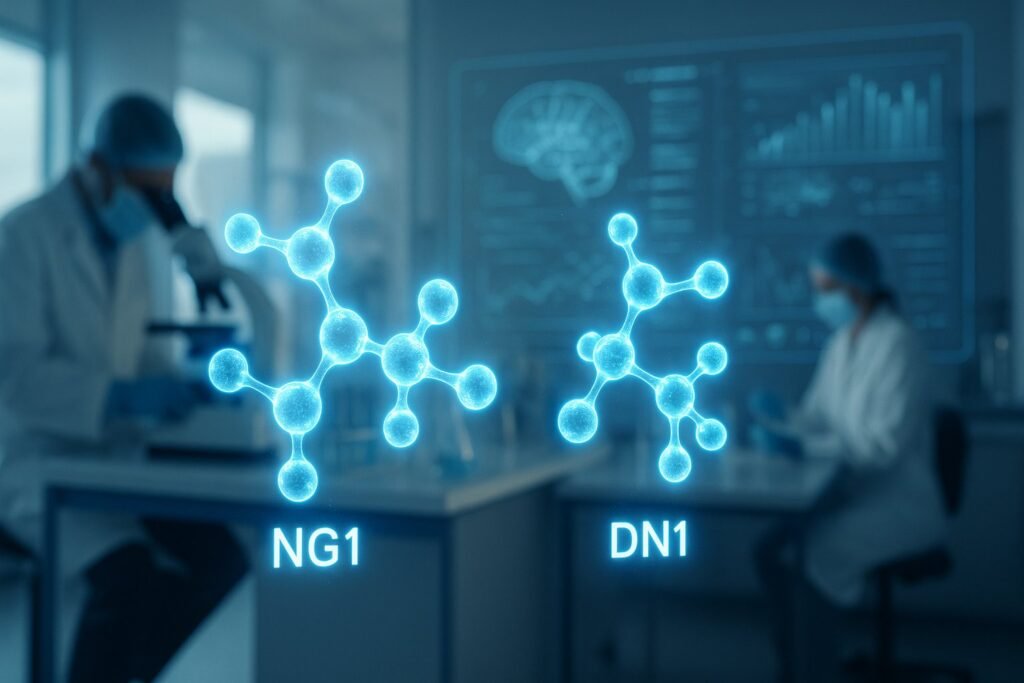
AI Transforms the Antibiotic Frontier
An AI antibiotic breakthrough from the Massachusetts Institute of Technology (MIT) is reshaping how medicine combats the world’s toughest bacterial infections. Two newly engineered compounds—NG1 and DN1—have shown remarkable efficacy against drug-resistant gonorrhoea and MRSA, marking a decisive step in the fight against antimicrobial resistance, a global health threat claiming over 1.2 million lives annually.
Escalating Crisis: The Superbug Challenge
Antibiotic resistance has quietly evolved into one of the most urgent challenges in modern healthcare. Decades of overuse and misuse have rendered many antibiotics ineffective, allowing dangerous “superbugs” to thrive.
Traditional drug discovery, constrained by years of trial-and-error synthesis, has struggled to keep pace. Developing a single antibiotic can take up to a decade and cost billions—time bacteria use to evolve faster defenses.
Now, artificial intelligence is changing that timeline. By modeling millions of chemical possibilities in weeks, AI is making antibiotic discovery faster, cheaper, and more targeted—an innovation the world desperately needs.
Inside MIT’s Generative AI Discovery Process
MIT’s research team, led by Professor James Collins at the Institute for Medical Engineering and Science, employed a generative AI platform to conceptualize antibiotic structures virtually.
- NG1 began from a known fragment, F1, which the AI modified for optimal potency and molecular stability.
- DN1, in contrast, emerged from a single atom—an entirely new construct designed from scratch.
The system generated millions of candidates, filtering them through predictive models to test toxicity, solubility, and target specificity.
What once demanded years of laboratory experimentation now happened in mere weeks, demonstrating how an AI antibiotic breakthrough can drastically shorten development timelines.
“AI has essentially given us a telescope for chemistry,” said Prof. Collins. “We can now explore chemical space at scales that were unimaginable even five years ago.”
NG1: Disarming Gonorrhoea Through a New Mechanism
NG1 takes aim at Neisseria gonorrhoeae, the bacteria behind gonorrhoea, which has grown resistant to almost all current treatments.
This compound operates through a novel LptA membrane-disrupting mechanism, effectively destabilizing the bacterium’s lipid transport system.
Laboratory and mouse model studies confirmed that NG1 cleared infections efficiently and safely. Its distinct molecular architecture, unlike any known antibiotic class, suggests minimal risk of cross-resistance—one of the most promising aspects of this AI antibiotic breakthrough.
DN1: A Next-Generation Weapon Against MRSA
DN1 demonstrated similar success against Methicillin-resistant Staphylococcus aureus (MRSA), a major cause of hospital-acquired infections.
It works by breaching MRSA’s cell membrane using a novel chemical route that bypasses traditional antibiotic targets.
Importantly, DN1’s molecular structure shares no similarity with existing beta-lactam or glycopeptide antibiotics, potentially enabling clinicians to outmaneuver established resistance patterns.
Early Laboratory and Animal Testing: Promising Indicators
In controlled animal studies, both NG1 and DN1 completely cleared bacterial infections in mice. Neither compound caused noticeable tissue toxicity or liver enzyme irregularities—key signs of early safety.
These results have propelled both candidates into preclinical optimization, focusing on fine-tuning chemical properties and dosage.
| Compound | Target | Mechanism of Action | Status |
|---|---|---|---|
| NG1 | Neisseria gonorrhoeae | LptA membrane disruption | Cleared mouse infection, early safety confirmed |
| DN1 | Staphylococcus aureus (MRSA) | Membrane compromise | Cleared mouse infection, early safety confirmed |
Such early outcomes strengthen the case that this AI antibiotic breakthrough could translate into viable, life-saving therapies.
The Power of AI: Speed, Novelty, and Scale
This AI antibiotic breakthrough offers three transformative advantages:
- Speed: Discovery cycles were cut from 5–10 years to weeks.
- Novelty: NG1 and DN1 use unique mechanisms that evade known resistance pathways.
- Scale: Generative AI can screen millions of molecular combinations in silico, a feat human chemists cannot replicate.
Dr. Rebecca Lambert, microbiologist at Imperial College London, noted:
“If human trials confirm their effectiveness, NG1 and DN1 could redefine antibiotic innovation. This isn’t just a new drug—it’s a new method of invention.”
AI’s Expanding Role in Medical Research
MIT’s success continues a growing trend of using AI to design next-generation antibiotics. Previous breakthroughs include Halicin in 2019 and Abaucin in 2023—both designed through similar computational methods.
Globally, AI now aids pharmaceutical development from drug modeling and protein folding to virtual clinical simulations.
Massive computational genome-mining initiatives have identified nearly one million new antibiotic candidates, reinforcing the potential of machine learning to revive a once-stagnant field of antimicrobial discovery.
Expert Reactions: Hope and Caution
The AI antibiotic breakthrough has drawn widespread attention from health institutions and researchers alike.
The World Health Organization (WHO) and the U.S. National Institutes of Health (NIH) both commended MIT’s findings, highlighting their potential to address pathogens listed among the world’s top 10 health threats.
Still, experts urge caution. AI’s predictions, while rapid, must be confirmed through rigorous human trials to ensure safety, effectiveness, and reproducibility.
As Dr. Collins cautioned, “Our optimism must be balanced by evidence. AI gives us powerful tools, but biology still holds surprises.”
Global Impact: A Turning Point in Public Health
If NG1 and DN1 reach clinical use, they could transform global public health outcomes:
- Sexual health clinics could finally combat gonorrhoea strains resistant to all known drugs.
- Hospitals could dramatically reduce MRSA infections, saving lives and billions in treatment costs.
- Developing countries, often hardest hit by antibiotic misuse, could access robust new therapies through cost-efficient AI-driven discovery pipelines.
The Centers for Disease Control and Prevention (CDC) estimates that antimicrobial resistance causes over 5 million deaths yearly. The success of this AI antibiotic breakthrough could reverse that trend and restore confidence in humanity’s ability to fight infectious disease.
“This could mark the dawn of a second golden age in antibiotic discovery,” said Dr. Collins. “AI allows us to explore biology’s uncharted chemical frontiers.”
From Discovery to Clinical Trials: The Road Ahead
MIT’s next phase involves refining both compounds’ chemical composition and pharmacokinetics, scaling up production for preclinical safety studies.
Human Phase I clinical trials, testing safety in volunteers, could follow within two years, with Phase II efficacy trials to assess treatment potential.
Although full approval may take five to seven years, this AI antibiotic breakthrough has already redefined what’s possible in biomedical science—turning months of computation into potential cures.
Conclusion: The Future of AI-Driven Medicine
The AI antibiotic breakthrough achieved by MIT stands as a landmark in global health innovation. By merging computational intelligence with molecular biology, NG1 and DN1 have reignited hope in a field once thought exhausted.
As humanity faces an escalating battle against antibiotic resistance, this fusion of AI and medicine may well safeguard the next century of healthcare—proving that the greatest cure may lie in intelligent design itself.
Internal Links
- WHO Issues New Mosquito Guidelines for 2025
- Ghanaian Doctors Mental Health Crisis: Substance Abuse and Burnout Exposed
External Links