A Dark Day for Press Freedom
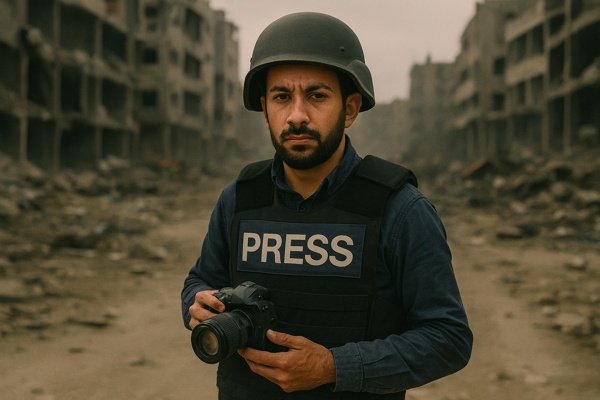
The Al Jazeera journalists killed Gaza tragedy has stunned the global media community. Five members of the network — including veteran correspondent Anas al-Sharif — lost their lives when an Israeli airstrike struck a clearly marked press tent near Al-Shifa Hospital in Gaza City.
The incident has reignited urgent global debate on accountability, the safety of journalists in war zones, and the legal obligations of all parties to protect civilian media workers.
Backdrop of Peril: Journalism Under Siege in Gaza
Since the outbreak of the Israel–Gaza conflict in October 2023, Gaza has been described by advocacy groups as one of the deadliest regions for journalists in modern history.
According to the Committee to Protect Journalists (CPJ), media professionals in the territory have faced unparalleled threats — from relentless airstrikes and power blackouts to the destruction of communication towers.
Veteran reporter Anas al-Sharif was widely known for his fearless coverage of daily life under siege. His death, alongside four colleagues, occurred while documenting civilian conditions and interviewing displaced families seeking shelter at the hospital complex. Witnesses say the team had identified the area as a “temporary safe zone” before the attack.
The Al Jazeera journalists killed Gaza episode reflects the dangers faced by local reporters who continue working despite the collapse of formal safety assurances.
The Incident: Strike Targets Press Tent at Al-Shifa Hospital
On August 10, 2025, an Israeli airstrike hit a media tent outside Al-Shifa Hospital, killing five Al Jazeera journalists instantly and wounding several others.
Eyewitness footage and survivor accounts indicate that the tent bore visible “PRESS” markings, making it identifiable from the air. The Israel Defense Forces (IDF) later confirmed responsibility for the strike but alleged that Anas al-Sharifmaintained “operational links” with Hamas — a claim Al Jazeera and multiple advocacy groups have denounced as “baseless and defamatory.”
The attack, which occurred amid renewed Israeli operations around Gaza City, has been described as “one of the deadliest single incidents involving journalists” since the conflict began.
“Journalists are civilians, not combatants,” said Jodie Ginsberg, Executive Director of CPJ. “The Al Jazeera journalists killed Gaza tragedy must be investigated transparently and independently.”
International Reaction: Outcry and Demands for Accountability
The deaths prompted swift and unified condemnation from international organizations and press freedom advocates.
- Reporters Without Borders (RSF) called the strike “a dangerous precedent that normalizes the targeting of the media.”
- The United Nations Human Rights Office reiterated that attacks on journalists contravene international humanitarian law, demanding an independent inquiry.
- Al Jazeera Media Network issued a statement condemning the bombing as “a deliberate act to silence truth-telling from Gaza.”
In cities across the Middle East and Europe, vigils were held for the victims, while numerous global newsrooms observed moments of silence. The European Federation of Journalists (EFJ) urged the creation of internationally protected “press corridors” to ensure safe coverage of armed conflicts.
Widening Crisis: Media Casualties Mount in Gaza
The Al Jazeera journalists killed Gaza tragedy adds to an alarming death toll among media professionals.
According to the International Federation of Journalists (IFJ), more than 150 journalists have died in Gaza since late 2023. Press vehicles, satellite vans, and temporary field studios have been bombed or rendered inoperable. Families of local fixers and producers have also been targeted in collateral damage.
With communications networks repeatedly severed, reporters often work with no access to GPS, electricity, or secure medical evacuation routes. One surviving cameraman told Reuters, “When we wear the word PRESS, it no longer protects us — it paints a target.”
This environment of fear has forced many international outlets to rely on local freelancers, often working with minimal safety gear or insurance coverage.
Operational Context: Intensified Offensive in Gaza City
The airstrike occurred during a broader Israeli military push into northern and central Gaza, part of what the IDF described as an “expanded operation to dismantle militant command nodes.”
Humanitarian agencies, including the World Health Organization (WHO), warned that continued combat around hospitals and residential districts would likely result in catastrophic civilian casualties.
The death of five Al Jazeera journalists has brought renewed scrutiny to Israel’s targeting procedures, with questions raised about proportionality, intelligence reliability, and adherence to the Geneva Conventions.
Analysts say that as fighting intensifies around civilian infrastructure, ensuring safe zones for media and aid workers becomes increasingly untenable.
Media Safety and Ethics: The Broader Implications
The Al Jazeera journalists killed Gaza event underscores a deeper crisis confronting global journalism: the erosion of press immunity in conflict zones.
Historically, journalists were considered neutral observers under Article 79 of Additional Protocol I to the Geneva Conventions — yet in modern conflicts, they are often viewed as adversaries.
The loss of independent voices undermines transparency and hampers the world’s ability to verify humanitarian claims. As UNESCO stated in its latest briefing, “Every journalist killed is a piece of truth lost.”
Experts emphasize that the integrity of postwar accountability — including war crimes documentation — depends on the work of these journalists, many of whom operate without institutional protection.
Investigations and Legal Pathways Ahead
Calls for accountability are intensifying. Al Jazeera has formally requested the International Criminal Court (ICC) to include the strike in its ongoing investigations into crimes against journalists.
Legal analysts say the path to justice will hinge on access to evidence — including ballistic fragments, satellite imagery, and unedited video recordings from the scene.
Rights organizations argue that credible investigations must be independent, prompt, and transparent. However, they warn that delays or restricted access may compromise crucial forensic data.
Meanwhile, media outlets globally are reassessing their field protocols — from encrypted GPS tracking and trauma kits to cross-border coordination centers — though such measures remain inadequate amid aerial warfare.
Expert Analysis: What the Tragedy Reveals About Modern Conflict Reporting
Analysts say the Al Jazeera journalists killed Gaza tragedy illustrates the new reality of warfare, where information control has become a strategic objective.
From Ukraine to Sudan, regimes and military powers increasingly target information channels to shape narratives. The Gaza conflict, in particular, has shown how local journalists — often the last witnesses standing — pay the highest price for revealing conditions on the ground.
Media ethics scholars warn that the normalization of journalist fatalities could desensitize the global audience and erode accountability mechanisms.
As GSN’s editorial board observes, “When those who tell the story become the story, democracy loses its eyes and ears.”
Global Impact: A Blow to Truth and Transparency
The Al Jazeera journalists killed Gaza incident reverberates far beyond the Middle East. For global audiences, the loss of trusted correspondents deepens uncertainty about verified information from war zones.
It also sets a dangerous precedent — signaling that even branded press facilities may not be safe from attack. Advocacy groups are urging governments and multilateral bodies to codify mandatory protections for journalists under armed conflict.
Some nations have proposed resolutions at the UN Human Rights Council to create international observer teams dedicated to monitoring media safety. If adopted, these measures could help deter future attacks and ensure that tragedies like this one are not repeated.
Mourning Voices That Told the Truth
As investigations continue, one fact remains beyond dispute: five Al Jazeera journalists are dead, silenced in pursuit of the truth.
The Al Jazeera journalists killed Gaza tragedy is not just another casualty count — it is a moral test for the international community.
Without justice and reform, the world risks losing not only courageous reporters but also the essential record of conflicts that define our time.
Their loss demands remembrance, accountability, and renewed global commitment to safeguard those who stand between war and truth.